Brito Luciano Abreu, Meira Joanna Goes Castro, Kobayashi Gerson Shigeru, Passos-Bueno Maria Rita
Human Genome Research Center, Institute of Biosciences, University of São Paulo, 05508-090 São Paulo, SP, Brazil.
Plast Surg Int. 2012;2012:782821. doi: 10.1155/2012/782821. Epub 2012 Nov 1.
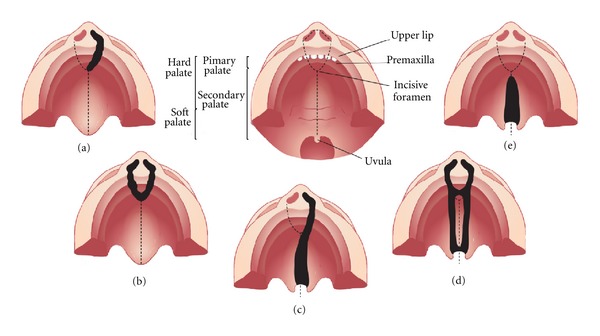
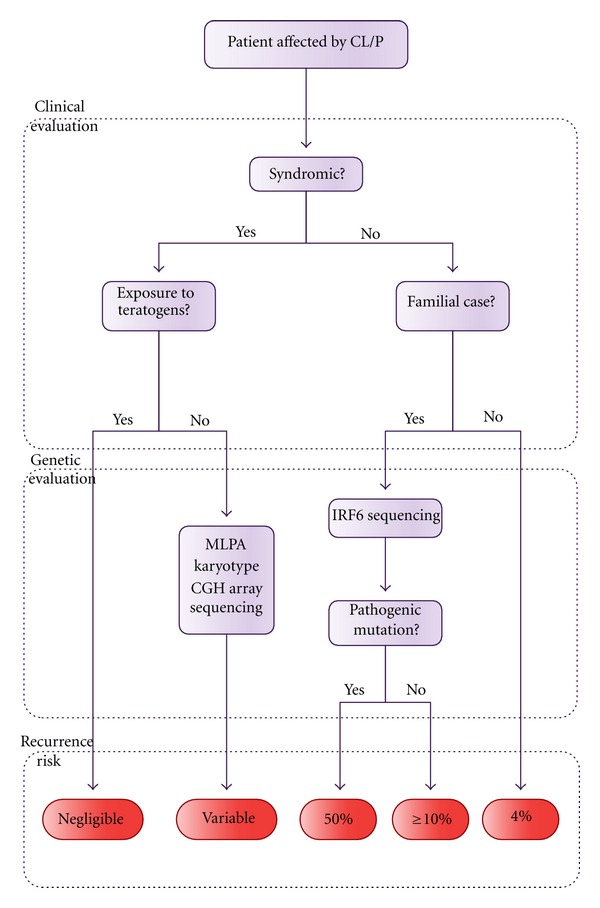
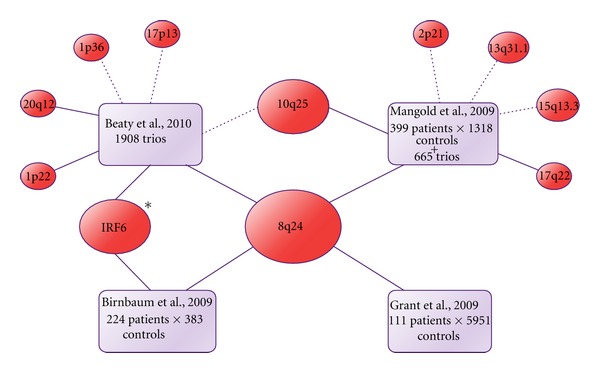
Cleft lip or palate (CL/P) is a common facial defect present in 1 : 700 live births and results in substantial burden to patients. There are more than 500 CL/P syndromes described, the causes of which may be single-gene mutations, chromosomopathies, and exposure to teratogens. Part of the most prevalent syndromic CL/P has known etiology. Nonsyndromic CL/P, on the other hand, is a complex disorder, whose etiology is still poorly understood. Recent genome-wide association studies have contributed to the elucidation of the genetic causes, by raising reproducible susceptibility genetic variants; their etiopathogenic roles, however, are difficult to predict, as in the case of the chromosomal region 8q24, the most corroborated locus predisposing to nonsyndromic CL/P. Knowing the genetic causes of CL/P will directly impact the genetic counseling, by estimating precise recurrence risks, and the patient management, since the patient, followup may be partially influenced by their genetic background. This paper focuses on the genetic causes of important syndromic CL/P forms (van der Woude syndrome, 22q11 deletion syndrome, and Robin sequence-associated syndromes) and depicts the recent findings in nonsyndromic CL/P research, addressing issues in the conduct of the geneticist.
唇腭裂(CL/P)是一种常见的面部缺陷,在每700例活产中就有1例出现,给患者带来了沉重负担。目前已描述了500多种唇腭裂综合征,其病因可能是单基因突变、染色体病以及接触致畸剂。部分最常见的综合征性唇腭裂已知病因。另一方面,非综合征性唇腭裂是一种复杂疾病,其病因仍知之甚少。最近的全基因组关联研究通过发现可重复的易感性遗传变异,为阐明其遗传病因做出了贡献;然而,它们的致病作用很难预测,例如在8q24染色体区域,这是最有力的非综合征性唇腭裂易感位点。了解唇腭裂的遗传病因将直接影响遗传咨询(通过估计精确的复发风险)以及患者管理,因为患者的随访可能会部分受到其遗传背景的影响。本文重点关注重要的综合征性唇腭裂类型(范德伍德综合征、22q11缺失综合征和罗宾序列相关综合征)的遗传病因,并描述非综合征性唇腭裂研究的最新发现,探讨遗传学家在研究过程中遇到的问题。