Professor of Neurology, Neuroscience and Ophthalmology, LSU Neuroscience Center, 2020 Gravier Street, Suite 904, New Orleans, LA 70112, USA.
Alzheimers Res Ther. 2012 Dec 6;4(6):47. doi: 10.1186/alzrt150. eCollection 2012.
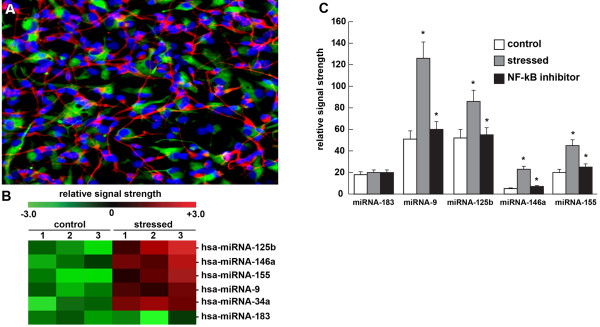
Abundant neurochemical, neuropathological, and genetic evidence suggests that a critical number of proinflammatory and innate immune system-associated factors are involved in the underlying pathological pathways that drive the sporadic Alzheimer's disease (AD) process. Most recently, a series of epigenetic factors - including a select family of inducible, proinflammatory, NF-κB-regulated small noncoding RNAs called miRNAs - have been shown to be significantly elevated in abundance in AD brain. These upregulated miRNAs appear to be instrumental in reshaping the human brain transcriptome. This reorganization of mRNA speciation and complexity in turn drives proinflammatory and pathogenic gene expression programs. The ensuing, progressively altered immune and inflammatory signaling patterns in AD brain support immunopathogenetic events and proinflammatory features of the AD phenotype. This report will briefly review what is known concerning NF-κB-inducible miRNAs that are significantly upregulated in AD-targeted anatomical regions of degenerating human brain cells and tissues. Quenching of NF-κB-sensitive inflammatory miRNA signaling using NF-κB-inhibitors such as the polyphenolic resveratrol analog trans-3,5,4'-trihydroxystilbene (CAY10512) may have some therapeutic value in reducing inflammatory neurodegeneration. Antagonism of NF-κB-inducing, and hence proinflammatory, epigenetic and environmental factors, such as the neurotrophic herpes simplex virus-1 and exposure to the potent neurotoxin aluminum, are briefly discussed. Early reports further indicate that miRNA neutralization employing anti-miRNA (antagomir) strategies may hold future promise in the clinical management of this insidious neurological disorder and expanding healthcare concern.
大量的神经化学、神经病理学和遗传学证据表明,大量促炎和固有免疫系统相关因素参与了驱动散发性阿尔茨海默病(AD)进程的潜在病理途径。最近,一系列表观遗传因素——包括一系列可诱导的、促炎的、NF-κB 调节的小非编码 RNA(称为 miRNA)——已被证明在 AD 脑中大量显著升高。这些上调的 miRNA 似乎在重塑人类大脑转录组方面发挥了重要作用。mRNA 特异性和复杂性的这种重新组织反过来又驱动了促炎和致病基因表达程序。AD 脑中随后逐渐改变的免疫和炎症信号模式支持免疫病理事件和 AD 表型的促炎特征。本报告将简要回顾在 AD 靶向的人类脑细胞和组织退化的解剖区域中显著上调的 NF-κB 诱导 miRNA 方面的已知内容。使用 NF-κB 抑制剂(如多酚白藜芦醇类似物反式-3,5,4'-三羟基二苯乙烯(CAY10512))抑制 NF-κB 敏感的炎症 miRNA 信号可能在减轻炎症性神经退行性变方面具有一定的治疗价值。拮抗 NF-κB 诱导的、因此是促炎的、表观遗传和环境因素,如神经营养性单纯疱疹病毒 1 和暴露于强效神经毒素铝,也将简要讨论。早期报告进一步表明,采用 miRNA 中和(miRNA 中和)策略的 miRNA 中和可能在这种隐匿性神经疾病的临床管理和不断扩大的医疗保健关注方面具有未来的前景。