Department of Medical Sciences, Entrance 40, 5th Floor, Uppsala University Hospital, SE-751 85, Uppsala, Sweden.
Eur J Epidemiol. 2012 Dec;27(12):903-9. doi: 10.1007/s10654-012-9752-0. Epub 2012 Dec 7.
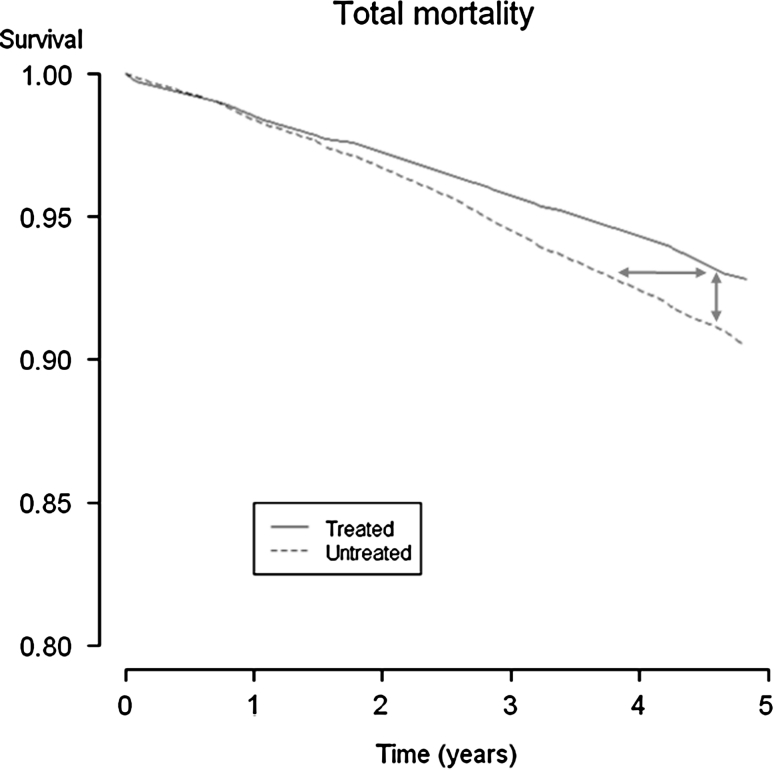
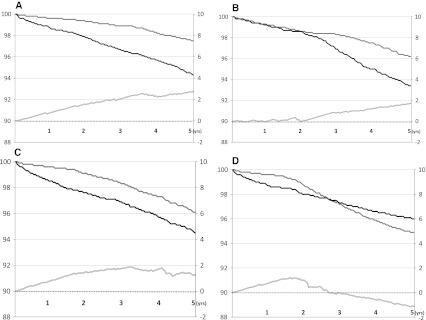
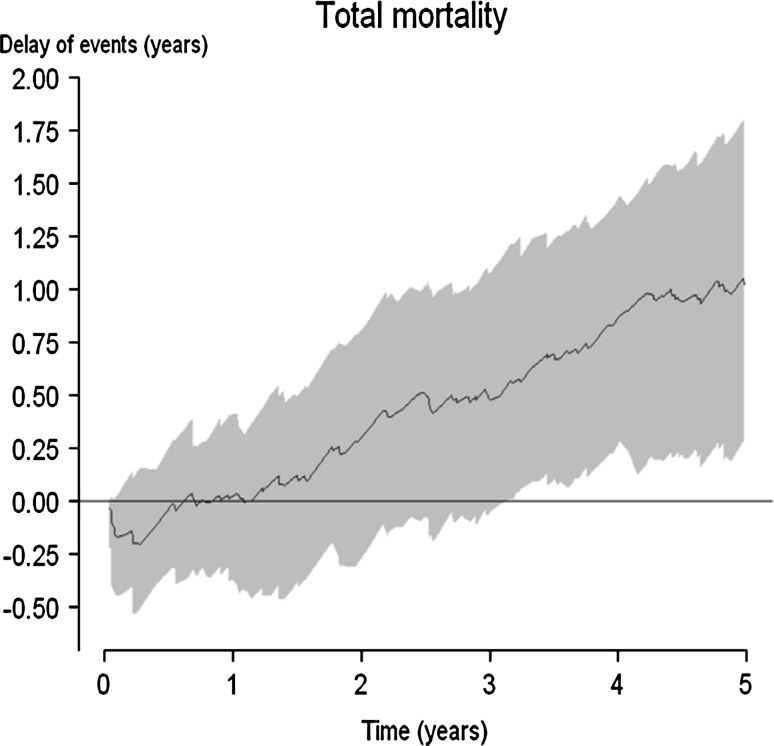
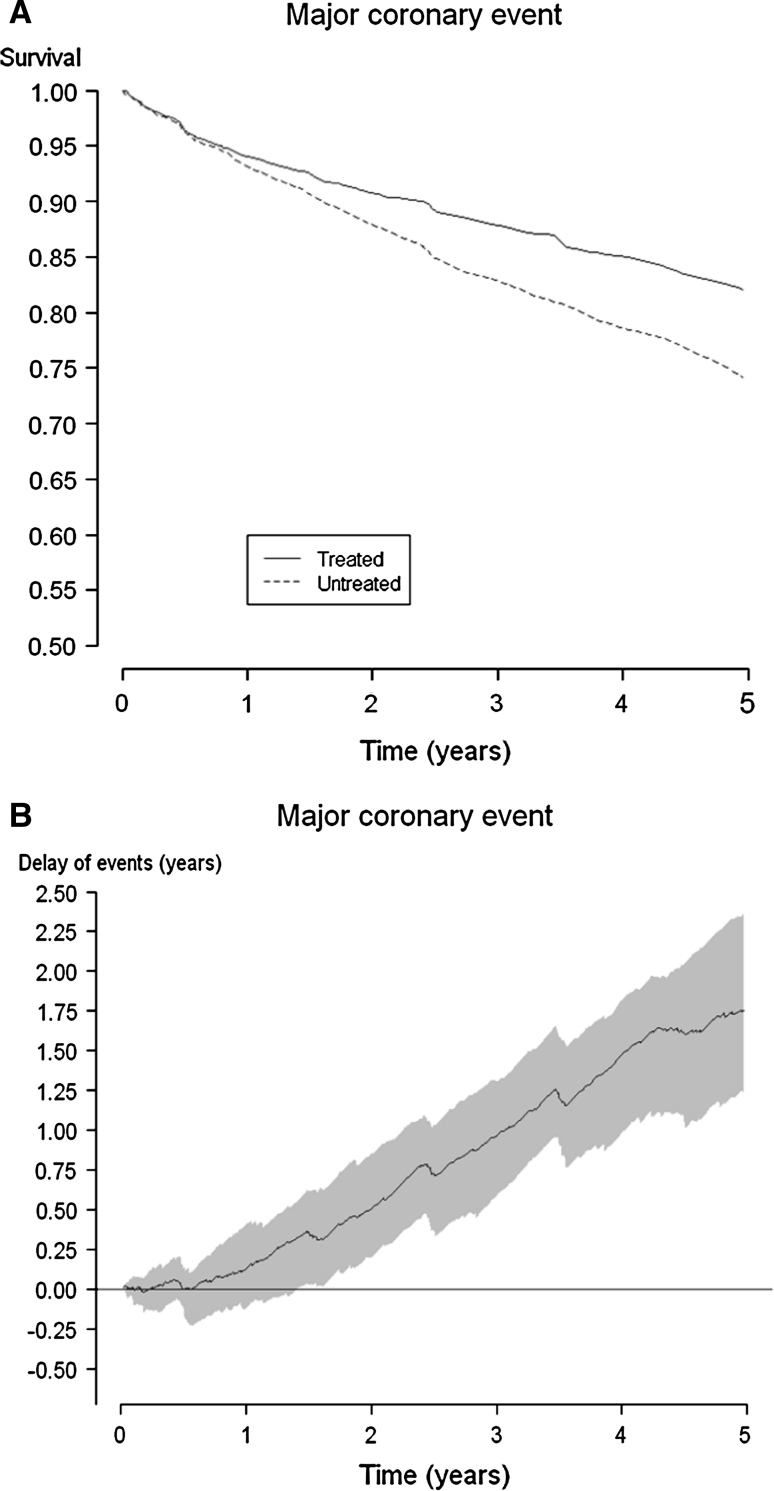
Many effect measures used in clinical trials are problematic because they are differentially understood by patients and physicians. The emergence of novel methods such as accelerated failure-time models and quantile regression has shifted the focus of effect measurement from probability measures to time-to-event measures. Such modeling techniques are rapidly evolving, but matching non-parametric descriptive measures are lacking. We propose such a measure, the delay of events, demonstrating treatment effect as a gain in event-free time. We believe this measure to be of value for shared clinical decision-making. The rationale behind the measure is given, and it is conceptually explained using the Kaplan-Meier estimate and the quantile regression framework. A formula for calculation of the delay of events is given. Hypothetical and empirical examples are used to demonstrate the measure. The measure is discussed in relation to other measures highlighting the time effects of preventive treatments. There is a need to further investigate the properties of the measure as well as its role in clinical decision-making.
许多在临床试验中使用的效应度量方法存在问题,因为它们在患者和医生之间的理解存在差异。新型方法的出现,如加速失效时间模型和分位数回归,已经将效应度量的重点从概率度量转移到了事件时间度量。这些建模技术正在迅速发展,但缺乏匹配的非参数描述性度量。我们提出了一种这样的度量方法,即事件延迟,将治疗效果表示为无事件时间的增加。我们相信,这种度量方法对于共同的临床决策具有价值。本文给出了该度量方法的原理,并使用 Kaplan-Meier 估计和分位数回归框架从概念上进行了解释。给出了计算事件延迟的公式。使用假设和实证示例来说明该度量方法。该度量方法与其他度量方法进行了讨论,突出了预防性治疗的时间效应。需要进一步研究该度量方法的性质及其在临床决策中的作用。