• 文献检索
  • 文档翻译
  • 深度研究
  • 学术资讯
  • Suppr Zotero 插件Zotero 插件
  • 邀请有礼
  • 套餐&价格
  • 历史记录
应用&插件
Suppr Zotero 插件Zotero 插件浏览器插件Mac 客户端Windows 客户端微信小程序
定价
高级版会员购买积分包购买API积分包
服务
文献检索文档翻译深度研究API 文档MCP 服务
关于我们
关于 Suppr公司介绍联系我们用户协议隐私条款
关注我们

Suppr 超能文献

核心技术专利:CN118964589B侵权必究
粤ICP备2023148730 号-1Suppr @ 2026

文献检索

告别复杂PubMed语法,用中文像聊天一样搜索,搜遍4000万医学文献。AI智能推荐,让科研检索更轻松。

立即免费搜索

文件翻译

保留排版,准确专业,支持PDF/Word/PPT等文件格式,支持 12+语言互译。

免费翻译文档

深度研究

AI帮你快速写综述,25分钟生成高质量综述,智能提取关键信息,辅助科研写作。

立即免费体验

硒超积累植物伯乐树和二色胡枝子被具有耐硒、排硒特性的胡蜂和甲虫种子草食性昆虫定殖。

Selenium hyperaccumulator plants Stanleya pinnata and Astragalus bisulcatus are colonized by Se-resistant, Se-excluding wasp and beetle seed herbivores.

机构信息

Department of Biology, California State University Fresno, Fresno, California, United States of America.

出版信息

PLoS One. 2012;7(12):e50516. doi: 10.1371/journal.pone.0050516. Epub 2012 Dec 3.

DOI:10.1371/journal.pone.0050516
PMID:23226523
原文链接:https://pmc.ncbi.nlm.nih.gov/articles/PMC3513300/
Abstract

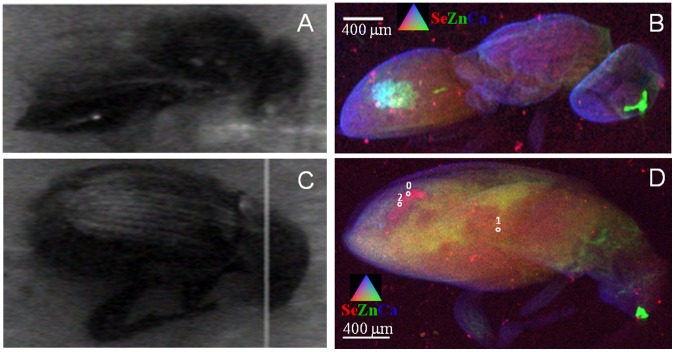
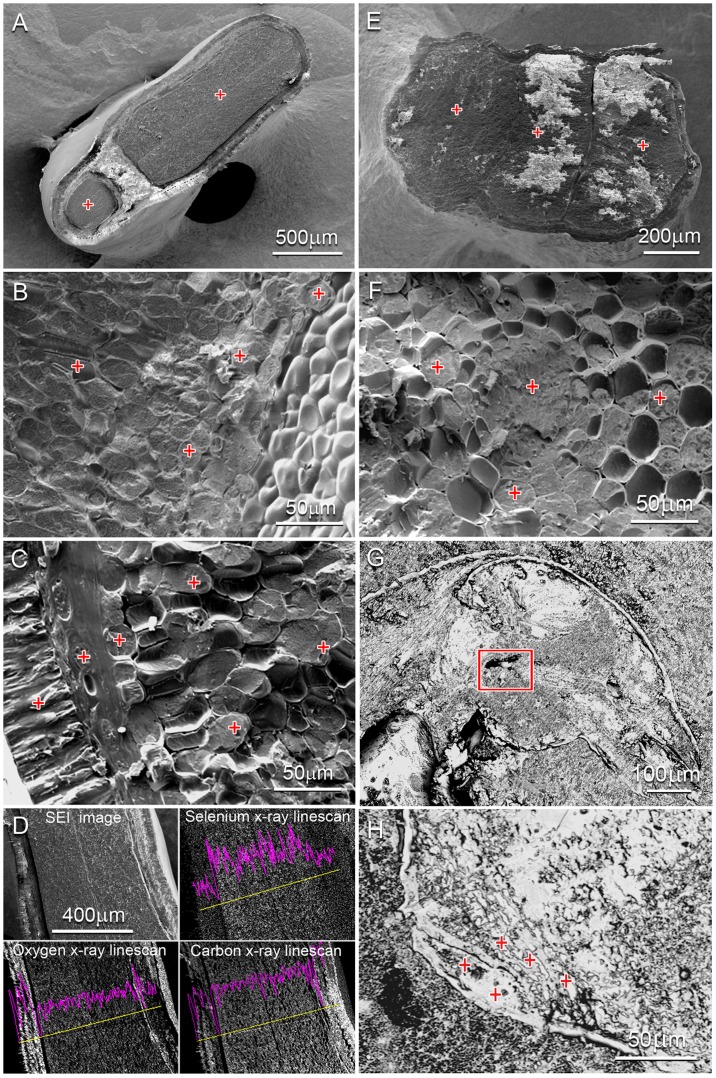
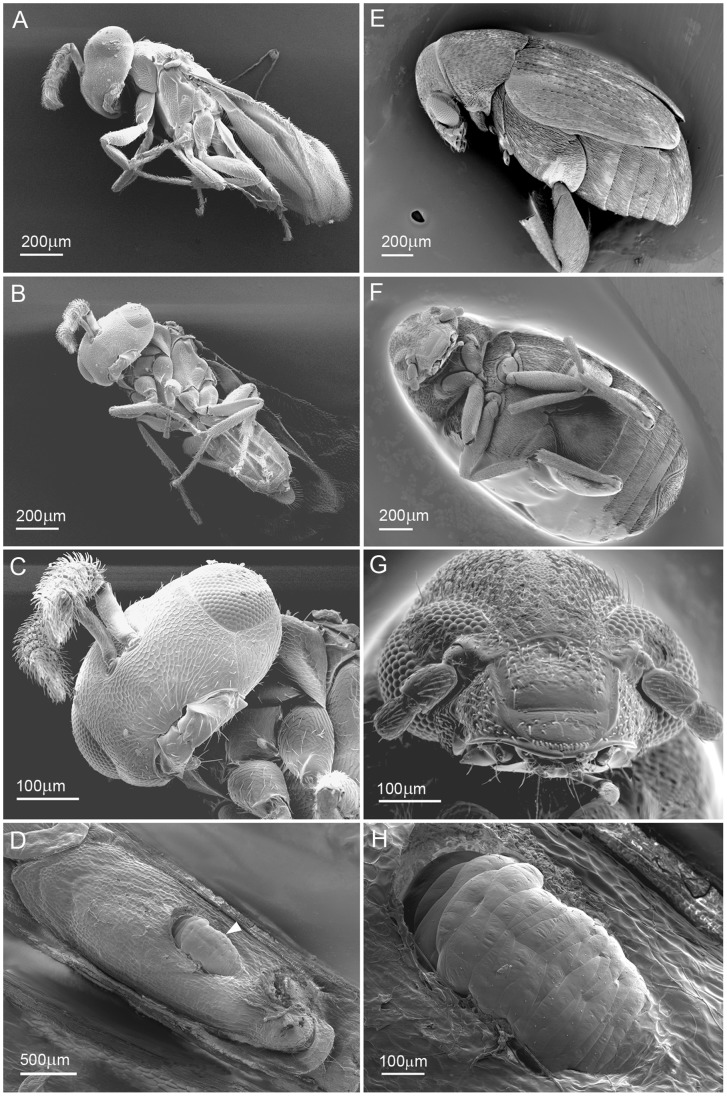
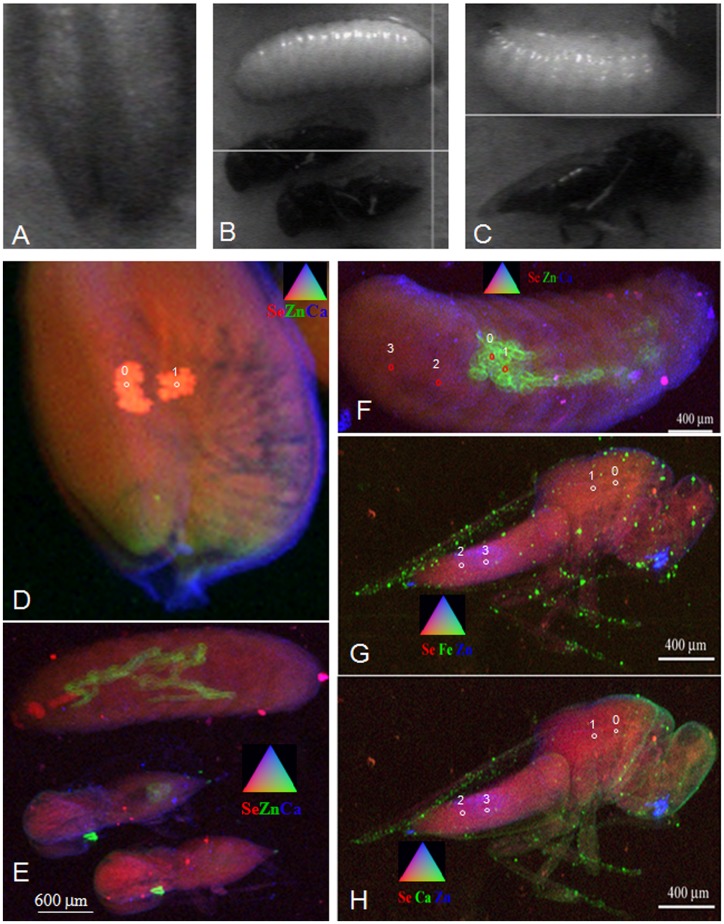
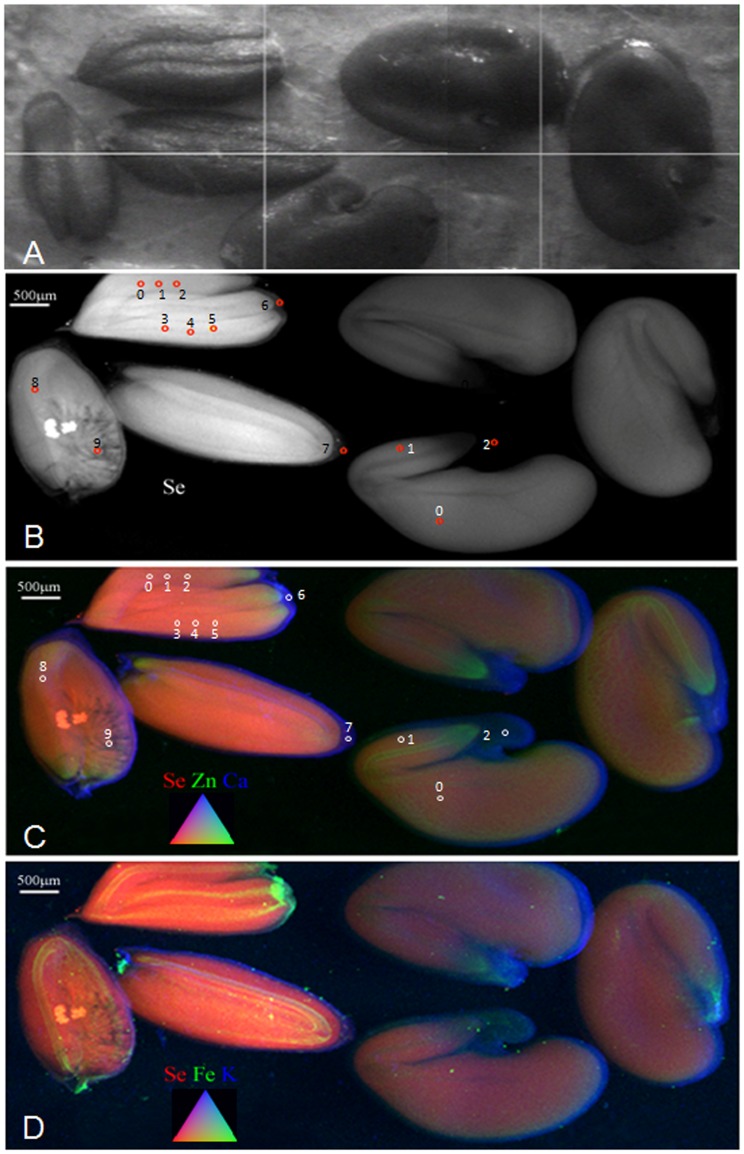
Selenium (Se) hyperaccumulator plants can concentrate the toxic element Se up to 1% of shoot (DW) which is known to protect hyperaccumulator plants from generalist herbivores. There is evidence for Se-resistant insect herbivores capable of feeding upon hyperaccumulators. In this study, resistance to Se was investigated in seed chalcids and seed beetles found consuming seeds inside pods of Se-hyperaccumulator species Astragalus bisulcatus and Stanleya pinnata. Selenium accumulation, localization and speciation were determined in seeds collected from hyperaccumulators in a seleniferous habitat and in seed herbivores. Astragalus bisulcatus seeds were consumed by seed beetle larvae (Acanthoscelides fraterculus Horn, Coleoptera: Bruchidae) and seed chalcid larvae (Bruchophagus mexicanus, Hymenoptera: Eurytomidae). Stanleya pinnata seeds were consumed by an unidentified seed chalcid larva. Micro X-ray absorption near-edge structure (µXANES) and micro-X-Ray Fluorescence mapping (µXRF) demonstrated Se was mostly organic C-Se-C forms in seeds of both hyperaccumulators, and S. pinnata seeds contained ∼24% elemental Se. Liquid chromatography-mass spectrometry of Se-compounds in S. pinnata seeds detected the C-Se-C compound seleno-cystathionine while previous studies of A. bisulcatus seeds detected the C-Se-C compounds methyl-selenocysteine and γ-glutamyl-methyl-selenocysteine. Micro-XRF and µXANES revealed Se ingested from hyperaccumulator seeds redistributed throughout seed herbivore tissues, and portions of seed C-Se-C were biotransformed into selenocysteine, selenocystine, selenodiglutathione, selenate and selenite. Astragalus bisulcatus seeds contained on average 5,750 µg Se g(-1), however adult beetles and adult chalcid wasps emerging from A. bisulcatus seed pods contained 4-6 µg Se g(-1). Stanleya pinnata seeds contained 1,329 µg Se g(-1) on average; however chalcid wasp larvae and adults emerging from S. pinnata seed pods contained 9 and 47 µg Se g(-1). The results suggest Se resistant seed herbivores exclude Se, greatly reducing tissue accumulation; this explains their ability to consume high-Se seeds without suffering toxicity, allowing them to occupy the unique niche offered by Se hyperaccumulator plants.

摘要

硒(Se)超积累植物可以将有毒元素硒浓缩到茎(DW)的 1%,这已知可以保护超积累植物免受普通食草动物的侵害。有证据表明,能够以超积累植物为食的抗硒昆虫食草动物是存在的。在这项研究中,研究了在消耗硒超积累物种 Astragalus bisulcatus 和 Stanleya pinnata 豆荚内种子的种象甲和种象甲幼虫中对硒的抗性。在硒超积累植物的栖息地和种子食草动物中收集的种子中,确定了硒的积累、定位和形态。Astragalus bisulcatus 种子被种象甲幼虫(Acanthoscelides fraterculus Horn,鞘翅目:象甲科)和种象甲幼虫(Bruchophagus mexicanus,膜翅目: Eurytomidae)消耗。Stanleya pinnata 种子被一种未鉴定的种象甲幼虫消耗。微束 X 射线吸收近边结构(µXANES)和微束 X 射线荧光图谱(µXRF)表明,在两种超积累植物的种子中,硒主要以有机 C-Se-C 形式存在,并且 S. pinnata 种子含有约 24%的元素硒。Stanleya pinnata 种子中硒化合物的液相色谱-质谱检测到 C-Se-C 化合物 seleno-cystathionine,而之前对 A. bisulcatus 种子的研究检测到 C-Se-C 化合物甲基硒代半胱氨酸和γ-谷氨酰甲基硒代半胱氨酸。微束 XRF 和 µXANES 表明,从超积累植物种子中摄取的硒重新分布到食草动物组织中,部分种子 C-Se-C 被生物转化为硒代半胱氨酸、硒代胱氨酸、硒代二谷胱甘肽、硒酸盐和亚硒酸盐。Astragalus bisulcatus 种子平均含有 5750 µg Se g(-1),然而从 A. bisulcatus 种子荚中出现的成年甲虫和成年象甲蜂仅含有 4-6 µg Se g(-1)。Stanleya pinnata 种子平均含有 1329 µg Se g(-1);然而,从 S. pinnata 种子荚中出现的象甲幼虫和成虫含有 9 和 47 µg Se g(-1)。结果表明,抗硒种子食草动物排除了硒,大大减少了组织积累;这解释了它们能够在不遭受毒性的情况下消耗高硒种子的能力,使它们能够占据硒超积累植物提供的独特生态位。
https://cdn.ncbi.nlm.nih.gov/pmc/blobs/bea0/3513300/ecb143166438/pone.0050516.g005.jpg
https://cdn.ncbi.nlm.nih.gov/pmc/blobs/bea0/3513300/6e3f6dd25ebc/pone.0050516.g001.jpg
https://cdn.ncbi.nlm.nih.gov/pmc/blobs/bea0/3513300/ecb4a92f83bb/pone.0050516.g002.jpg
https://cdn.ncbi.nlm.nih.gov/pmc/blobs/bea0/3513300/7e9ce1aff4d0/pone.0050516.g003.jpg
https://cdn.ncbi.nlm.nih.gov/pmc/blobs/bea0/3513300/b88463546eee/pone.0050516.g004.jpg
https://cdn.ncbi.nlm.nih.gov/pmc/blobs/bea0/3513300/ecb143166438/pone.0050516.g005.jpg
https://cdn.ncbi.nlm.nih.gov/pmc/blobs/bea0/3513300/6e3f6dd25ebc/pone.0050516.g001.jpg
https://cdn.ncbi.nlm.nih.gov/pmc/blobs/bea0/3513300/ecb4a92f83bb/pone.0050516.g002.jpg
https://cdn.ncbi.nlm.nih.gov/pmc/blobs/bea0/3513300/7e9ce1aff4d0/pone.0050516.g003.jpg
https://cdn.ncbi.nlm.nih.gov/pmc/blobs/bea0/3513300/b88463546eee/pone.0050516.g004.jpg
https://cdn.ncbi.nlm.nih.gov/pmc/blobs/bea0/3513300/ecb143166438/pone.0050516.g005.jpg

相似文献

1
Selenium hyperaccumulator plants Stanleya pinnata and Astragalus bisulcatus are colonized by Se-resistant, Se-excluding wasp and beetle seed herbivores.硒超积累植物伯乐树和二色胡枝子被具有耐硒、排硒特性的胡蜂和甲虫种子草食性昆虫定殖。
PLoS One. 2012;7(12):e50516. doi: 10.1371/journal.pone.0050516. Epub 2012 Dec 3.
2
Spatial imaging, speciation, and quantification of selenium in the hyperaccumulator plants Astragalus bisulcatus and Stanleya pinnata.超积累植物双槽黄耆和窄叶鲜卑花中硒的空间成像、形态分析及定量研究。
Plant Physiol. 2006 Sep;142(1):124-34. doi: 10.1104/pp.106.081158. Epub 2006 Aug 18.
3
Selenium hyperaccumulation offers protection from cell disruptor herbivores.硒超积累提供了对细胞破坏食草动物的保护。
BMC Ecol. 2010 Aug 27;10:19. doi: 10.1186/1472-6785-10-19.
4
Interactions of selenium hyperaccumulators and nonaccumulators during cocultivation on seleniferous or nonseleniferous soil--the importance of having good neighbors.硒超积累植物和非积累植物在富硒或非硒土壤共培养时的相互作用——拥有好邻居的重要性。
New Phytol. 2012 Apr;194(1):264-277. doi: 10.1111/j.1469-8137.2011.04043.x. Epub 2012 Jan 23.
5
Selenium distribution and speciation in the hyperaccumulator Astragalus bisulcatus and associated ecological partners.超积累植物盐肤木中硒的分布和形态。
Plant Physiol. 2012 Aug;159(4):1834-44. doi: 10.1104/pp.112.199307. Epub 2012 May 29.
6
Selenium accumulation protects plants from herbivory by Orthoptera via toxicity and deterrence.硒的积累通过毒性和威慑作用保护植物免受直翅目食草动物的侵害。
New Phytol. 2007;175(3):490-500. doi: 10.1111/j.1469-8137.2007.02119.x.
7
Fungal Endophyte Can Affect Growth and Selenium Accumulation in Its Hyperaccumulator Host .真菌内生菌可影响其超积累宿主植物的生长和硒积累。
Front Plant Sci. 2018 Aug 20;9:1213. doi: 10.3389/fpls.2018.01213. eCollection 2018.
8
Inoculation of selenium hyperaccumulator Stanleya pinnata and related non-accumulator Stanleya elata with hyperaccumulator rhizosphere fungi--investigation of effects on Se accumulation and speciation.用超富集植物根际真菌接种硒超富集植物斯坦利羽扇豆及相关非富集植物矮羽扇豆——对硒积累和形态影响的研究
Physiol Plant. 2014 Jan;150(1):107-18. doi: 10.1111/ppl.12094. Epub 2013 Sep 19.
9
Do selenium hyperaccumulators affect selenium speciation in neighboring plants and soil? An X-Ray Microprobe Analysis.硒超积累植物会影响邻近植物和土壤中的硒形态吗?X射线微探针分析。
Int J Phytoremediation. 2015;17(8):753-65. doi: 10.1080/15226514.2014.987374.
10
Effects of selenium hyperaccumulation on plant-plant interactions: evidence for elemental allelopathy?硒超富集对植物-植物相互作用的影响:元素化感作用的证据?
New Phytol. 2011 Jul;191(1):120-131. doi: 10.1111/j.1469-8137.2011.03670.x. Epub 2011 Mar 4.

引用本文的文献

1
The curious case of selenium hyperaccumulation in Coelospermum decipiens from the Cape York Peninsula (Queensland, Australia).好奇的硒超积累案例:来自约克角半岛(澳大利亚昆士兰州)的 Coelospermum decipiens。
Ann Bot. 2024 Nov 13;134(5):769-786. doi: 10.1093/aob/mcae103.
2
Hyperaccumulator : In Situ Fitness in Relation to Tissue Selenium Concentration.超富集植物:与组织硒浓度相关的原位适合度
Plants (Basel). 2022 Mar 3;11(5):690. doi: 10.3390/plants11050690.
3
Feeding intensity of insect herbivores is associated more closely with key metabolite profiles than phylogenetic relatedness of their potential hosts.

本文引用的文献

1
Selenium protects plants from phloem-feeding aphids due to both deterrence and toxicity.硒通过威慑作用和毒性作用保护植物免受以韧皮部为食的蚜虫侵害。
New Phytol. 2004 Jun;162(3):655-662. doi: 10.1111/j.1469-8137.2004.01067.x.
2
Selenium accumulation protects Brassica juncea from invertebrate herbivory and fungal infection.硒积累可保护芥菜免受无脊椎动物啃食和真菌感染。
New Phytol. 2003 Aug;159(2):461-469. doi: 10.1046/j.1469-8137.2003.00786.x.
3
Ecological aspects of plant selenium hyperaccumulation.植物硒超积累的生态方面。
食草昆虫的取食强度与其潜在宿主的关键代谢物谱的关联比与其系统发育相关性更为密切。
PeerJ. 2019 Dec 17;7:e8203. doi: 10.7717/peerj.8203. eCollection 2019.
4
Selenium tolerance, accumulation, localization and speciation in a Cardamine hyperaccumulator and a non-hyperaccumulator.硒耐性、积累、定位和形态在十字花科叶菥菜超积累植物和非超积累植物中的研究。
Sci Total Environ. 2020 Feb 10;703:135041. doi: 10.1016/j.scitotenv.2019.135041. Epub 2019 Nov 2.
5
The defensive benefit and flower number cost of selenium accumulation in .[植物名称]中硒积累的防御益处及花朵数量代价 。 需注意,原文中“in.”后缺少具体所指植物等关键信息,此翻译是基于补充完整后的理解。
AoB Plants. 2019 Aug 17;11(5):plz053. doi: 10.1093/aobpla/plz053. eCollection 2019 Oct.
6
On the Ecology of Selenium Accumulation in Plants.植物中硒积累的生态学研究
Plants (Basel). 2019 Jun 30;8(7):197. doi: 10.3390/plants8070197.
7
Selenium Accumulating Leafy Vegetables Are a Potential Source of Functional Foods.富硒叶菜是功能性食品的潜在来源。
Int J Food Sci. 2015;2015:549676. doi: 10.1155/2015/549676. Epub 2015 Dec 10.
8
Effect of Selenium on Control of Postharvest Gray Mold of Tomato Fruit and the Possible Mechanisms Involved.硒对番茄果实采后灰霉病的防控效果及可能的作用机制
Front Microbiol. 2016 Jan 6;6:1441. doi: 10.3389/fmicb.2015.01441. eCollection 2015.
9
Exploring the importance of sulfate transporters and ATP sulphurylases for selenium hyperaccumulation-a comparison of Stanleya pinnata and Brassica juncea (Brassicaceae).探讨硫酸盐转运蛋白和三磷酸腺苷硫酸化酶在硒超积累中的重要性——以凤尾兰和油菜(十字花科)为例。
Front Plant Sci. 2015 Jan 23;6:2. doi: 10.3389/fpls.2015.00002. eCollection 2015.
10
Elemental and chemically specific X-ray fluorescence imaging of biological systems.生物系统的元素及化学特异性X射线荧光成像。
Chem Rev. 2014 Sep 10;114(17):8499-541. doi: 10.1021/cr4007297. Epub 2014 Aug 7.
Plant Biol (Stuttg). 2012 Jan;14(1):1-10. doi: 10.1111/j.1438-8677.2011.00535.x.
4
Selenium accumulation in flowers and its effects on pollination.花朵中硒的积累及其对授粉的影响。
New Phytol. 2011 Nov;192(3):727-37. doi: 10.1111/j.1469-8137.2011.03832.x. Epub 2011 Jul 27.
5
Selenium protects the hyperaccumulator Stanleya pinnata against black-tailed prairie dog herbivory in native seleniferous habitats.在原生富硒栖息地,硒可保护超积累植物羽叶长柄芥免受黑尾草原犬鼠的啃食。
Am J Bot. 2009 Jun;96(6):1075-85. doi: 10.3732/ajb.0800287.
6
Selenium hyperaccumulation offers protection from cell disruptor herbivores.硒超积累提供了对细胞破坏食草动物的保护。
BMC Ecol. 2010 Aug 27;10:19. doi: 10.1186/1472-6785-10-19.
7
Distribution and translocation of selenium from soil to grain and its speciation in paddy rice (Oryza sativa L.).土壤向谷物中硒的分布和迁移及其在水稻(Oryza sativa L.)中的形态。
Environ Sci Technol. 2010 Sep 1;44(17):6706-11. doi: 10.1021/es101843x.
8
Molecular mechanisms of selenium tolerance and hyperaccumulation in Stanleya pinnata.中华羊蹄甲耐硒和超积累的分子机制。
Plant Physiol. 2010 Aug;153(4):1630-52. doi: 10.1104/pp.110.156570. Epub 2010 May 24.
9
Changes in selenium speciation associated with increasing tissue concentrations of selenium in wheat grain.随着小麦籽粒中硒浓度的增加,硒形态的变化。
J Agric Food Chem. 2010 Feb 24;58(4):2295-301. doi: 10.1021/jf903004a.
10
Selenium hyperaccumulation reduces plant arthropod loads in the field.硒的超积累减少了田间植物上节肢动物的数量。
New Phytol. 2008;177(3):715-724. doi: 10.1111/j.1469-8137.2007.02285.x. Epub 2007 Nov 17.