Cankırı Karatekin University, Faculty of Science, Department of Biology, Cankiri, Turkey ; Istanbul University, Faculty of Science, Department of Biology, Istanbul, Turkey.
PLoS One. 2012;7(12):e50298. doi: 10.1371/journal.pone.0050298. Epub 2012 Dec 5.
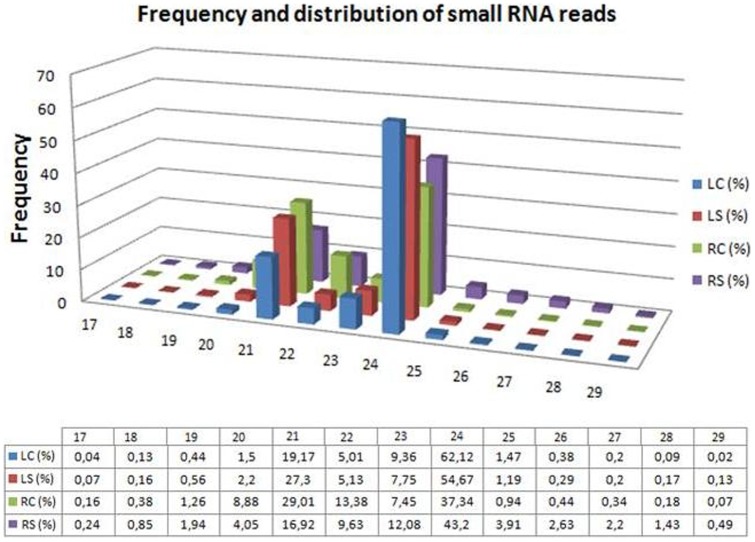
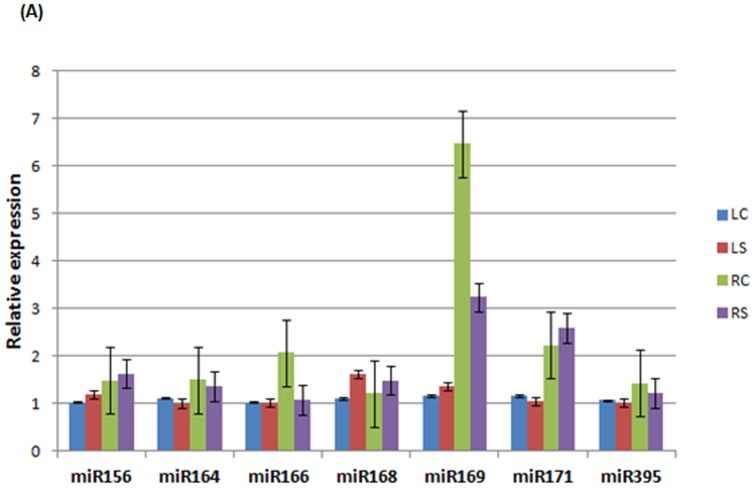
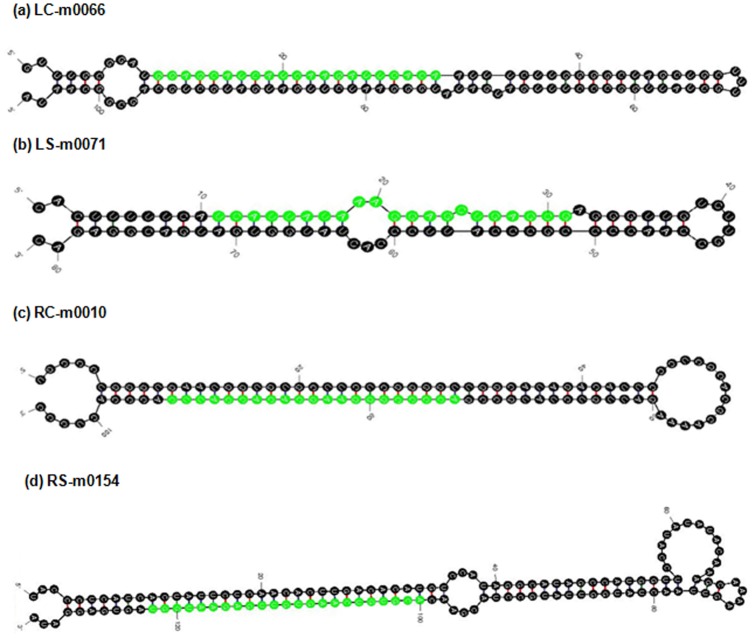
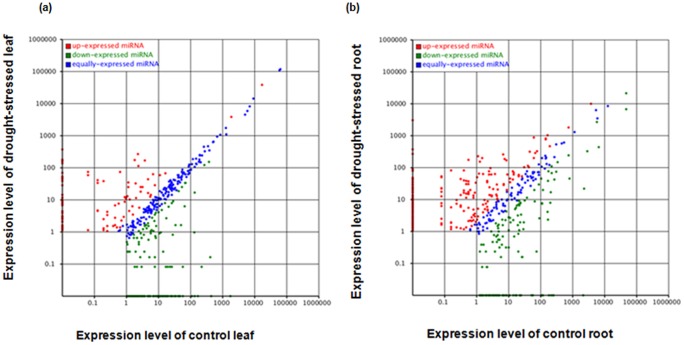
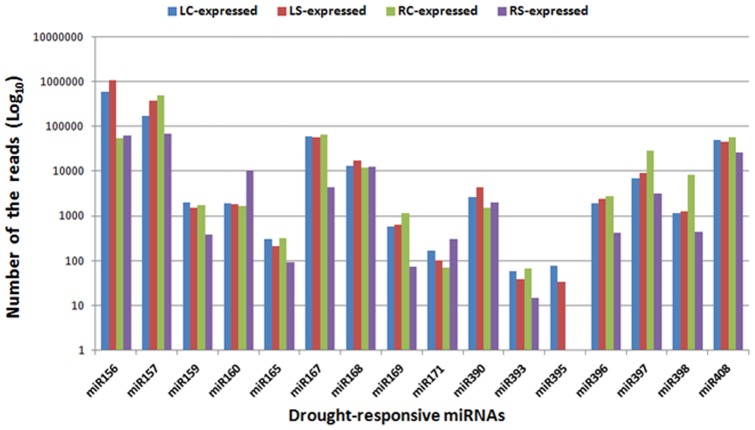
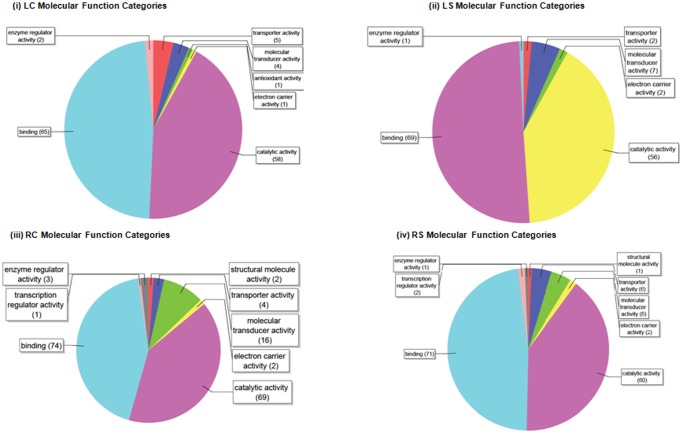
Peach (Prunus persica L.) is one of the most important worldwide fresh fruits. Since fruit growth largely depends on adequate water supply, drought stress is considered as the most important abiotic stress limiting fleshy fruit production and quality in peach. Plant responses to drought stress are regulated both at transcriptional and post-transcriptional level. As post-transcriptional gene regulators, miRNAs (miRNAs) are small (19-25 nucleotides in length), endogenous, non-coding RNAs. Recent studies indicate that miRNAs are involved in plant responses to drought. Therefore, Illumina deep sequencing technology was used for genome-wide identification of miRNAs and their expression profile in response to drought in peach. In this study, four sRNA libraries were constructed from leaf control (LC), leaf stress (LS), root control (RC) and root stress (RS) samples. We identified a total of 531, 471, 535 and 487 known mature miRNAs in LC, LS, RC and RS libraries, respectively. The expression level of 262 (104 up-regulated, 158 down-regulated) of the 453 miRNAs changed significantly in leaf tissue, whereas 368 (221 up-regulated, 147 down-regulated) of the 465 miRNAs had expression levels that changed significantly in root tissue upon drought stress. Additionally, a total of 197, 221, 238 and 265 novel miRNA precursor candidates were identified from LC, LS, RC and RS libraries, respectively. Target transcripts (137 for LC, 133 for LS, 148 for RC and 153 for RS) generated significant Gene Ontology (GO) terms related to DNA binding and catalytic activities. Genome-wide miRNA expression analysis of peach by deep sequencing approach helped to expand our understanding of miRNA function in response to drought stress in peach and Rosaceae. A set of differentially expressed miRNAs could pave the way for developing new strategies to alleviate the adverse effects of drought stress on plant growth and development.
桃(Prunus persica L.)是世界上最重要的鲜食水果之一。由于果实的生长在很大程度上依赖于充足的水分供应,干旱胁迫被认为是限制桃果实产量和品质的最重要非生物胁迫因素。植物对干旱胁迫的反应受到转录和转录后水平的调节。作为转录后基因调控因子,miRNAs(miRNAs)是小的(长度为 19-25 个核苷酸)、内源性、非编码 RNA。最近的研究表明,miRNAs参与了植物对干旱的反应。因此,我们使用 Illumina 高通量测序技术对桃在受到干旱胁迫时的 miRNA 及其表达谱进行了全基因组鉴定。在这项研究中,我们从叶片对照(LC)、叶片胁迫(LS)、根对照(RC)和根胁迫(RS)样本中构建了四个 sRNA 文库。我们分别在 LC、LS、RC 和 RS 文库中鉴定到了 531、471、535 和 487 个已知成熟的 miRNA。在叶片组织中,453 个 miRNA 中有 262 个(104 个上调,158 个下调)的表达水平发生了显著变化,而在根系组织中,在受到干旱胁迫时,465 个 miRNA 中有 368 个(221 个上调,147 个下调)的表达水平发生了显著变化。此外,我们还分别从 LC、LS、RC 和 RS 文库中鉴定到了 197、221、238 和 265 个新的 miRNA 前体候选物。LC、LS、RC 和 RS 文库中分别有 137、133、148 和 153 个靶转录本生成了与 DNA 结合和催化活性相关的显著基因本体(GO)术语。通过高通量测序方法对桃进行全基因组 miRNA 表达分析,有助于我们扩大对桃和蔷薇科植物响应干旱胁迫时 miRNA 功能的理解。一组差异表达的 miRNA 可以为开发新的策略来减轻干旱胁迫对植物生长和发育的不利影响铺平道路。