University of Cambridge Metabolic Research Laboratories, Institute of Metabolic Science, Addenbrooke's Hospital, Cambridge, UK.
Int J Obes (Lond). 2013 Aug;37(8):1051-7. doi: 10.1038/ijo.2012.196. Epub 2012 Dec 11.
It is now widely accepted that the early-life nutritional environment is important in determining susceptibility to metabolic diseases. In particular, intra-uterine growth restriction followed by accelerated postnatal growth is associated with an increased risk of obesity, type-2 diabetes and other features of the metabolic syndrome. The mechanisms underlying these observations are not fully understood.
Using a well-established maternal protein-restriction rodent model, our aim was to determine if exposure to mismatched nutrition in early-life programmes adipose tissue structure and function, and expression of key components of the insulin-signalling pathway.
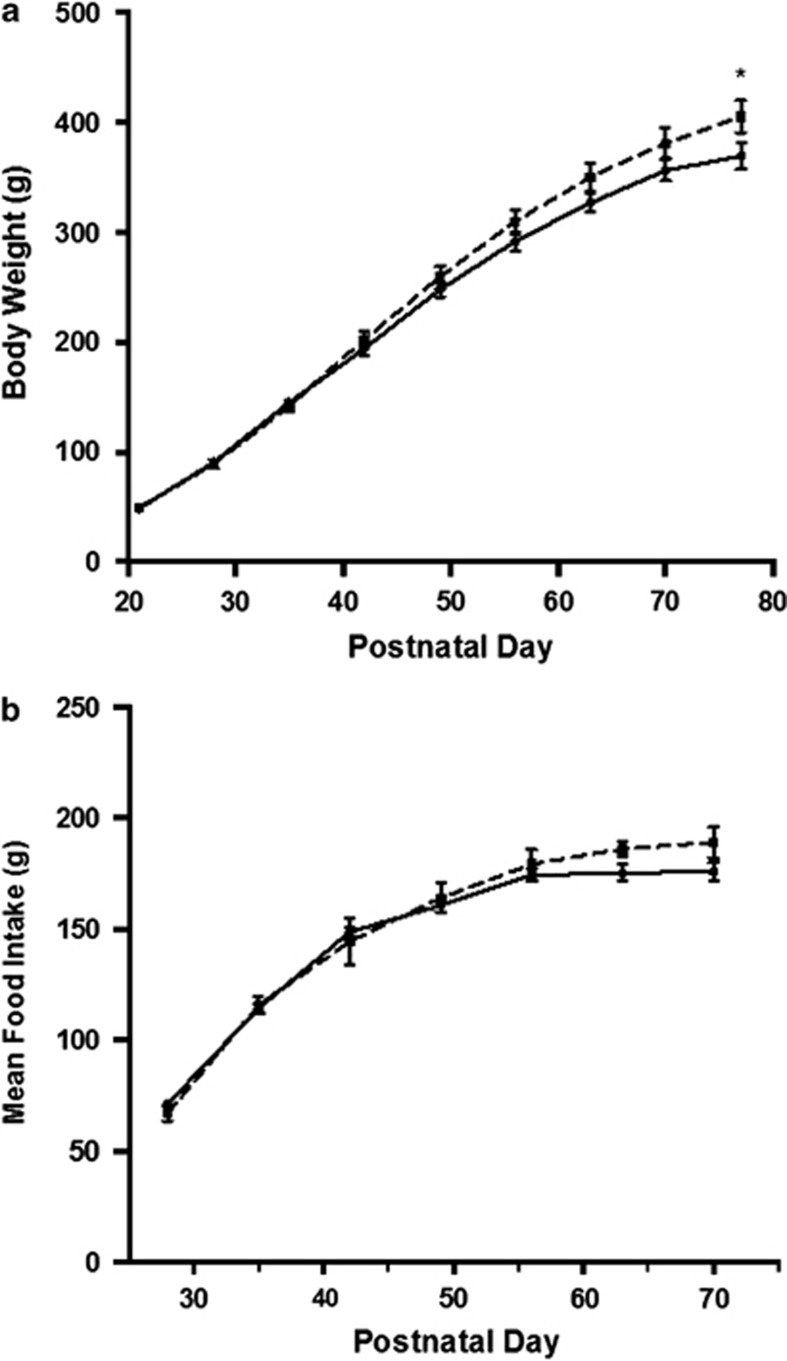
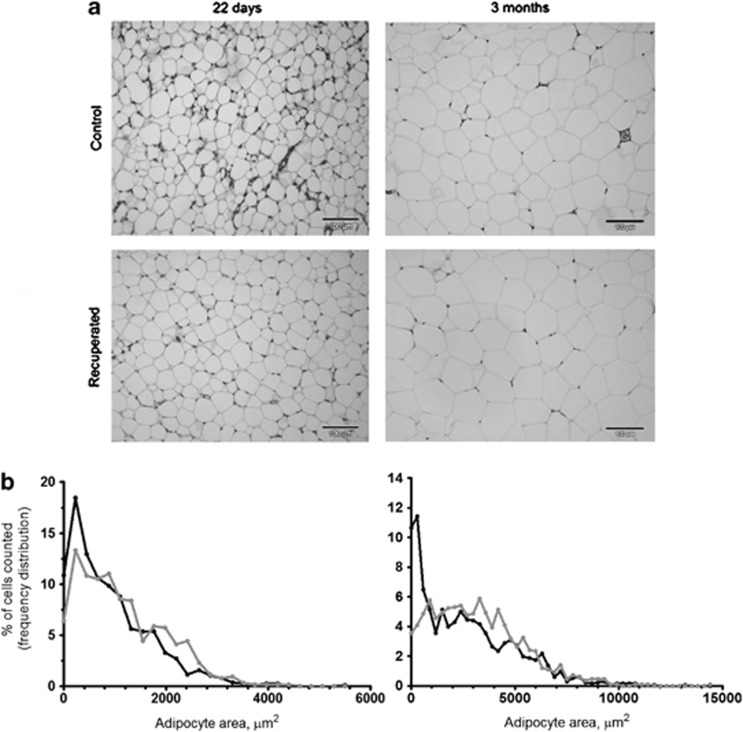
Offspring of dams fed a low-protein (8%) diet during pregnancy were suckled by control (20%)-fed dams to drive catch-up growth. This 'recuperated' group was compared with offspring of dams fed a 20% protein diet during pregnancy and lactation (control group). Epididymal adipose tissue from 22-day and 3-month-old control and recuperated male rats was studied using histological analysis. Expression and phosphorylation of insulin-signalling proteins and gene expression were assessed by western blotting and reverse-transcriptase PCR, respectively.
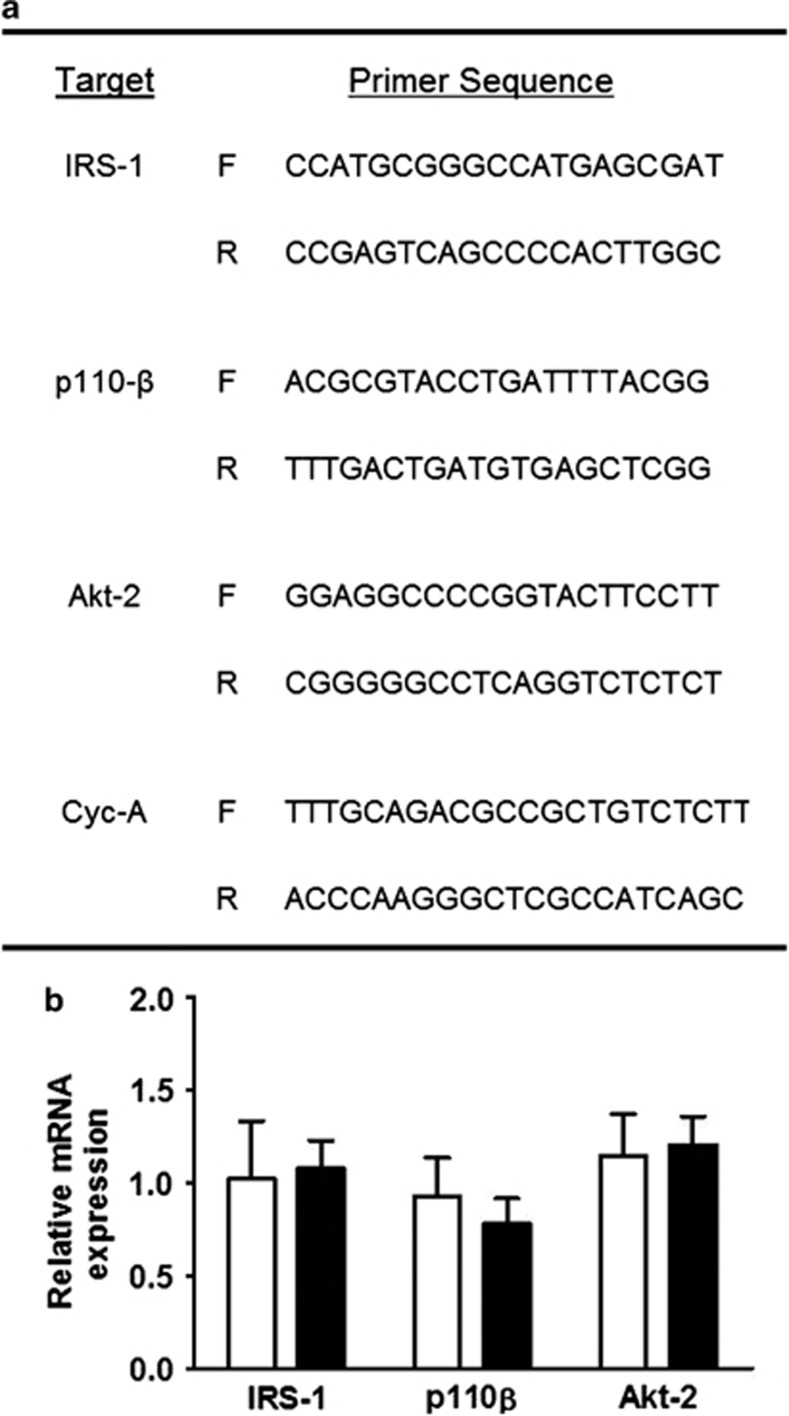
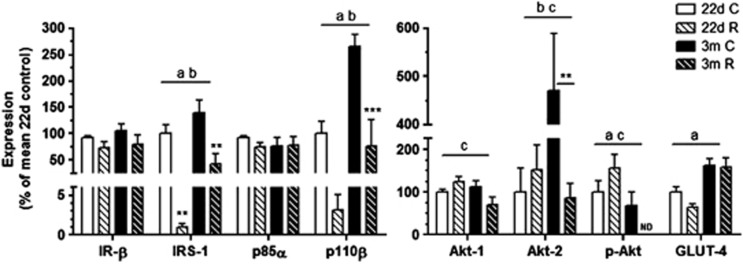
Recuperated offspring at both ages had larger adipocytes (P<0.001). Fasting serum glucose, insulin and leptin levels were comparable between groups but increased with age. Recuperated offspring had reduced expression of IRS-1 (P<0.01) and PI3K p110β (P<0.001) in adipose tissue. In adult recuperated rats, Akt phosphorylation (P<0.01) and protein levels of Akt-2 (P<0.01) were also reduced. Messenger RNA expression levels of these proteins were not different, indicating a post-transcriptional effect.
Early-life nutrition programmes alterations in adipocyte cell size and impairs the protein expression of several insulin-signalling proteins through post-transcriptional mechanisms. These indices may represent early markers of insulin resistance and metabolic disease risk.
人们普遍认为,生命早期的营养环境对代谢性疾病的易感性起着重要作用。特别是宫内生长受限,随后是加速的出生后生长,与肥胖、2 型糖尿病和代谢综合征的其他特征风险增加有关。这些观察结果的机制尚未完全阐明。
本研究使用一种成熟的母体蛋白限制啮齿动物模型,旨在确定生命早期暴露于不匹配的营养是否会影响脂肪组织的结构和功能,并影响胰岛素信号通路的关键成分的表达。
怀孕期喂食低蛋白(8%)饮食的母鼠的后代由喂食 20%蛋白饮食的母鼠哺乳,以促进追赶生长。将“恢复组”与孕期和哺乳期喂食 20%蛋白饮食的母鼠的后代(对照组)进行比较。使用组织学分析研究 22 天和 3 个月龄的对照组和恢复组雄性大鼠的附睾脂肪组织。通过 Western blot 和逆转录聚合酶链反应分别评估胰岛素信号蛋白的表达和磷酸化以及基因表达。
两组中,恢复组的幼鼠在 22 天和 3 个月时的脂肪细胞均较大(P<0.001)。空腹血清葡萄糖、胰岛素和瘦素水平在各组之间无差异,但随年龄增长而增加。恢复组脂肪组织中 IRS-1(P<0.01)和 PI3K p110β(P<0.001)的表达减少。在成年恢复组大鼠中,Akt 磷酸化(P<0.01)和 Akt-2 蛋白水平(P<0.01)也降低。这些蛋白的信使 RNA 表达水平无差异,表明存在转录后效应。
生命早期的营养会改变脂肪细胞大小,并通过转录后机制损害几种胰岛素信号蛋白的蛋白质表达。这些指标可能代表胰岛素抵抗和代谢性疾病风险的早期标志物。