Division of Neurosurgery, Toronto Western Hospital, University of Toronto, 399 Bathurst Street, 4W-439, Toronto, ON, M5T 2S8, Canada.
Acta Neurochir (Wien). 2013 Mar;155(3):421-7. doi: 10.1007/s00701-012-1577-9. Epub 2012 Dec 13.
Bone invasive skull base meningiomas are a subset of meningiomas that present a unique clinical challenge due to brain and neural structure involvement and limitations in complete surgical resection, resulting in higher recurrence and need for repeat surgery. To date, the pathogenesis of meningioma bone invasion has not been investigated. We investigated immunoexpression of proteins implicated in bone invasion in other tumor types to establish their involvement in meningioma bone invasion.
Retrospective review of our database identified bone invasive meningiomas operated on at our institution over the past 20 years. Using high-throughput tissue microarray (TMA), we established the expression profile of osteopontin (OPN), matrix metalloproteinase-2 (MMP2), and integrin beta-1 (ITGB1). Differential expression in tumor cell and vasculature was evaluated and comparisons were made between meningioma anatomical locations.
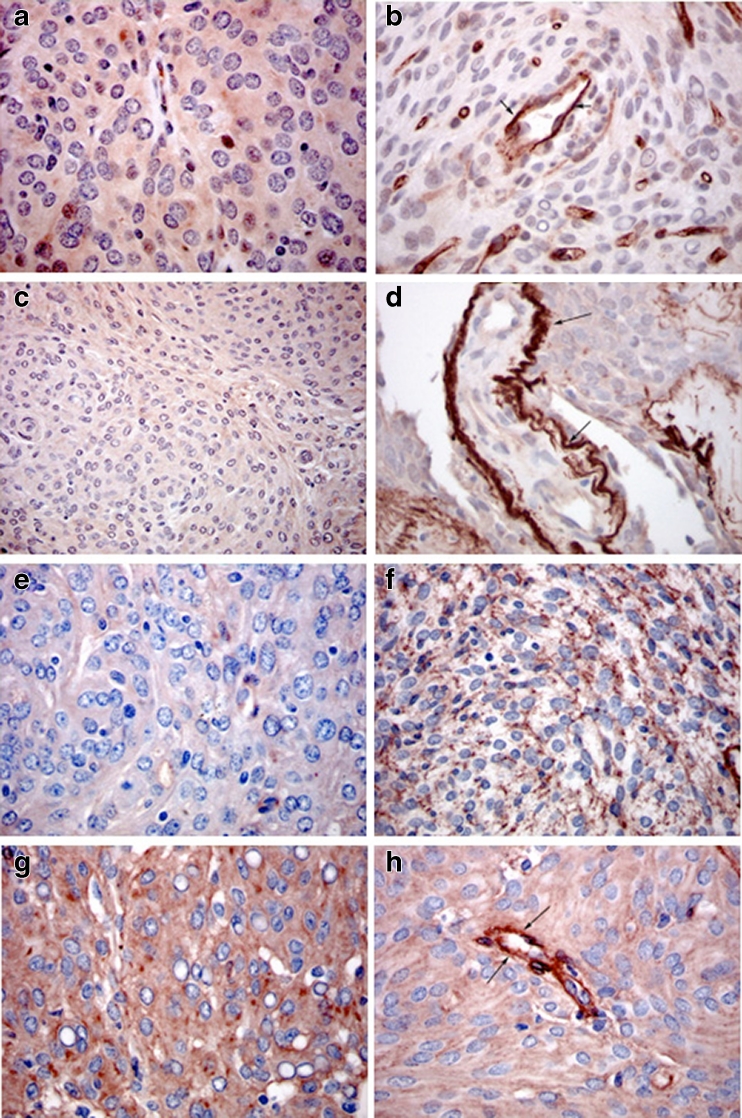
MMP2, OPN, and ITGB1 immunoreactivity was cytoplasmic in tumor and/or endothelial cells. Noninvasive transbasal meningiomas exhibited higher vascular endothelial cell MMP2 immunoexpression compared to invasive meningiomas. We found higher expression levels of OPN and ITGB1 in bone invasive transbasal compared to noninvasive meningiomas. Strong vascular ITGB1 expression extending from the endothelium through the media and into the adventitia was found in a subset of meningiomas.
We have demonstrated that key proteins are differentially expressed in bone invasive meningiomas and that the anatomical location of bone invasion is a key determinant of expression pattern of MMP1, OPN, and ITGB1. This data provides initial insights into the pathophysiology of bone invasion in meningiomas and identifies factors that can be pursued as potential therapeutic targets.
骨侵袭性颅底脑膜瘤是脑膜瘤的一个亚组,由于涉及脑和神经结构以及完全手术切除的局限性,导致复发率较高且需要重复手术,因此呈现出独特的临床挑战。迄今为止,脑膜瘤骨侵袭的发病机制尚未得到研究。我们研究了其他肿瘤类型中与骨侵袭相关的蛋白的免疫表达,以确定它们在脑膜瘤骨侵袭中的作用。
通过对过去 20 年在我院接受手术的骨侵袭性脑膜瘤患者的数据库进行回顾性分析,我们使用高通量组织微阵列(TMA)建立了骨桥蛋白(OPN)、基质金属蛋白酶-2(MMP2)和整合素β-1(ITGB1)的表达谱。评估了肿瘤细胞和血管中差异表达情况,并比较了脑膜瘤的解剖位置。
MMP2、OPN 和 ITGB1 免疫反应性在肿瘤细胞和/或内皮细胞中呈细胞质。与侵袭性脑膜瘤相比,非侵袭性颅底脑膜瘤的血管内皮细胞 MMP2 免疫表达更高。我们发现骨侵袭性颅底脑膜瘤中 OPN 和 ITGB1 的表达水平高于非侵袭性脑膜瘤。在一组脑膜瘤中,发现了从内皮延伸穿过中膜并进入外膜的强烈血管 ITGB1 表达。
我们已经证明,关键蛋白在骨侵袭性脑膜瘤中存在差异表达,并且骨侵袭的解剖位置是 MMP1、OPN 和 ITGB1 表达模式的关键决定因素。这些数据为脑膜瘤骨侵袭的病理生理学提供了初步见解,并确定了可以作为潜在治疗靶点的因素。