Experimental & Clinical Pharmacology, College of Pharmacy, Epilepsy Research and Education Program, University of Minnesota, Minneapolis, MN 55455, USA.
J Pharm Biomed Anal. 2013 Feb 23;74:291-7. doi: 10.1016/j.jpba.2012.10.033. Epub 2012 Nov 15.
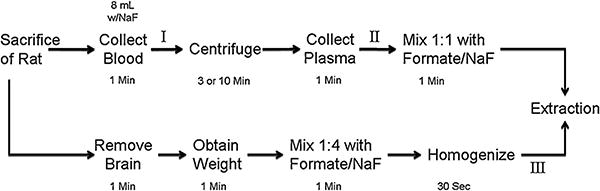
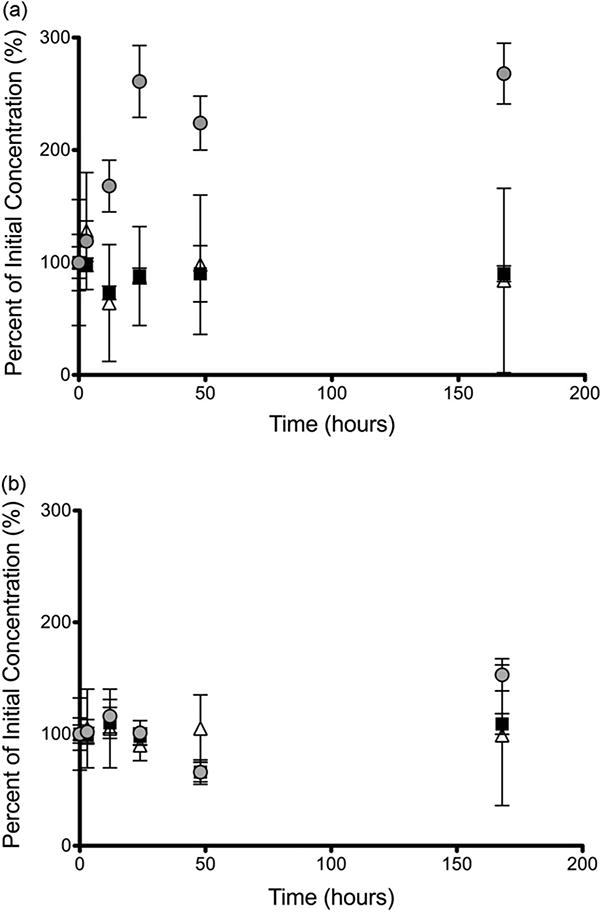
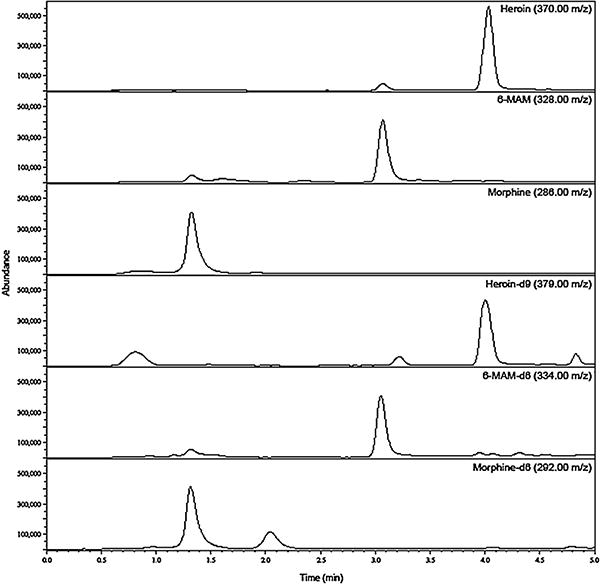
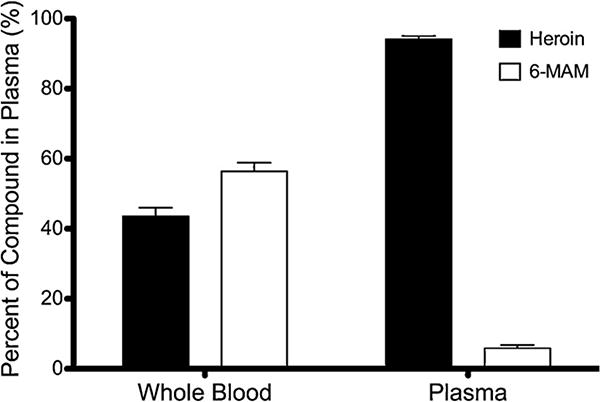
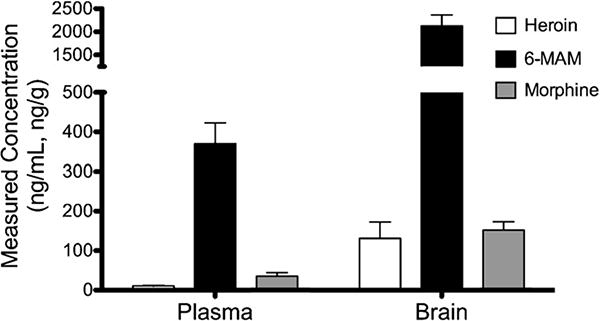
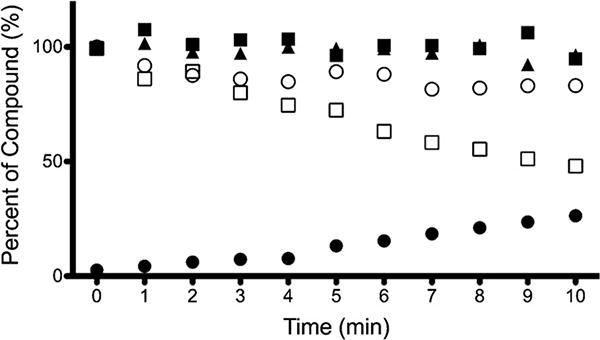
Degradation of heroin to 6-monoacetylmorphine (6-MAM) and then morphine happens rapidly in vivo and in vitro. The rates of heroin and 6-MAM degradation depend on the type of biological samples, and the duration and conditions of storage. In order to optimize conditions for measuring heroin and its metabolites in samples collected for pharmacokinetic studies in rats, we investigated the time course of degradation of heroin, 6-MAM, and morphine in four biological matrices: rat blood, rat brain homogenate, bovine serum, and human plasma under various conditions. Analyte concentrations were measured by LC-MS. The goal was to identify conditions that allow maximum flexibility in scheduling sample collection and analysis, as well as gain more information on the stability of heroin in blood and tissue samples. A solid-phase extraction method with ice-cold solvents, sodium fluoride (NaF) and a low pH (3.0) maintained sample stability. Quality controls were within 94.0-105% of the target value. Variability was 4.0-8.9% for all analytes within the range of 5-200 ng/mL for heroin, 5-1000 ng/mL for 6-MAM, and 10-200 ng/mL for morphine. Heroin degradation to 6-MAM was faster in rat whole blood than in plasma, and faster in rat plasma than in rat brain homogenate. Maintaining NaF at 4 mg/mL throughout processing enhanced stability; higher NaF concentrations added to whole blood caused hemolysis. Samples processed through solid phase extraction and stored as dried pellets at 80°C constituted the most stable environment for heroin, and was superior to the storing of samples in solution prior to or after extraction. Nevertheless, post-extraction heroin and 6-MAM levels declined by 6.7-8.3% over one week in rat plasma under these conditions, and by <1-4.7% in bovine serum or human plasma.
海洛因在体内和体外迅速降解为 6-单乙酰吗啡(6-MAM)和吗啡。海洛因和 6-MAM 的降解率取决于生物样本的类型,以及储存的时间和条件。为了优化用于测量大鼠药代动力学研究中采集的样本中海洛因及其代谢物的条件,我们研究了海洛因、6-MAM 和吗啡在四种生物基质中的降解时间过程:大鼠血液、大鼠脑匀浆、牛血清和人血浆,在不同条件下。通过 LC-MS 测量分析物浓度。目标是确定可以最大限度地灵活安排样品采集和分析的条件,并获得更多关于血液和组织样品中海洛因稳定性的信息。采用固相萃取法,用冰冷的溶剂、氟化钠(NaF)和低 pH 值(3.0)保持样品稳定。质量控制在目标值的 94.0-105%范围内。在海洛因 5-200ng/mL、6-MAM 5-1000ng/mL 和吗啡 10-200ng/mL 的范围内,所有分析物的变异性均为 4.0-8.9%。海洛因在大鼠全血中的降解速度快于血浆,在大鼠血浆中的降解速度快于大鼠脑匀浆。在整个处理过程中保持 NaF 浓度为 4mg/mL 可增强稳定性;向全血中添加更高浓度的 NaF 会导致溶血。通过固相萃取处理并在 80°C 下作为干燥颗粒储存的样品构成了海洛因最稳定的环境,优于提取前或提取后在溶液中储存样品。尽管如此,在这些条件下,大鼠血浆中海洛因和 6-MAM 的水平在一周内下降了 6.7-8.3%,而在牛血清或人血浆中下降了<1-4.7%。