Section of General Pathology, Department of Morphology, Surgery and Experimental Medicine, Interdisciplinary Center for the Study of Inflammation, Laboratory for Technologies of Advanced Therapies, University of Ferrara, 44121 Ferrara, Italy.
Curr Biol. 2013 Jan 7;23(1):58-63. doi: 10.1016/j.cub.2012.11.026. Epub 2012 Dec 13.
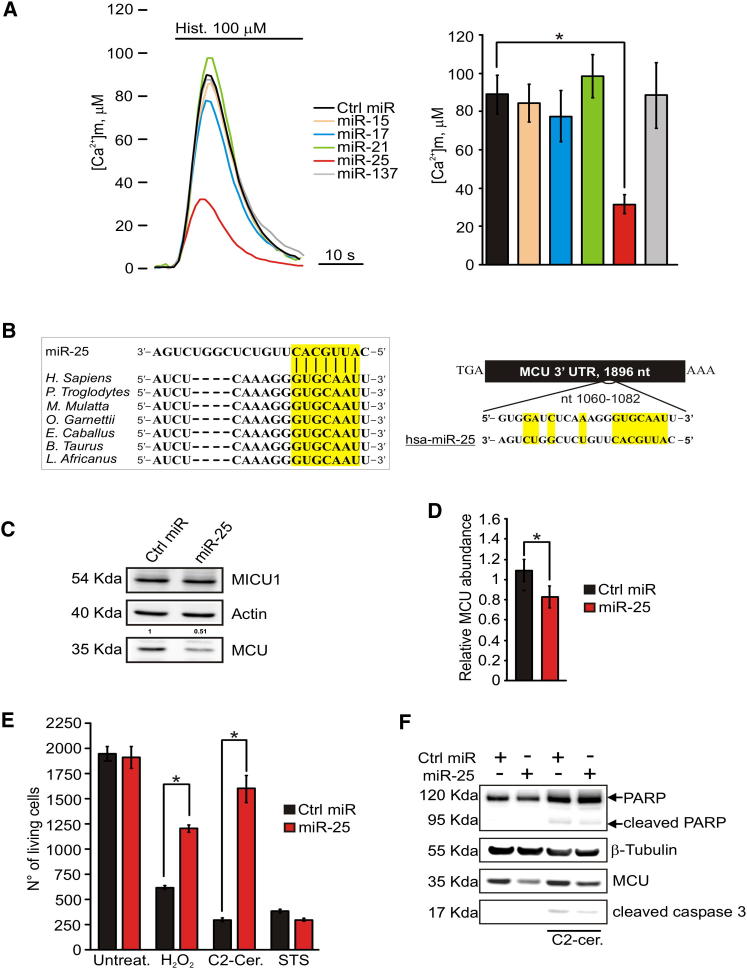
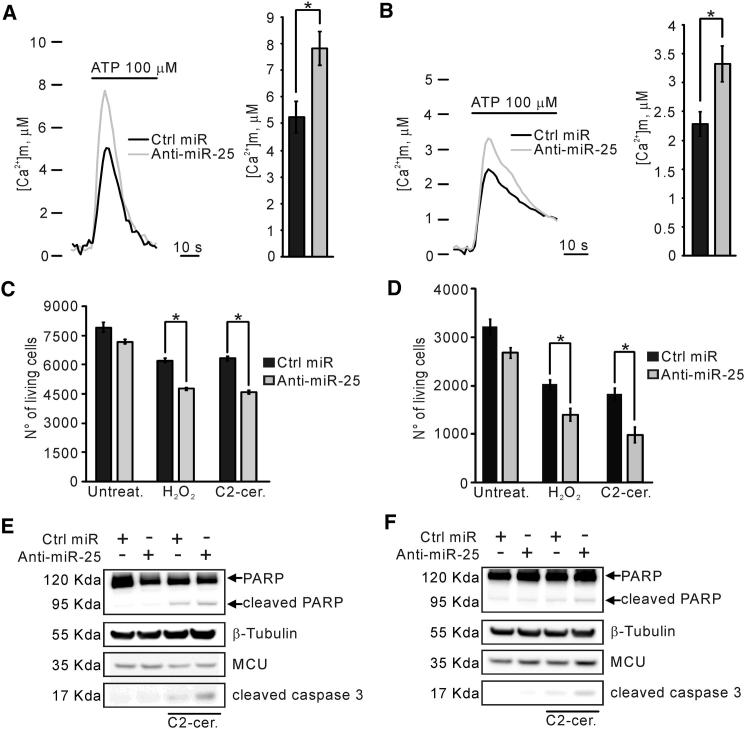
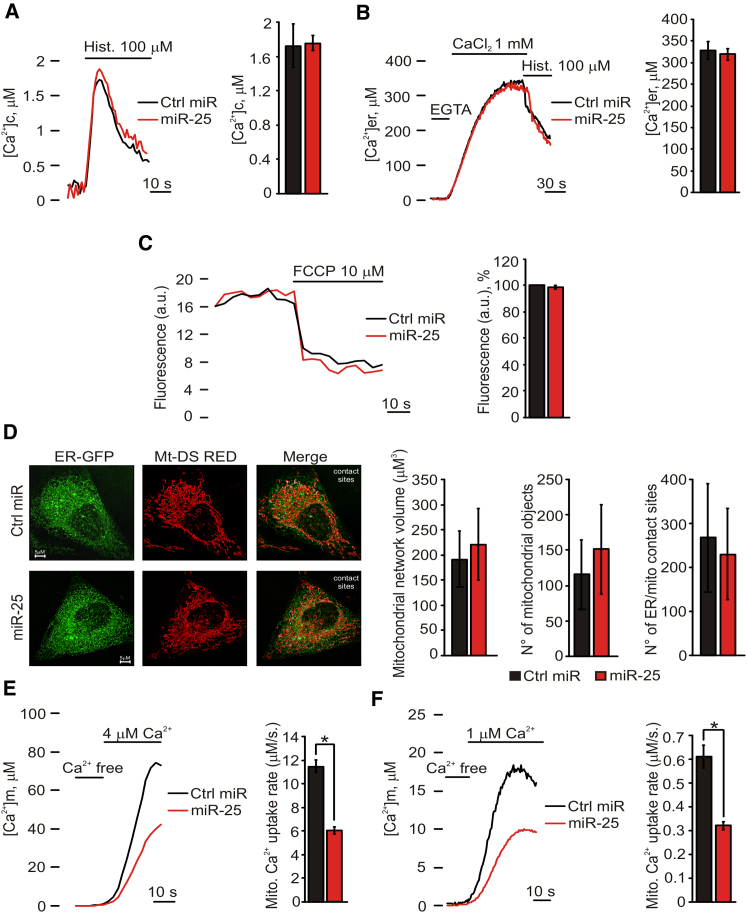
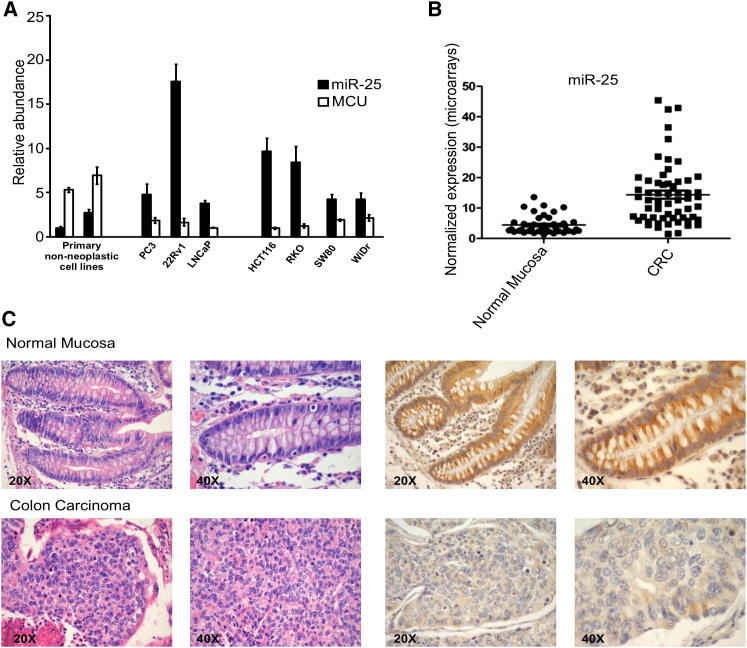
The recently discovered mitochondrial calcium uniporter (MCU) promotes Ca(2+) accumulation into the mitochondrial matrix. We identified in silico miR-25 as a cancer-related MCU-targeting microRNA family and demonstrate that its overexpression in HeLa cells drastically reduces MCU levels and mitochondrial Ca(2+) uptake, while leaving other mitochondrial parameters and cytosolic Ca(2+) signals unaffected. In human colon cancers and cancer-derived cells, miR-25 is overexpressed and MCU accordingly silenced. miR-25-dependent reduction of mitochondrial Ca(2+) uptake correlates with resistance to apoptotic challenges and can be reversed by anti-miR-25 overexpression. Overall, the data demonstrate that microRNA targeting of mitochondrial Ca(2+) signaling favors cancer cell survival, thus providing mechanistic insight into the role of mitochondria in tumorigenesis and identifying a novel therapeutic target in neoplasia.
最近发现的线粒体钙单向转运体(MCU)促进 Ca(2+)积累到线粒体基质中。我们通过计算机预测 miR-25 是一种与癌症相关的 MCU 靶向 microRNA 家族,并证明其在 HeLa 细胞中的过表达会显著降低 MCU 水平和线粒体 Ca(2+)摄取,而其他线粒体参数和胞质 Ca(2+)信号不受影响。在人类结肠癌和癌细胞中,miR-25 过表达,MCU 相应沉默。miR-25 依赖性减少线粒体 Ca(2+)摄取与抗凋亡挑战的抗性相关,并且可以通过抗 miR-25 过表达逆转。总的来说,这些数据表明靶向线粒体 Ca(2+)信号的 microRNA 有利于癌细胞的存活,从而为线粒体在肿瘤发生中的作用提供了机制上的见解,并确定了一种新的肿瘤治疗靶点。