FAVET-INBIOGEN, Faculty of Veterinary Sciences , University of Chile , Santa Rosa No 11.735 (PO 8820808), Santiago , Chile.
AoB Plants. 2012;2012:pls033. doi: 10.1093/aobpla/pls033. Epub 2012 Dec 18.
On the basis of morphological evidence, the species involved in South American Pacific coast harmful algal blooms (HABs) has been traditionally recognized as Alexandrium catenella (Dinophyceae). However, these observations have not been confirmed using evidence based on genomic sequence variability. Our principal objective was to accurately determine the species of Alexandrium involved in local HABs in order to implement a real-time polymerase chain reaction (PCR) assay for its rapid and easy detection on filter-feeding shellfish, such as mussels.
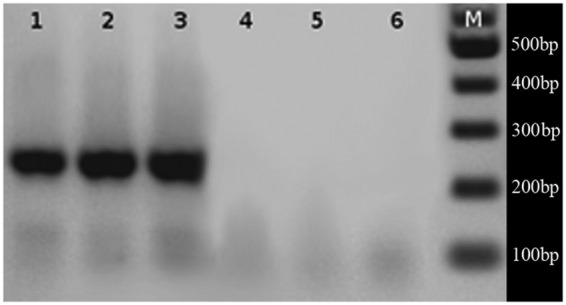
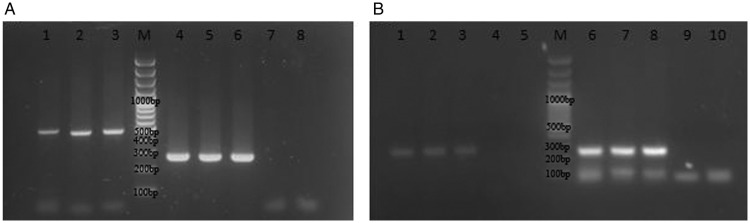
For species-specific determination, the intergenic spacer 1 (ITS1), 5.8S subunit, ITS2 and the hypervariable genomic regions D1-D5 of the large ribosomal subunit of local strains were sequenced and compared with two data sets of other Alexandrium sequences. Species-specific primers were used to amplify signature sequences within the genomic DNA of the studied species by conventional and real-time PCR.
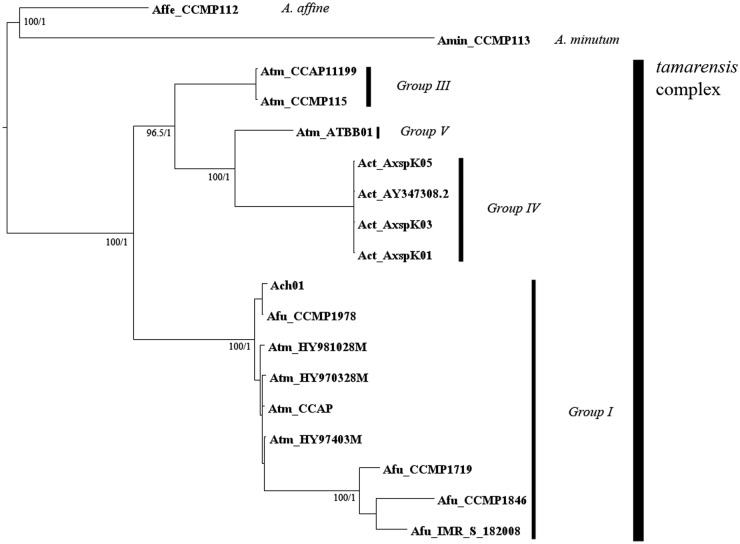
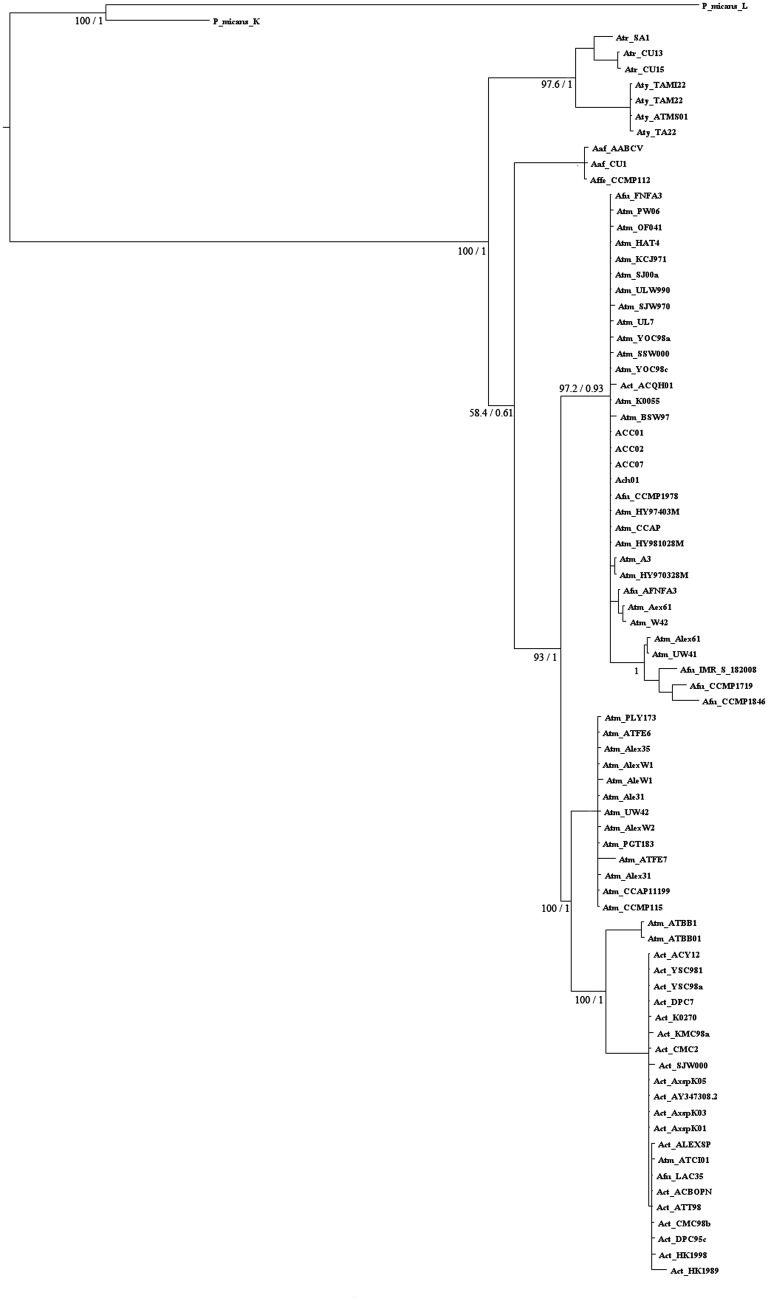
Phylogenetic analysis determined that the Chilean strain falls into Group I of the tamarensis complex. Our results support the allocation of the Chilean Alexandrium species as a toxic Alexandrium tamarense rather than A. catenella, as currently defined. Once local species were determined to belong to Group I of the tamarensis complex, a highly sensitive and accurate real-time PCR procedure was developed to detect dinoflagellate presence in Mytilus spp. (Bivalvia) samples after being fed (challenged) in vitro with the Chilean Alexandrium strain. The results show that real-time PCR is useful to detect Alexandrium intake in filter-feeding molluscs.
It has been shown that the classification of local Alexandrium using morphological evidence is not very accurate. Molecular methods enabled the HAB dinoflagellate species of the Chilean coast to be assigned as A. tamarense rather than A. catenella. Real-time PCR analysis based on A. tamarense primers allowed the detection of dinoflagellate DNA in Mytilus spp. samples exposed to this alga. Through the specific assignment of dinoflagellate species involved in HABs, more reliable preventive policies can be implemented.
基于形态学证据,传统上认为参与南太平洋沿海有害藻华(HAB)的物种是亚历山大藻(Dinophyceae)。然而,这些观察结果尚未通过基于基因组序列变异性的证据得到证实。我们的主要目标是准确确定参与当地 HAB 的亚历山大藻物种,以便在滤食性贝类(如贻贝)上快速、轻松地检测其实时聚合酶链反应(PCR)检测。
为了进行物种特异性鉴定,对当地菌株的基因间 spacer 1(ITS1)、5.8S 亚基、ITS2 和大亚基基因组 DNA 的高变区 D1-D5 进行测序,并与其他两个亚历山大藻序列数据集进行比较。使用物种特异性引物通过常规和实时 PCR 扩增研究物种基因组 DNA 中的特征序列。
系统发育分析确定智利菌株属于 tamarensis 复合体的 I 组。我们的结果支持将智利亚历山大藻种分配为有毒的亚历山大藻 tamarense,而不是目前定义的 A. catenella。一旦确定当地物种属于 tamarensis 复合体的 I 组,就开发了一种高度敏感和准确的实时 PCR 程序,用于检测在体外用智利亚历山大藻菌株喂养(挑战)后贻贝属(双壳类)样品中鞭毛藻类的存在。结果表明,实时 PCR 可用于检测滤食性软体动物中亚历山大藻的摄入量。
研究表明,使用形态学证据对当地亚历山大藻进行分类并不十分准确。分子方法使智利沿海 HAB 鞭毛藻类物种能够被归类为 A. tamarense,而不是 A. catenella。基于 A. tamarense 引物的实时 PCR 分析允许检测暴露于该藻类的贻贝属样品中的鞭毛藻类 DNA。通过对参与 HAB 的鞭毛藻类物种的特异性鉴定,可以实施更可靠的预防政策。