Center for Neural Science, New York University, New York, New York 10003, USA.
Nature. 2013 Jan 17;493(7432):411-5. doi: 10.1038/nature11782. Epub 2012 Dec 23.
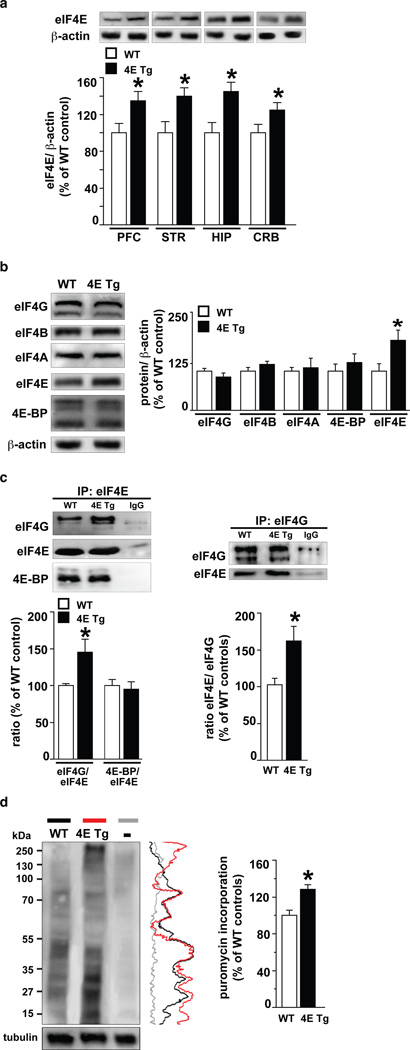
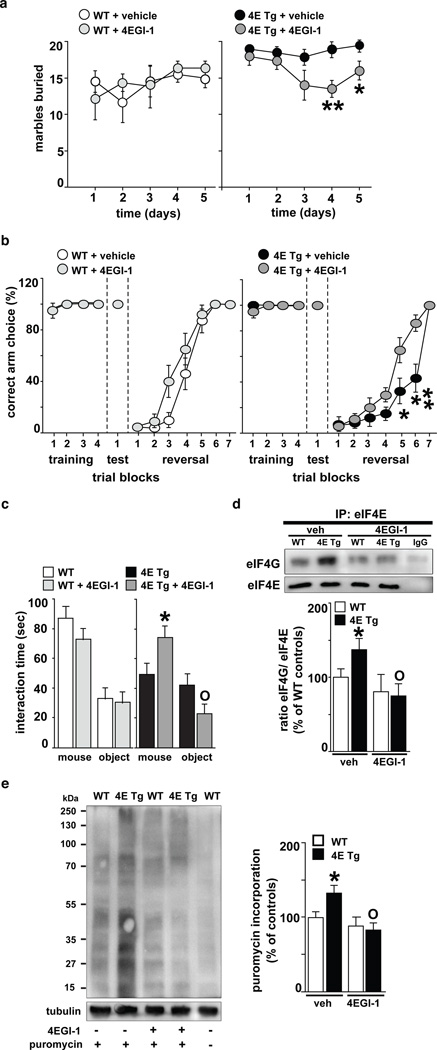
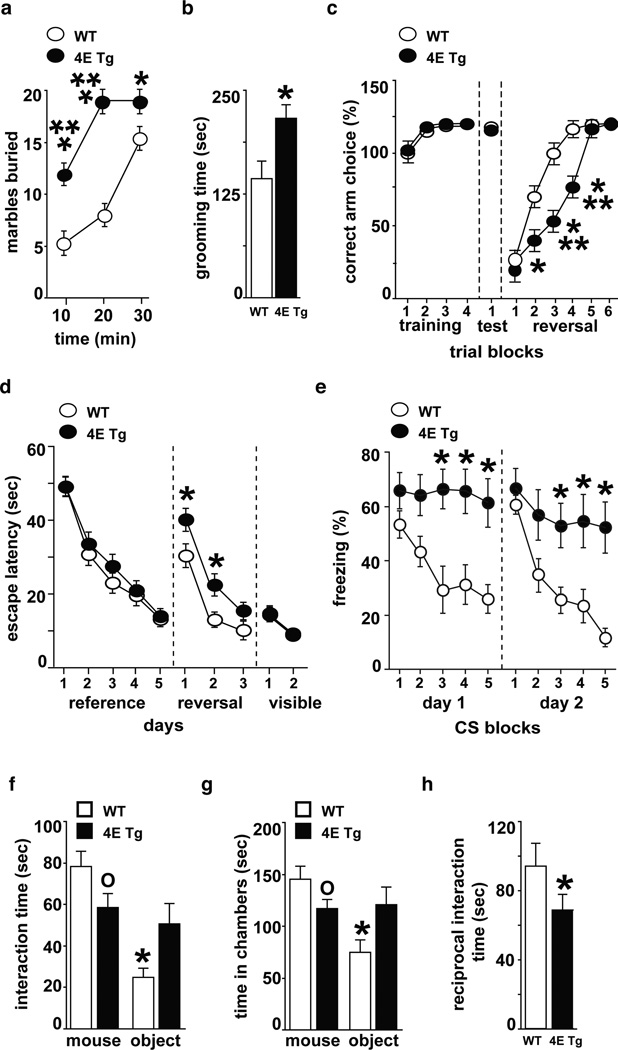
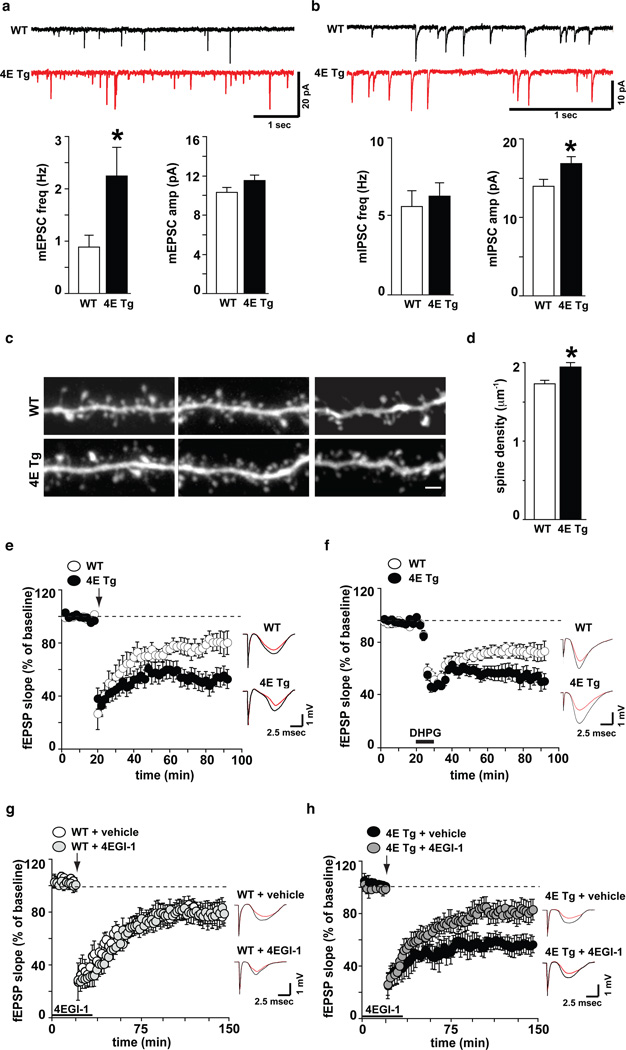
Autism spectrum disorders (ASDs) are an early onset, heterogeneous group of heritable neuropsychiatric disorders with symptoms that include deficits in social interaction skills, impaired communication abilities, and ritualistic-like repetitive behaviours. One of the hypotheses for a common molecular mechanism underlying ASDs is altered translational control resulting in exaggerated protein synthesis. Genetic variants in chromosome 4q, which contains the EIF4E locus, have been described in patients with autism. Importantly, a rare single nucleotide polymorphism has been identified in autism that is associated with increased promoter activity in the EIF4E gene. Here we show that genetically increasing the levels of eukaryotic translation initiation factor 4E (eIF4E) in mice results in exaggerated cap-dependent translation and aberrant behaviours reminiscent of autism, including repetitive and perseverative behaviours and social interaction deficits. Moreover, these autistic-like behaviours are accompanied by synaptic pathophysiology in the medial prefrontal cortex, striatum and hippocampus. The autistic-like behaviours displayed by the eIF4E-transgenic mice are corrected by intracerebroventricular infusions of the cap-dependent translation inhibitor 4EGI-1. Our findings demonstrate a causal relationship between exaggerated cap-dependent translation, synaptic dysfunction and aberrant behaviours associated with autism.
自闭症谱系障碍(ASD)是一种早期发病、异质性的遗传性神经精神疾病,其症状包括社交互动技能缺陷、沟通能力受损以及仪式性重复行为。ASD 潜在共同分子机制的一个假设是翻译控制的改变导致蛋白质合成过度。染色体 4q 包含 EIF4E 基因座,其遗传变异已在自闭症患者中被描述。重要的是,在自闭症中发现了一种罕见的单核苷酸多态性,与 EIF4E 基因启动子活性增加有关。在这里,我们表明在小鼠中遗传增加真核翻译起始因子 4E (eIF4E) 的水平会导致帽依赖性翻译过度和类似于自闭症的异常行为,包括重复和固执行为以及社交互动缺陷。此外,这些自闭症样行为伴随着内侧前额叶皮层、纹状体和海马体的突触病理生理学改变。eIF4E 转基因小鼠表现出的自闭症样行为可通过脑室内注射帽依赖性翻译抑制剂 4EGI-1 得到纠正。我们的发现表明,帽依赖性翻译过度、突触功能障碍和与自闭症相关的异常行为之间存在因果关系。