Center for Neural Science, New York University, New York, NY 10003, USA.
Neuron. 2010 Apr 15;66(1):101-13. doi: 10.1016/j.neuron.2010.03.012.
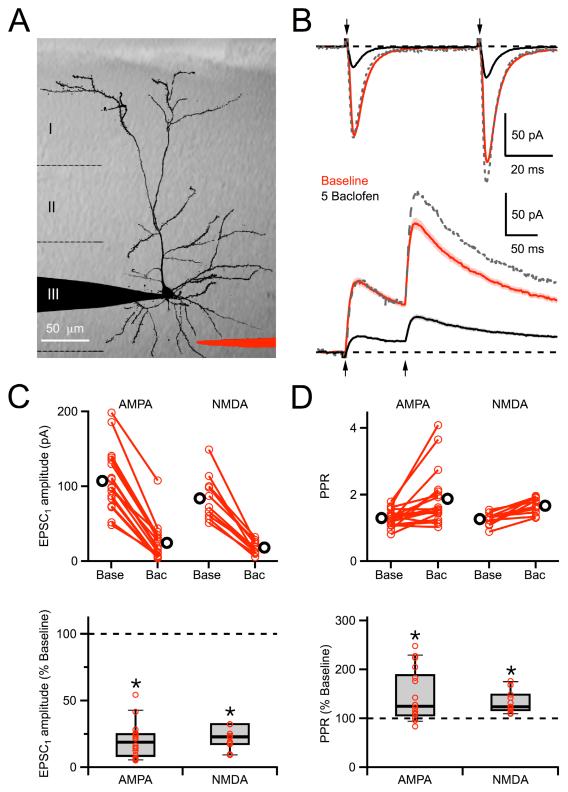
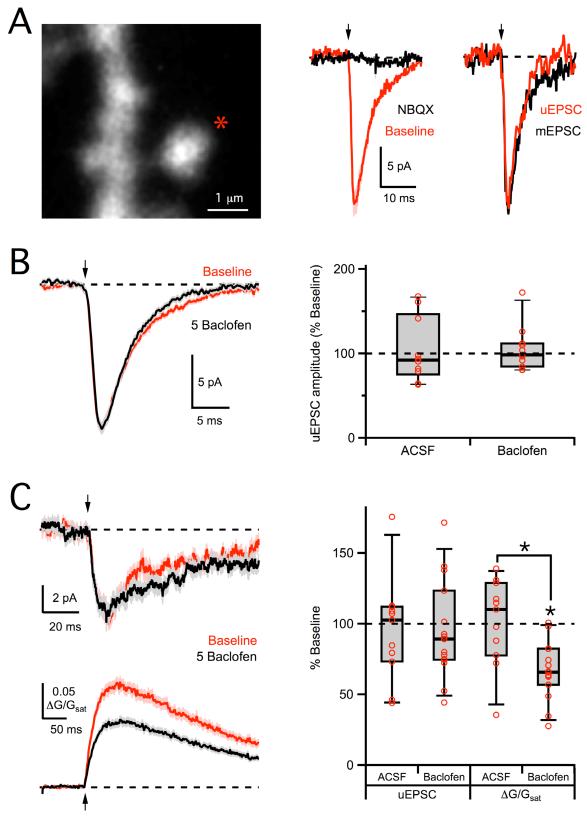
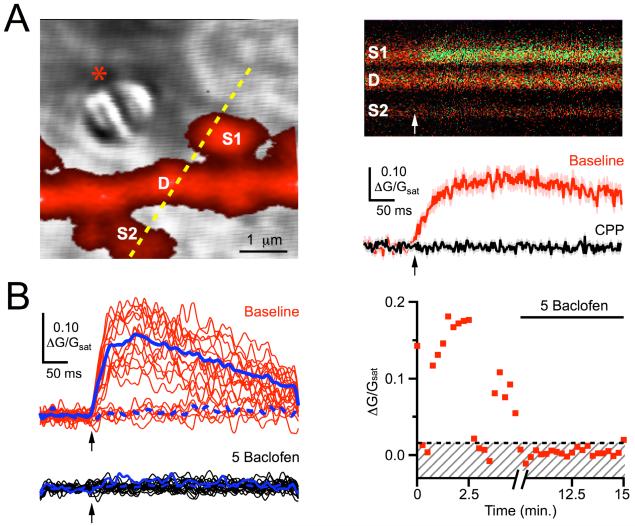
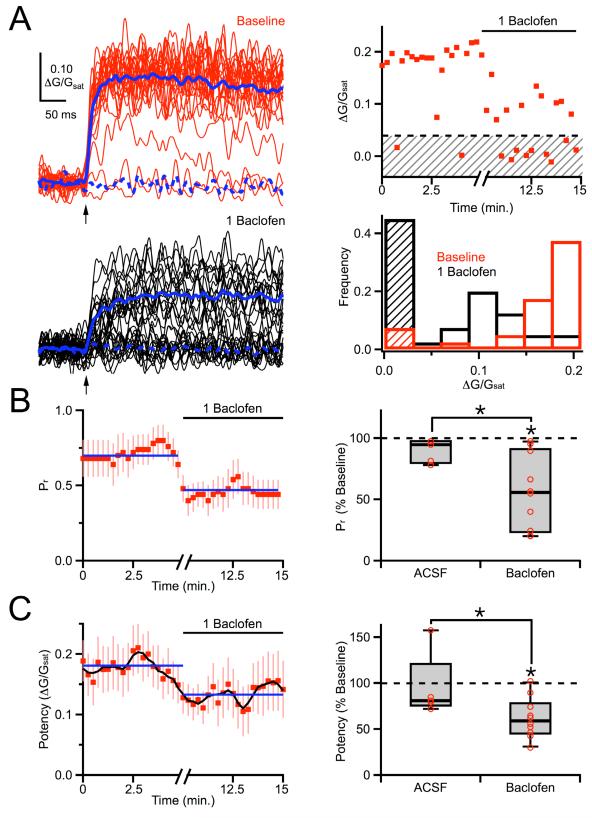
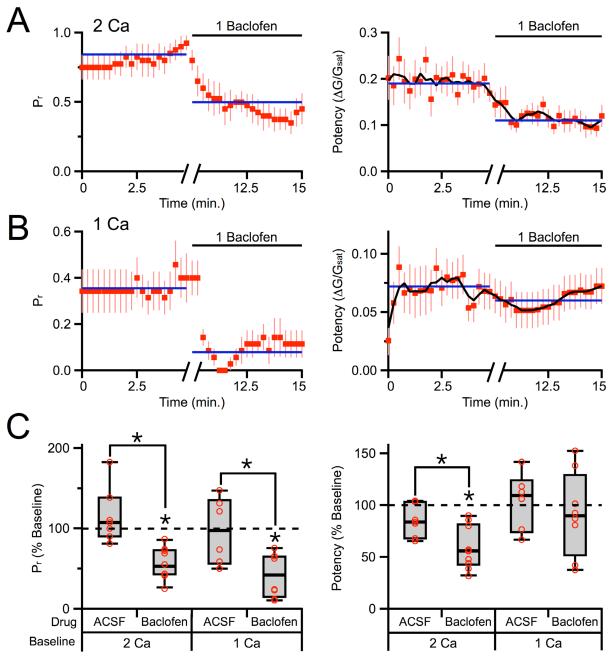
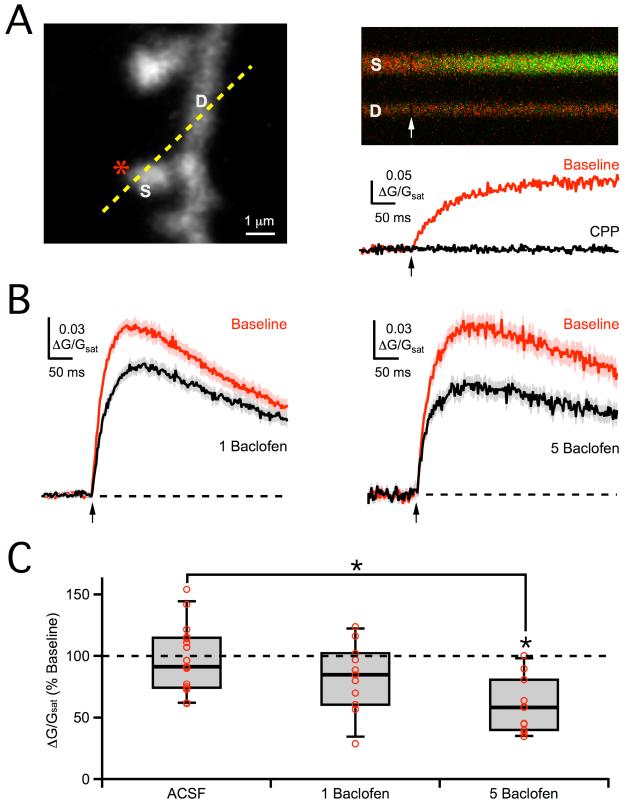
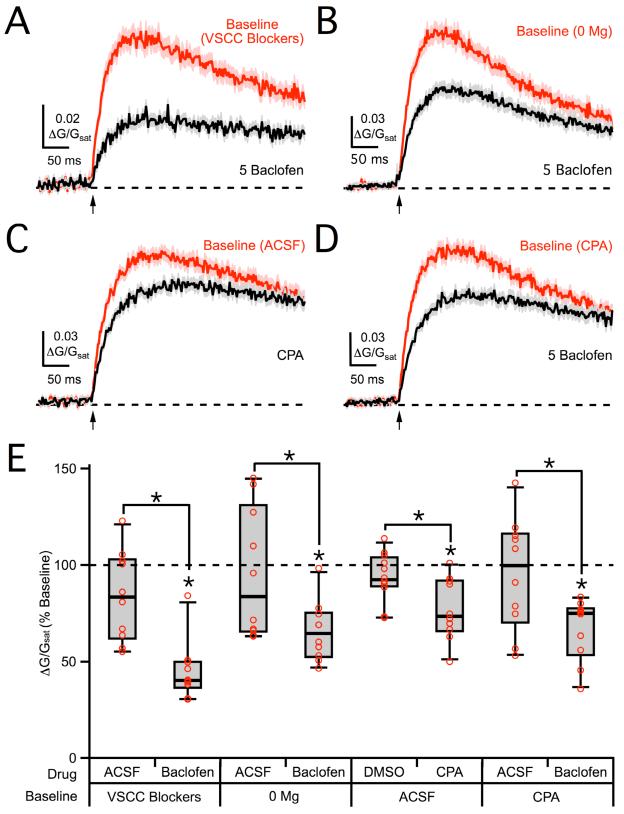
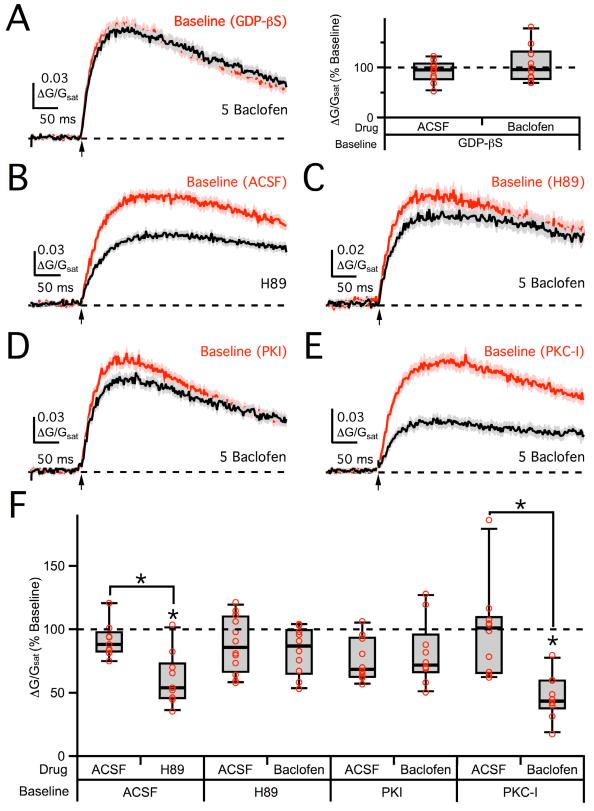
Metabotropic GABA(B) receptors play a fundamental role in modulating the excitability of neurons and circuits throughout the brain. These receptors influence synaptic transmission by inhibiting presynaptic release or activating postsynaptic potassium channels. However, their ability to directly influence different types of postsynaptic glutamate receptors remains unresolved. Here we examine GABA(B) receptor modulation in layer 2/3 pyramidal neurons from the mouse prefrontal cortex. We use two-photon laser-scanning microscopy to study synaptic modulation at individual dendritic spines. Using two-photon optical quantal analysis, we first demonstrate robust presynaptic modulation of multivesicular release at single synapses. Using two-photon glutamate uncaging, we then reveal that GABA(B) receptors strongly inhibit NMDA receptor calcium signals. This postsynaptic modulation occurs via the PKA pathway and does not affect synaptic currents mediated by AMPA or NMDA receptors. This form of GABA(B) receptor modulation has widespread implications for the control of calcium-dependent neuronal function.
代谢型 GABA(B) 受体在调节大脑中神经元和回路的兴奋性方面发挥着基本作用。这些受体通过抑制突触前释放或激活突触后钾通道来影响突触传递。然而,它们直接影响不同类型的突触后谷氨酸受体的能力仍未得到解决。在这里,我们检查了来自小鼠前额叶皮层的第 2/3 层锥体神经元中的 GABA(B) 受体调节。我们使用双光子激光扫描显微镜研究单个树突棘的突触调制。使用双光子光量子分析,我们首先证明了在单个突触上多泡释放的强大的突触前调制。然后,我们使用双光子谷氨酸光解揭示了 GABA(B) 受体强烈抑制 NMDA 受体钙信号。这种突触后调制通过 PKA 途径发生,并且不影响由 AMPA 或 NMDA 受体介导的突触电流。这种形式的 GABA(B) 受体调节对钙依赖性神经元功能的控制具有广泛的意义。