Department of Biological Sciences, University of Wisconsin-Milwaukee, Milwaukee, WI, USA.
PLoS One. 2012;7(12):e52114. doi: 10.1371/journal.pone.0052114. Epub 2012 Dec 21.
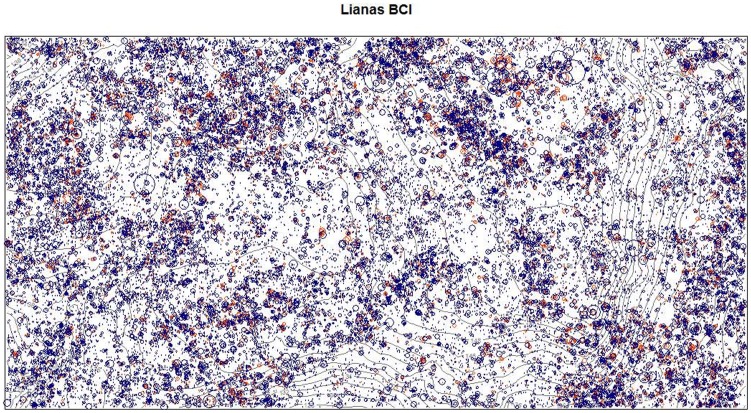
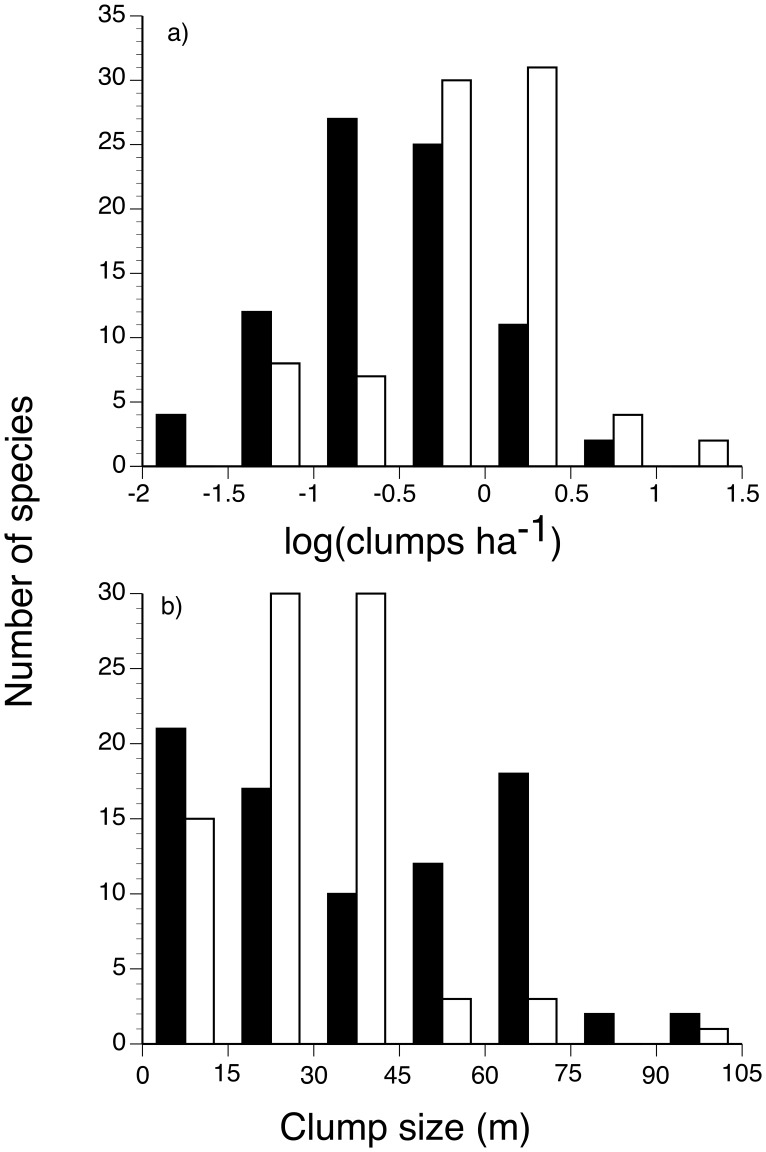
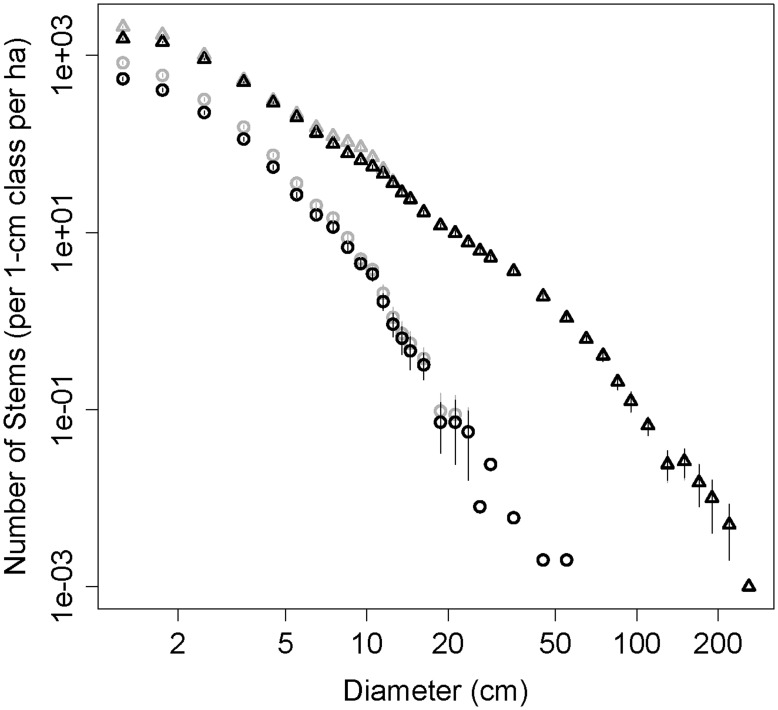
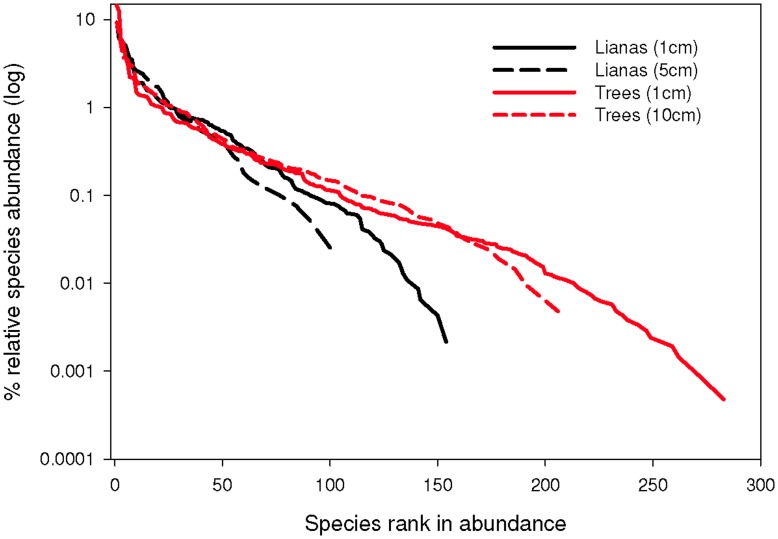
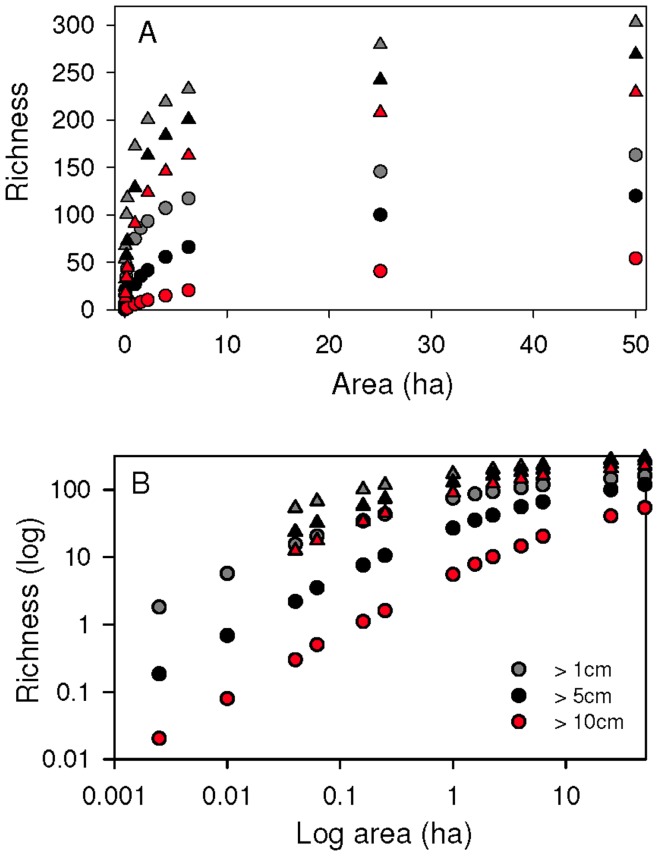
Lianas are a key component of tropical forests; however, most surveys are too small to accurately quantify liana community composition, diversity, abundance, and spatial distribution - critical components for measuring the contribution of lianas to forest processes. In 2007, we tagged, mapped, measured the diameter, and identified all lianas ≥1 cm rooted in a 50-ha plot on Barro Colorado Island, Panama (BCI). We calculated liana density, basal area, and species richness for both independently rooted lianas and all rooted liana stems (genets plus clones). We compared spatial aggregation patterns of liana and tree species, and among liana species that varied in the amount of clonal reproduction. We also tested whether liana and tree densities have increased on BCI compared to surveys conducted 30-years earlier. This study represents the most comprehensive spatially contiguous sampling of lianas ever conducted and, over the 50 ha area, we found 67,447 rooted liana stems comprising 162 species. Rooted lianas composed nearly 25% of the woody stems (trees and lianas), 35% of woody species richness, and 3% of woody basal area. Lianas were spatially aggregated within the 50-ha plot and the liana species with the highest proportion of clonal stems more spatially aggregated than the least clonal species, possibly indicating clonal stem recruitment following canopy disturbance. Over the past 30 years, liana density increased by 75% for stems ≥1 cm diameter and nearly 140% for stems ≥5 cm diameter, while tree density on BCI decreased 11.5%; a finding consistent with other neotropical forests. Our data confirm that lianas contribute substantially to tropical forest stem density and diversity, they have highly clumped distributions that appear to be driven by clonal stem recruitment into treefall gaps, and they are increasing relative to trees, thus indicating that lianas will play a greater role in the future dynamics of BCI and other neotropical forests.
藤本植物是热带森林的重要组成部分;然而,大多数调查的范围太小,无法准确量化藤本植物群落的组成、多样性、丰度和空间分布——这些都是衡量藤本植物对森林过程贡献的关键因素。2007 年,我们在巴拿马的巴罗科罗拉多岛(BCI)的一个 50 公顷的地块上标记、绘制地图、测量直径并鉴定所有大于 1 厘米扎根的藤本植物。我们计算了独立生根的藤本植物和所有生根的藤本植物茎(克隆加上克隆)的密度、基部面积和物种丰富度。我们比较了藤本植物和树种的空间聚集模式,以及在克隆繁殖量不同的藤本植物物种之间的模式。我们还测试了与 30 年前进行的调查相比,BCI 上的藤本植物和树木密度是否增加。这项研究代表了有史以来最全面的空间连续藤本植物抽样调查,在 50 公顷的区域内,我们发现了 67447 根扎根的藤本植物茎,包括 162 个物种。扎根的藤本植物构成了木质茎(树木和藤本植物)的近 25%,木质物种丰富度的 35%,木质基部面积的 3%。藤本植物在 50 公顷的地块内空间聚集,具有最高比例克隆茎的藤本植物比最少克隆的物种更具空间聚集性,这可能表明在树冠干扰后克隆茎的补充。在过去的 30 年里,直径大于 1 厘米的藤本植物密度增加了 75%,直径大于 5 厘米的藤本植物密度增加了近 140%,而 BCI 上的树木密度下降了 11.5%;这一发现与其他新热带森林一致。我们的数据证实,藤本植物对热带森林的茎密度和多样性有很大的贡献,它们的分布高度聚集,这似乎是由克隆茎在树冠空隙中的补充所驱动的,而且它们相对于树木在增加,这表明藤本植物将在未来的巴罗科罗拉多岛和其他新热带森林的动态中发挥更大的作用。