Department of Plant Pathology and Crop Physiology, Louisiana State University Agricultural Center, Baton Rouge, Louisiana, USA.
PLoS One. 2012;7(12):e52150. doi: 10.1371/journal.pone.0052150. Epub 2012 Dec 20.
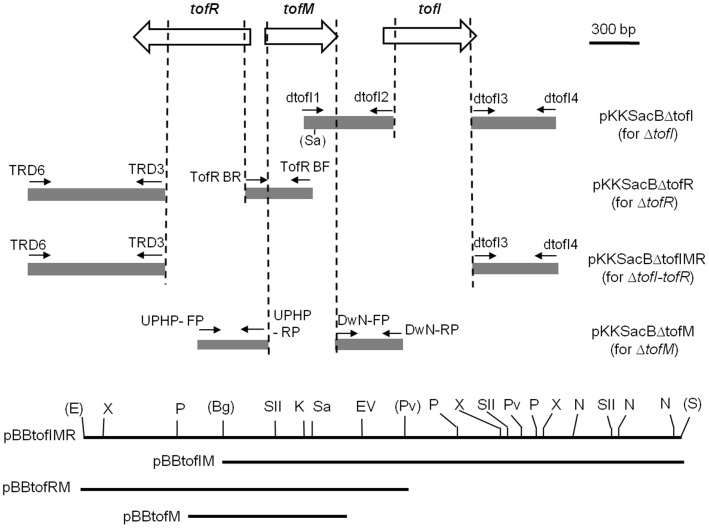
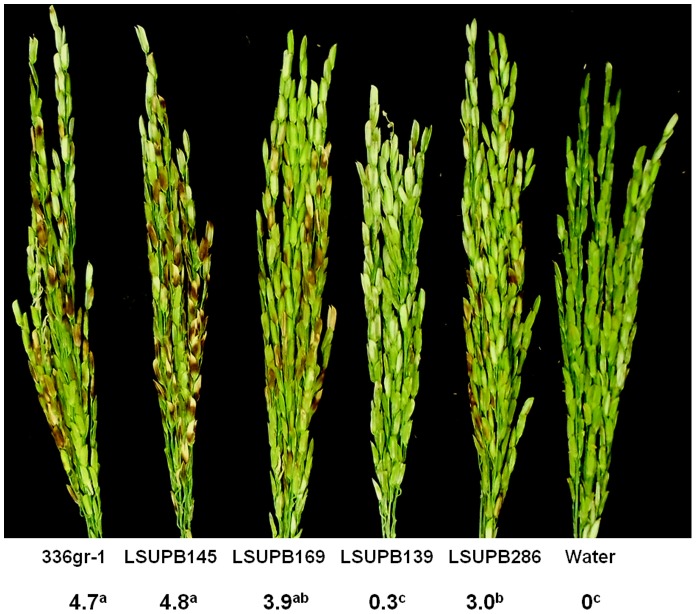
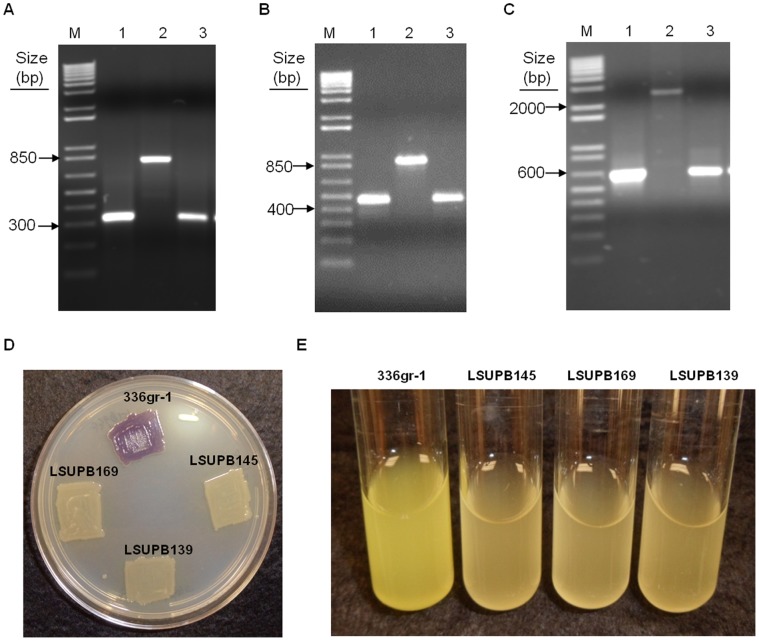
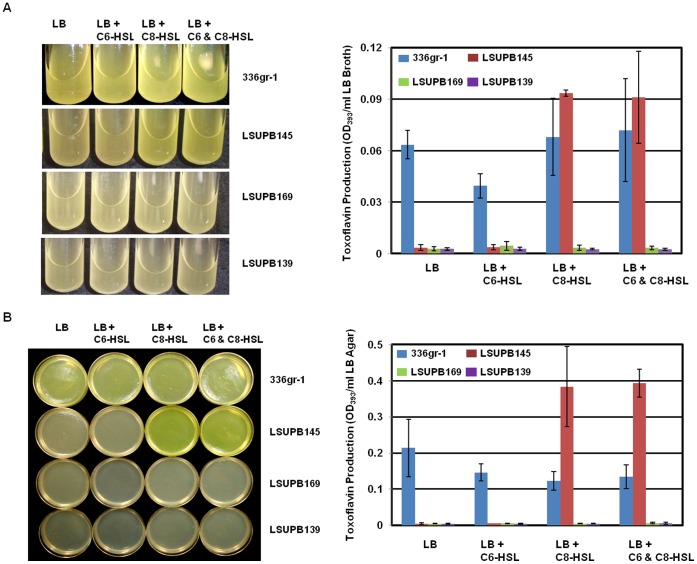
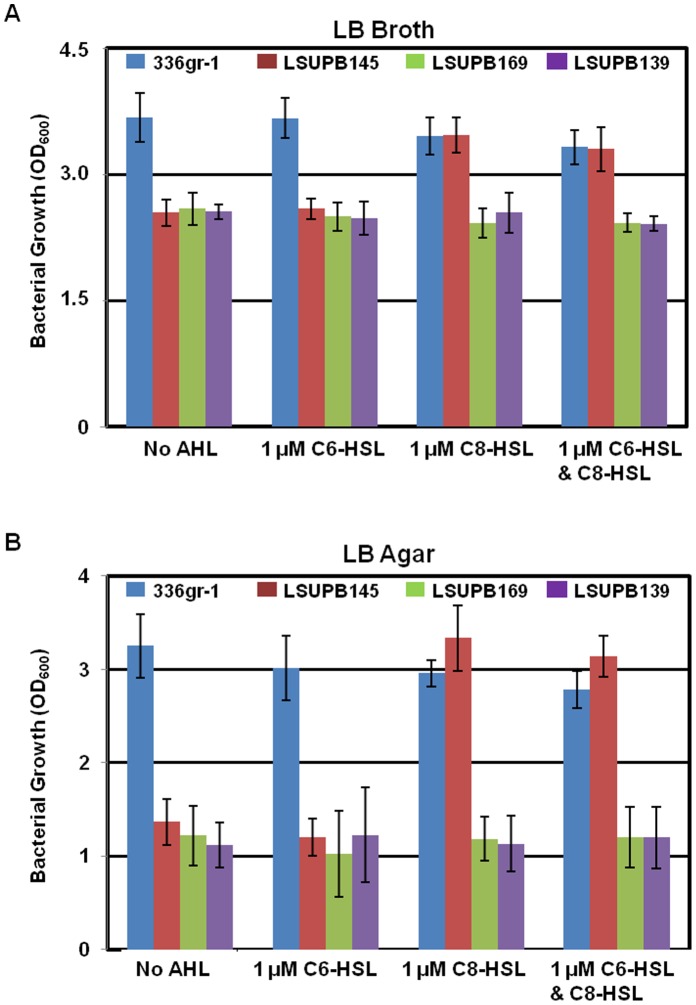
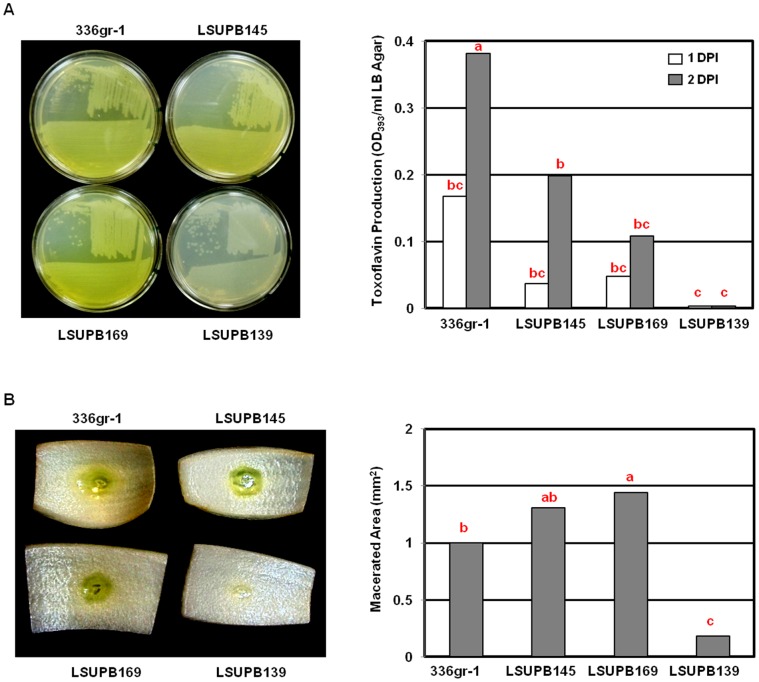
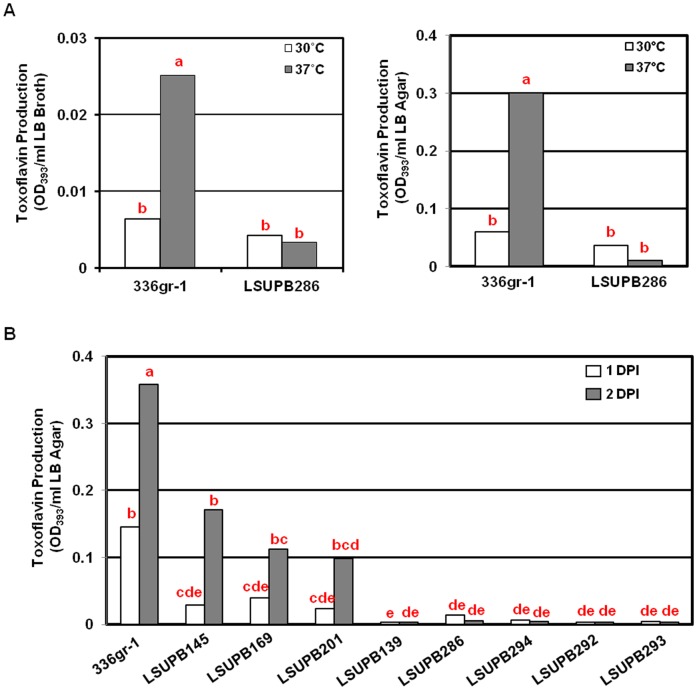
Burkholderia glumae causes bacterial panicle blight of rice and produces major virulence factors, including toxoflavin, under the control of the quorum-sensing (QS) system mediated by the luxI homolog, tofI, and the luxR homolog, tofR. In this study, a series of markerless deletion mutants of B. glumae for tofI and tofR were generated using the suicide vector system, pKKSacB, for comprehensive characterization of the QS system of this pathogen. Consistent with the previous studies by other research groups, ΔtofI and ΔtofR strains of B. glumae did not produce toxoflavin in Luria-Bertani (LB) broth. However, these mutants produced high levels of toxoflavin when grown in a highly dense bacterial inoculum (∼ 10(11) CFU/ml) on solid media, including LB agar and King's B (KB) agar media. The ΔtofI/ΔtofR strain of B. glumae, LSUPB201, also produced toxoflavin on LB agar medium. These results indicate the presence of previously unknown regulatory pathways for the production of toxoflavin that are independent of tofI and/or tofR. Notably, the conserved open reading frame (locus tag: bglu_2g14480) located in the intergenic region between tofI and tofR was found to be essential for the production of toxoflavin by tofI and tofR mutants on solid media. This novel regulatory factor of B. glumae was named tofM after its homolog, rsaM, which was recently identified as a novel negative regulatory gene for the QS system of another rice pathogenic bacterium, Pseudomonas fuscovaginae. The ΔtofM strain of B. glumae, LSUPB286, produced a less amount of toxoflavin and showed attenuated virulence when compared with its wild type parental strain, 336gr-1, suggesting that tofM plays a positive role in toxoflavin production and virulence. In addition, the observed growth defect of the ΔtofI strain, LSUPB145, was restored by 1 µM N-octanoyl homoserine lactone (C8-HSL).
引起稻细菌性穗枯病的伯克霍尔德氏菌产生多种主要毒力因子,包括依靠群体感应(QS)系统控制的毒黄素,该系统由 luxI 同系物 tofI 和 luxR 同系物 tofR 介导。在这项研究中,使用自杀载体系统 pKKSacB 生成了一系列伯克霍尔德氏菌 tofI 和 tofR 的无标记缺失突变体,用于全面表征该病原体的 QS 系统。与其他研究小组的先前研究一致,B. glumae 的ΔtofI 和ΔtofR 菌株在 LB 肉汤中不产生毒黄素。然而,当在固体培养基上(包括 LB 琼脂和 King's B (KB) 琼脂培养基)以高密度细菌接种物(约 10(11) CFU/ml)生长时,这些突变体产生高水平的毒黄素。B. glumae 的ΔtofI/ΔtofR 菌株 LSUPB201 也在 LB 琼脂培养基上产生毒黄素。这些结果表明,存在以前未知的毒黄素产生调控途径,这些途径独立于 tofI 和/或 tofR。值得注意的是,在 tofI 和 tofR 之间的基因间区域发现的保守开放阅读框(基因标签:bglu_2g14480)对于 tofI 和 tofR 突变体在固体培养基上产生毒黄素是必需的。这个伯克霍尔德氏菌的新型调控因子被命名为 tofM,是其同源物 rsaM 的缩写,rsaM 最近被鉴定为另一种水稻病原菌假单胞菌 fuscovaginae 的 QS 系统的新型负调控基因。与野生型亲本菌株 336gr-1 相比,B. glumae 的ΔtofM 菌株 LSUPB286 产生的毒黄素较少,毒力减弱,表明 tofM 在毒黄素产生和毒力中发挥积极作用。此外,观察到ΔtofI 菌株 LSUPB145 的生长缺陷通过 1 µM N-辛酰基高丝氨酸内酯(C8-HSL)得到恢复。