School of Medical Science and Laboratory Medicine, Jiangsu University, Zhenjiang, Jiangsu, China.
PLoS One. 2012;7(12):e52465. doi: 10.1371/journal.pone.0052465. Epub 2012 Dec 20.
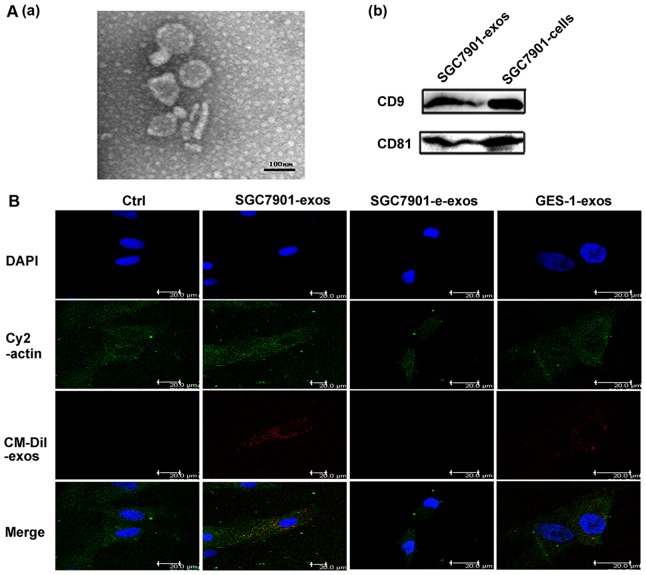
Mesenchymal stem cells (MSCs) promote tumor growth by differentiating into carcinoma-associated fibroblasts (CAFs) and composing the tumor microenvironment. However, the mechanisms responsible for the transition of MSCs to CAFs are not well understood. Exosomes regulate cellular activities by mediating cell-cell communication. In this study, we aimed to investigate whether cancer cell-derived exosomes were involved in regulating the differentiation of human umbilical cord-derived MSCs (hucMSCs) to CAFs.
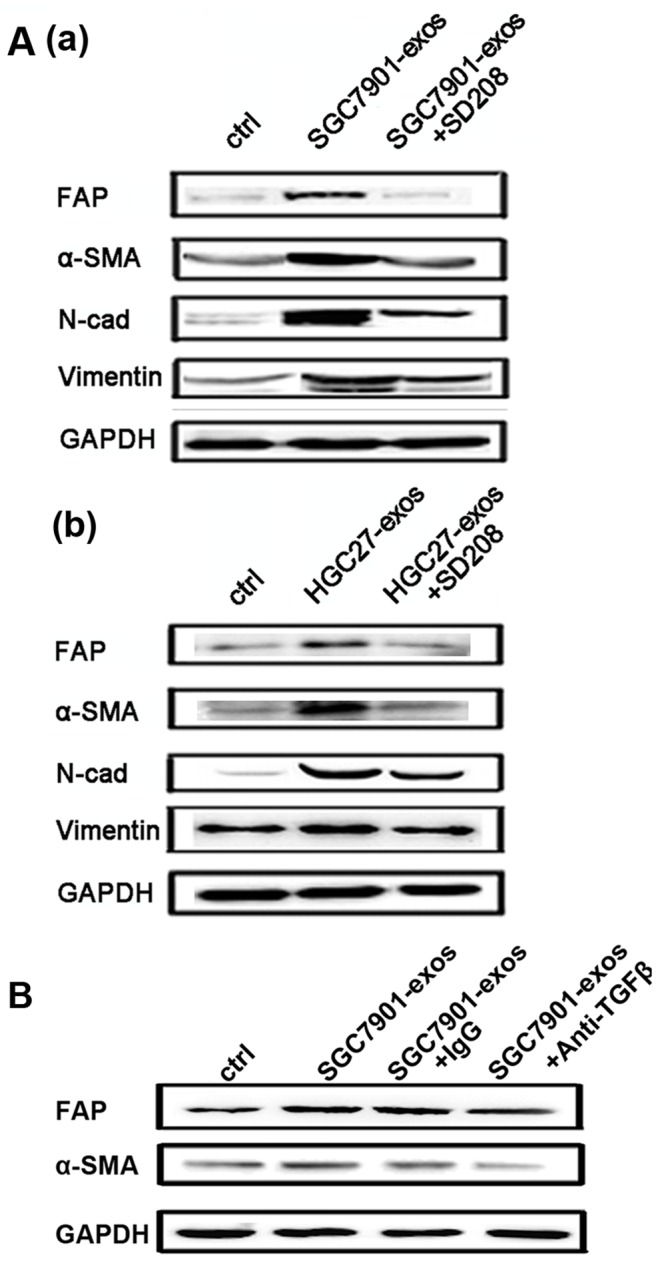
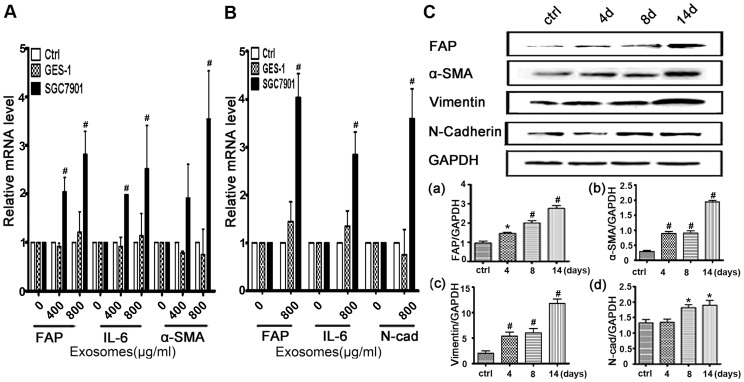
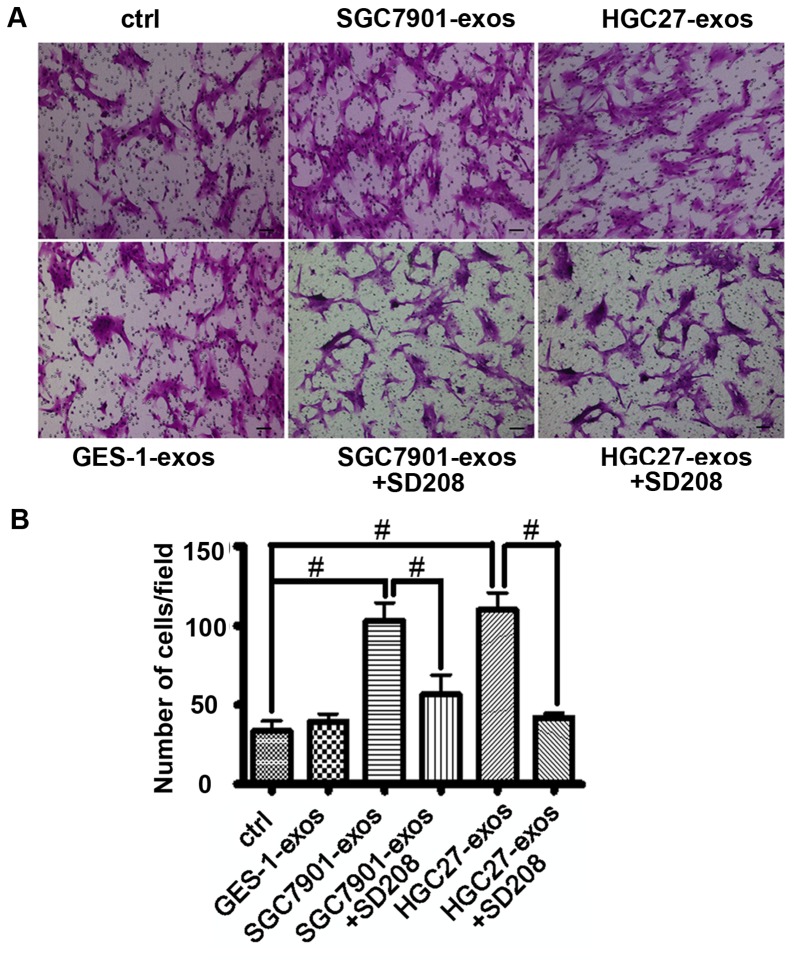
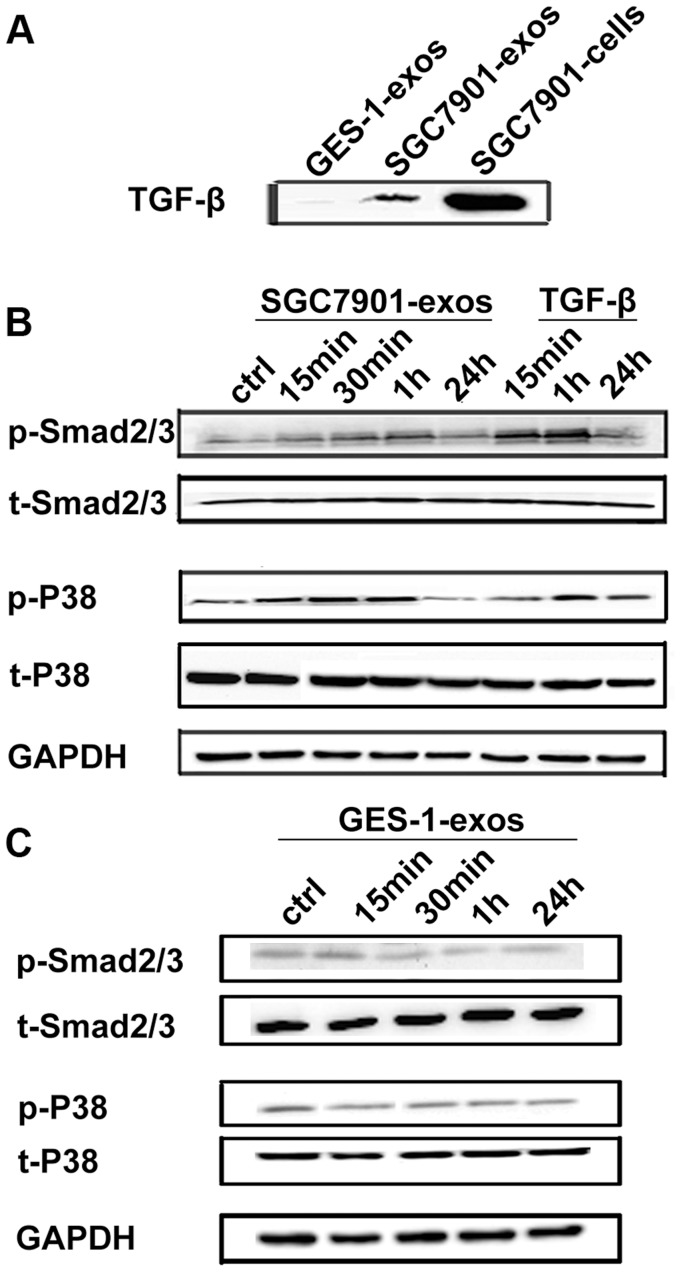
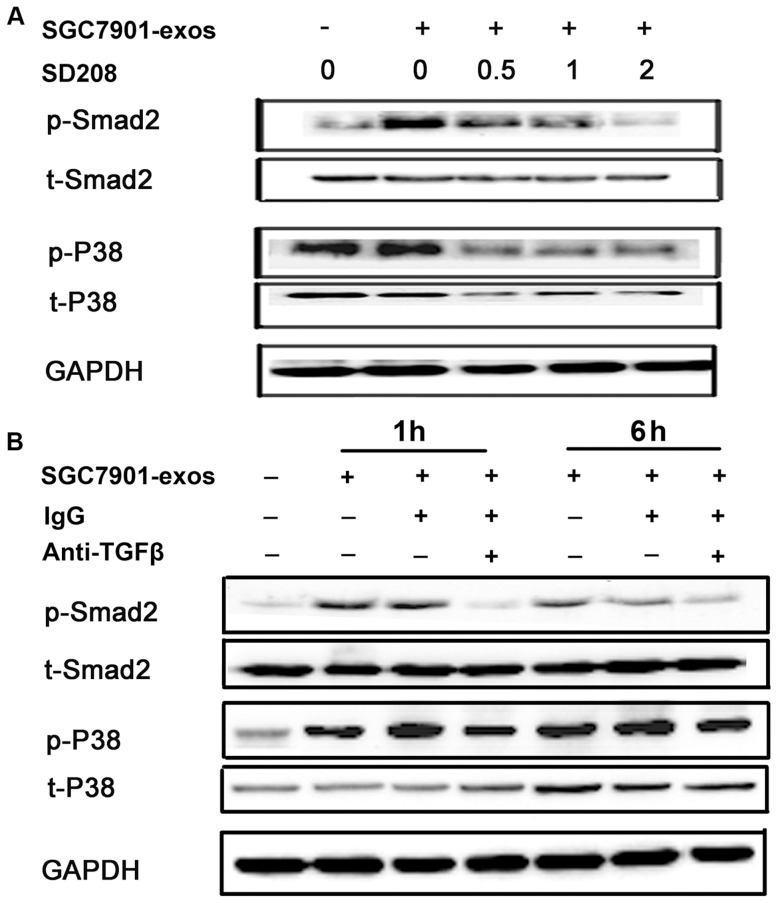
METHODOLOGY/PRINCIPAL FINDINGS: We first showed that gastric cancer cell-derived exosomes induced the expression of CAF markers in hucMSCs. We then demonstrated that gastric cancer cell-derived exosomes stimulated the phosphorylation of Smad-2 in hucMSCs. We further confirmed that TGF-β receptor 1 kinase inhibitor attenuated Smad-2 phosphorylation and CAF marker expression in hucMSCs after exposure to gastric cancer cell-derived exosomes.
CONCLUSION/SIGNIFICANCE: Our results suggest that gastric cancer cells triggered the differentiation of hucMSCs to CAFs by exosomes-mediated TGF-β transfer and TGF-β/Smad pathway activation, which may represent a novel mechanism for MSCs to CAFs transition in cancer.
间充质干细胞 (MSCs) 通过分化为癌相关成纤维细胞 (CAFs) 并构成肿瘤微环境来促进肿瘤生长。然而,导致 MSCs 向 CAFs 转化的机制尚不清楚。外泌体通过介导细胞间通讯来调节细胞活动。在这项研究中,我们旨在研究癌细胞来源的外泌体是否参与调节人脐带间充质干细胞 (hucMSCs) 向 CAFs 的分化。
方法/主要发现:我们首先表明,胃癌细胞来源的外泌体诱导 hucMSCs 中 CAF 标志物的表达。然后,我们证明胃癌细胞来源的外泌体刺激 hucMSCs 中 Smad-2 的磷酸化。我们进一步证实,在 hucMSCs 暴露于胃癌细胞来源的外泌体后,TGF-β 受体 1 激酶抑制剂可减弱 Smad-2 磷酸化和 CAF 标志物的表达。
结论/意义:我们的结果表明,胃癌细胞通过外泌体介导的 TGF-β 转移和 TGF-β/Smad 通路激活触发 hucMSCs 向 CAFs 的分化,这可能代表了 MSCs 向癌症中 CAFs 转化的一种新机制。