Department of Oncology-Pathology, Karolinska Institutet, Stockholm, Sweden.
PLoS One. 2012;7(12):e52476. doi: 10.1371/journal.pone.0052476. Epub 2012 Dec 20.
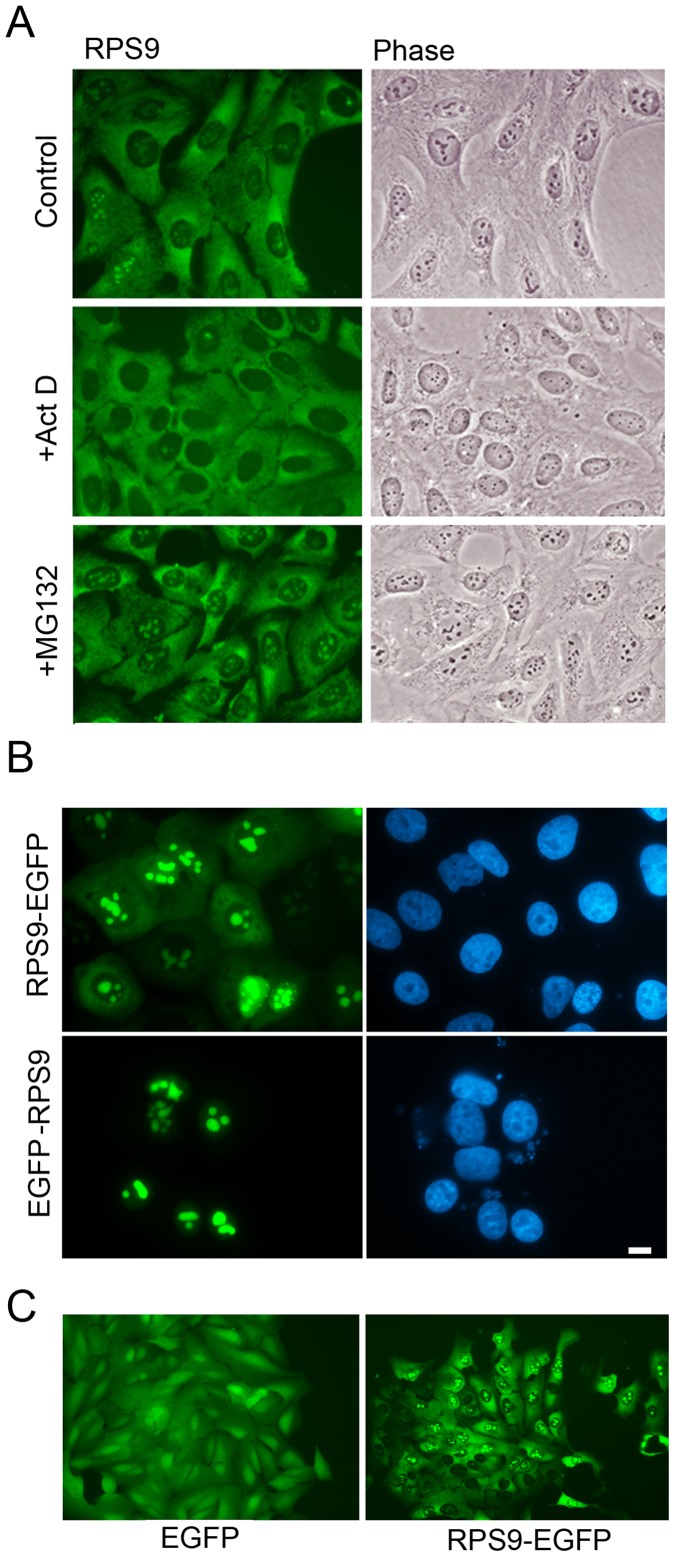
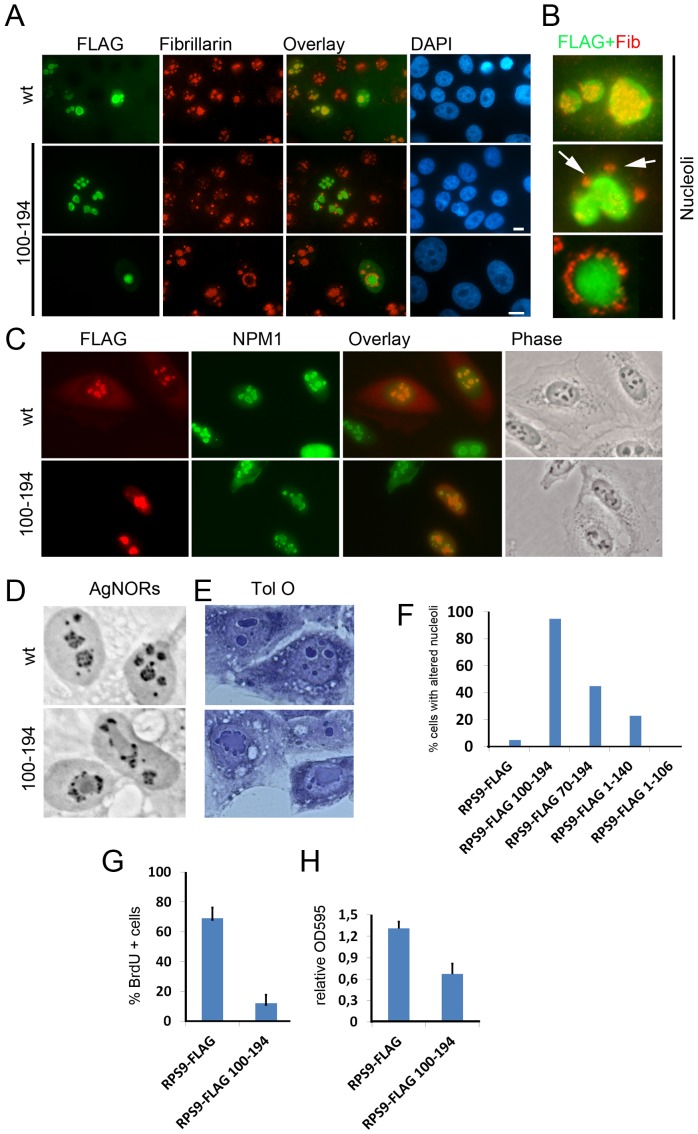
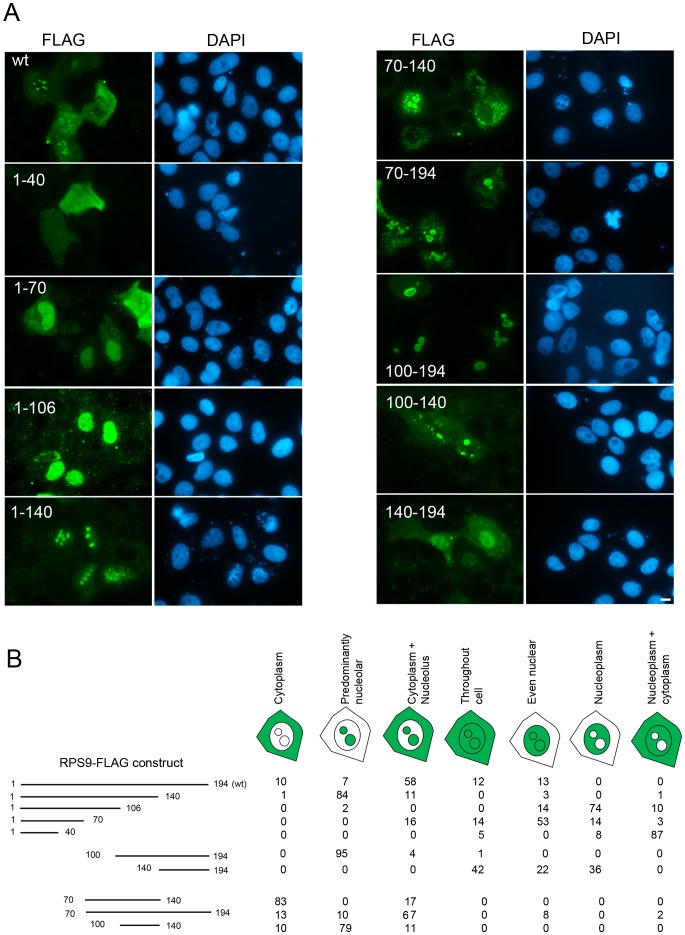
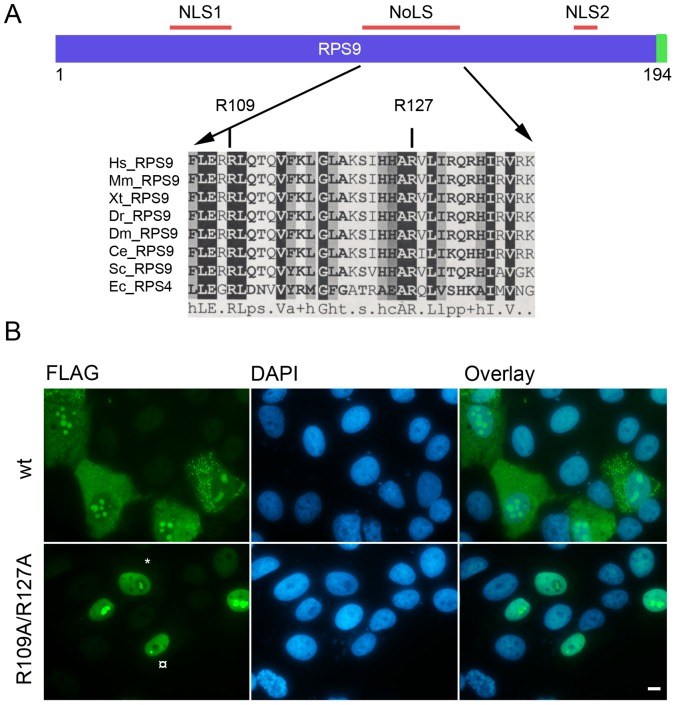
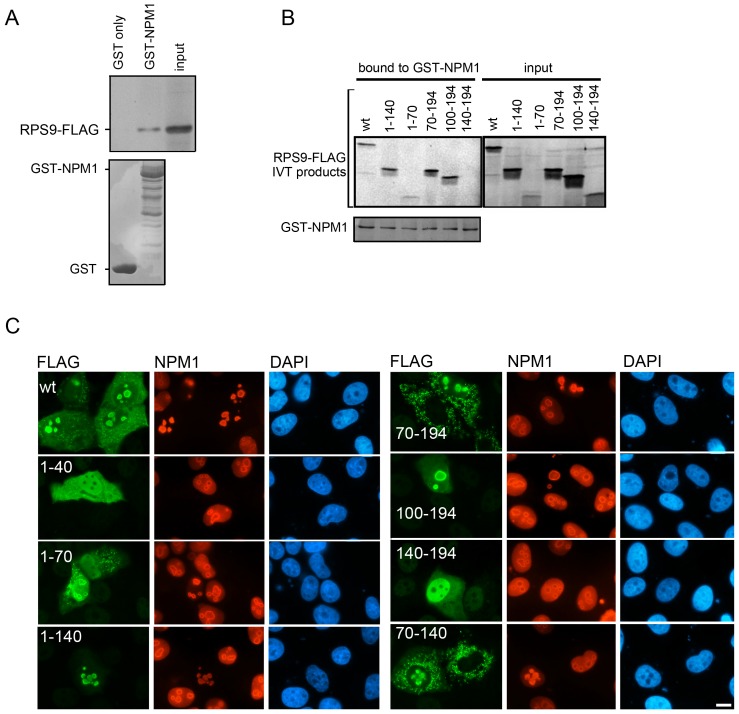
Biogenesis of eukaryotic ribosomes occurs mainly in a specific subnuclear compartment, the nucleolus, and involves the coordinated assembly of ribosomal RNA and ribosomal proteins. Identification of amino acid sequences mediating nucleolar localization of ribosomal proteins may provide important clues to understand the early steps in ribosome biogenesis. Human ribosomal protein S9 (RPS9), known in prokaryotes as RPS4, plays a critical role in ribosome biogenesis and directly binds to ribosomal RNA. RPS9 is targeted to the nucleolus but the regions in the protein that determine its localization remains unknown. Cellular expression of RPS9 deletion mutants revealed that it has three regions capable of driving nuclear localization of a fused enhanced green fluorescent protein (EGFP). The first region was mapped to the RPS9 N-terminus while the second one was located in the proteins C-terminus. The central and third region in RPS9 also behaved as a strong nucleolar localization signal and was hence sufficient to cause accumulation of EGFP in the nucleolus. RPS9 was previously shown to interact with the abundant nucleolar chaperone NPM1 (nucleophosmin). Evaluating different RPS9 fragments for their ability to bind NPM1 indicated that there are two binding sites for NPM1 on RPS9. Enforced expression of NPM1 resulted in nucleolar accumulation of a predominantly nucleoplasmic RPS9 mutant. Moreover, it was found that expression of a subset of RPS9 deletion mutants resulted in altered nucleolar morphology as evidenced by changes in the localization patterns of NPM1, fibrillarin and the silver stained nucleolar organizer regions. In conclusion, RPS9 has three regions that each are competent for nuclear localization, but only the central region acted as a potent nucleolar localization signal. Interestingly, the RPS9 nucleolar localization signal is residing in a highly conserved domain corresponding to a ribosomal RNA binding site.
真核核糖体的生物发生主要发生在特定的核亚区室——核仁中,涉及核糖体 RNA 和核糖体蛋白的协调组装。鉴定介导核糖体蛋白核仁定位的氨基酸序列可能为理解核糖体生物发生的早期步骤提供重要线索。人类核糖体蛋白 S9(RPS9),在原核生物中称为 RPS4,在核糖体生物发生中发挥关键作用,并直接与核糖体 RNA 结合。RPS9 靶向核仁,但决定其定位的蛋白区域仍不清楚。细胞表达 RPS9 缺失突变体表明,它有三个区域能够驱动融合增强型绿色荧光蛋白(EGFP)的核定位。第一个区域位于 RPS9 N 端,第二个区域位于蛋白质的 C 端。RPS9 的中心和第三个区域也表现出强烈的核仁定位信号,足以导致 EGFP 在核仁中积累。RPS9 先前被证明与丰富的核仁伴侣蛋白 NPM1(核磷蛋白)相互作用。评估 RPS9 的不同片段结合 NPM1 的能力表明,RPS9 上有两个 NPM1 结合位点。强制表达 NPM1 导致主要存在于核质中的 RPS9 突变体在核仁中积累。此外,发现表达一组 RPS9 缺失突变体导致核仁形态发生改变,这表现为 NPM1、纤维蛋白和银染核仁组织者区域的定位模式发生变化。总之,RPS9 有三个区域都能够进行核定位,但只有中心区域充当有效的核仁定位信号。有趣的是,RPS9 的核仁定位信号位于一个高度保守的结构域中,对应于核糖体 RNA 结合位点。