Department of Kinesiology and Nutrition, Motor Control and Movement Disorders Group, University of Illinois at Chicago Chicago, IL, USA.
Front Integr Neurosci. 2012 Dec 31;6:122. doi: 10.3389/fnint.2012.00122. eCollection 2012.
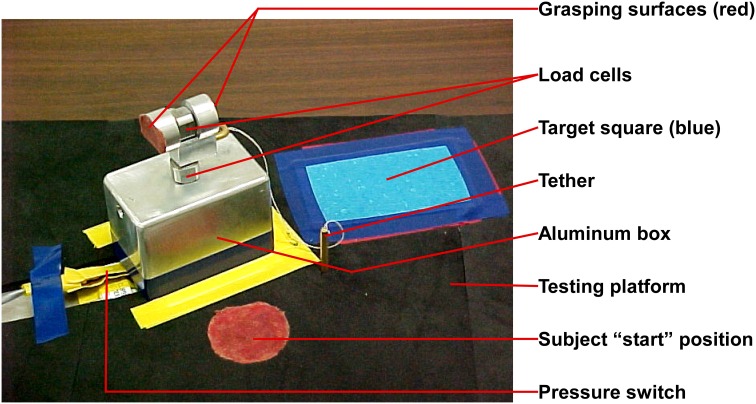
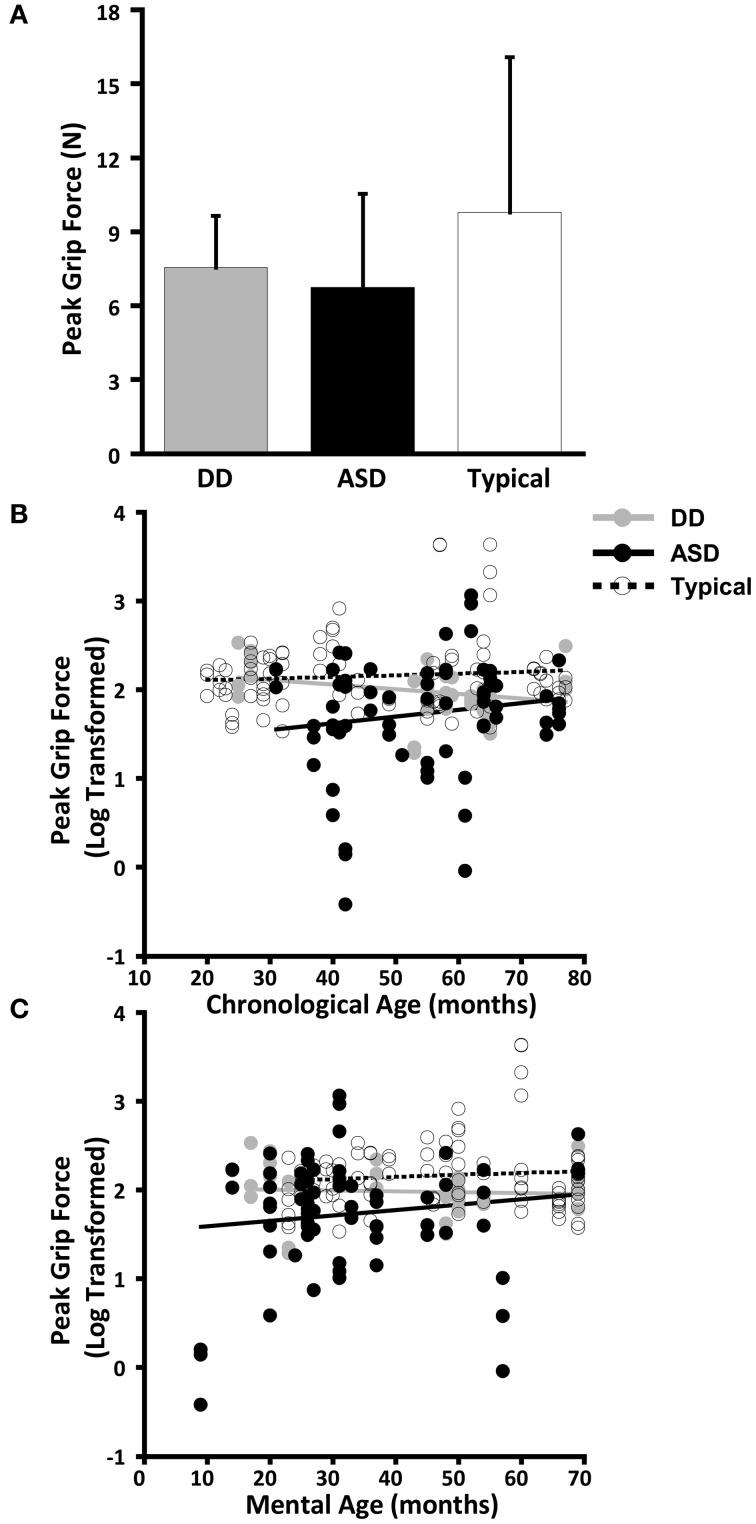
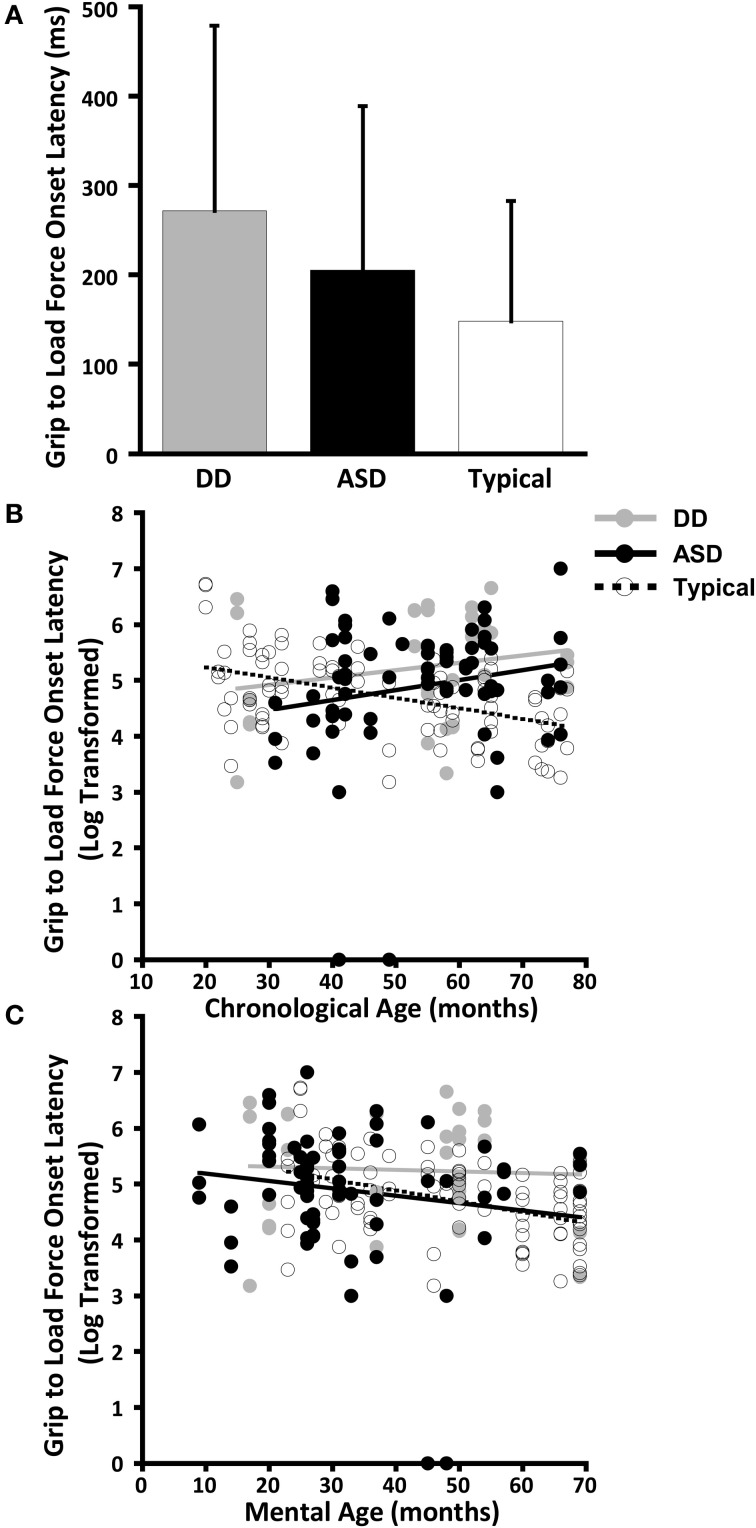
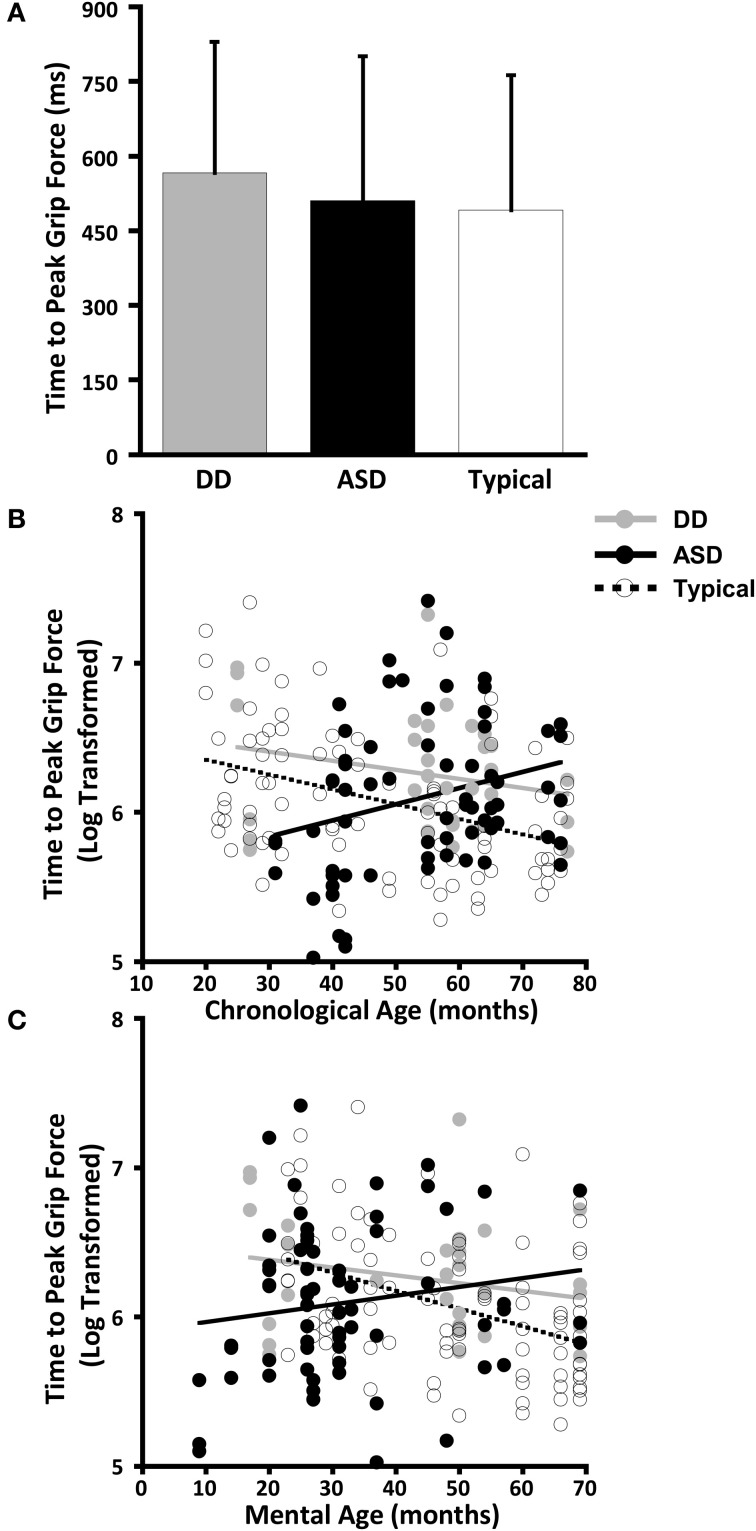
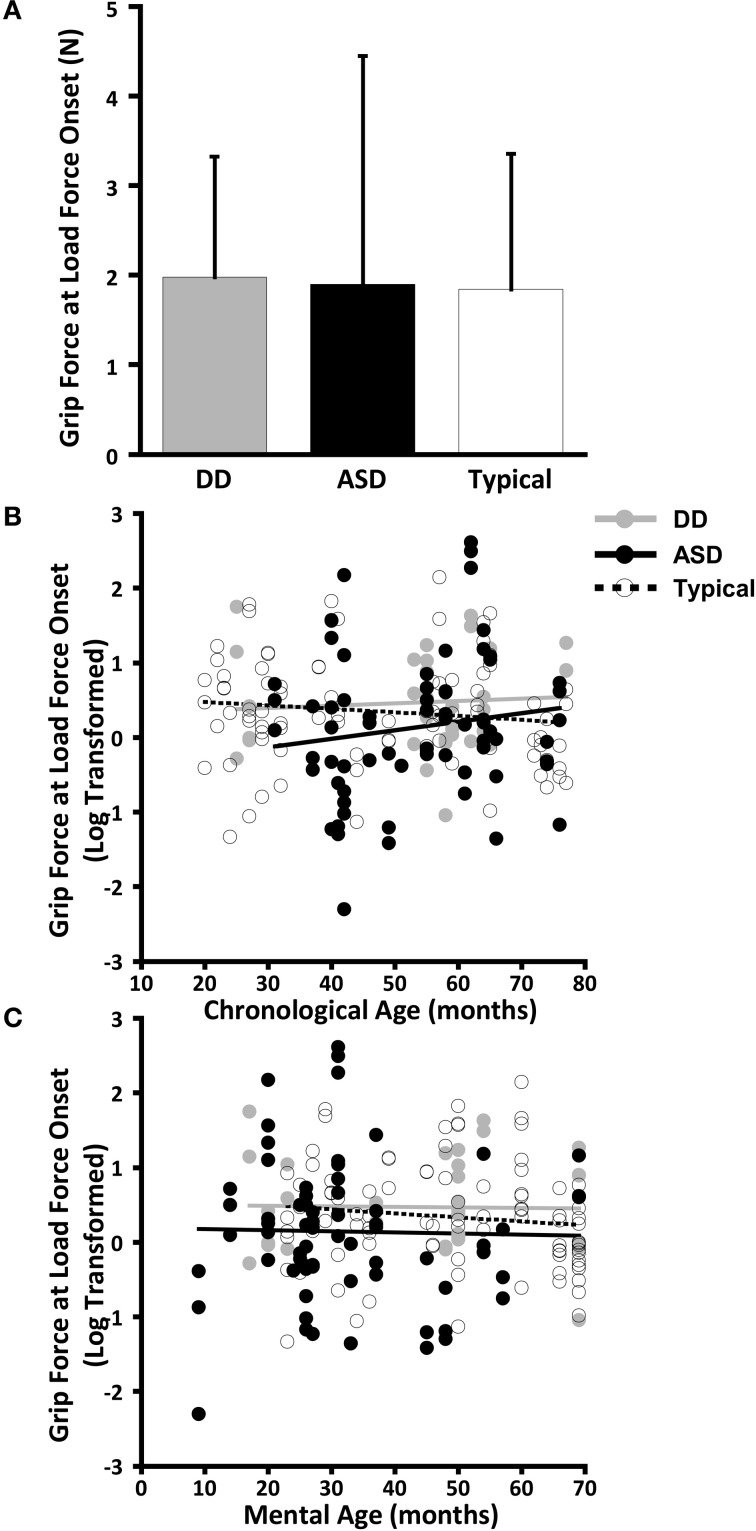
Impaired motor coordination is prevalent in children with Autism Spectrum Disorders (ASD) and affects adaptive skills. Little is known about the development of motor patterns in young children with ASD between 2 and 6 years of age. The purpose of the current study was threefold: (1) to describe developmental correlates of motor coordination in children with ASD, (2) to identify the extent to which motor coordination deficits are unique to ASD by using a control group of children with other developmental disabilities (DD), and (3) to determine the association between motor coordination variables and functional fine motor skills. Twenty-four children with ASD were compared to 30 children with typical development (TD) and 11 children with DD. A precision grip task was used to quantify and analyze motor coordination. The motor coordination variables were two temporal variables (grip to load force onset latency and time to peak grip force) and two force variables (grip force at onset of load force and peak grip force). Functional motor skills were assessed using the Fine Motor Age Equivalents of the Vineland Adaptive Behavior Scale and the Mullen Scales of Early Learning. Mixed regression models were used for all analyses. Children with ASD presented with significant motor coordination deficits only on the two temporal variables, and these variables differentiated children with ASD from the children with TD, but not from children with DD. Fine motor functional skills had no statistically significant associations with any of the motor coordination variables. These findings suggest that subtle problems in the timing of motor actions, possibly related to maturational delays in anticipatory feed-forward mechanisms, may underlie some motor deficits reported in children with ASD, but that these issues are not unique to this population. Further research is needed to investigate how children with ASD or DD compensate for motor control deficits to establish functional skills.
运动协调障碍在自闭症谱系障碍(ASD)儿童中很常见,会影响适应技能。对于 2 至 6 岁 ASD 幼儿的运动模式发展知之甚少。本研究的目的有三:(1)描述 ASD 儿童运动协调的发展相关性;(2)通过使用其他发育障碍(DD)儿童的对照组,确定运动协调缺陷在 ASD 中的独特程度;(3)确定运动协调变量与功能性精细运动技能之间的关联。将 24 名 ASD 儿童与 30 名具有典型发育(TD)的儿童和 11 名具有 DD 的儿童进行比较。使用精密握力任务来量化和分析运动协调。运动协调变量包括两个时间变量(握持到负载力起始潜伏期和达到峰值握持力的时间)和两个力变量(负载力起始时的握持力和峰值握持力)。使用韦氏适应行为量表精细运动年龄当量和门登早期学习量表评估功能性运动技能。所有分析均使用混合回归模型。ASD 儿童仅在两个时间变量上表现出明显的运动协调缺陷,这些变量可以将 ASD 儿童与 TD 儿童区分开来,但不能与 DD 儿童区分开来。精细运动功能技能与任何运动协调变量均无统计学显著关联。这些发现表明,运动动作时间上的细微问题,可能与预期前馈机制的成熟延迟有关,可能是 ASD 儿童报告的一些运动缺陷的基础,但这些问题并非 ASD 人群所特有。需要进一步研究,以调查 ASD 或 DD 儿童如何补偿运动控制缺陷以建立功能性技能。