The Wistar Institute Philadelphia, PA, USA.
Front Oncol. 2012 Dec 31;2:201. doi: 10.3389/fonc.2012.00201. eCollection 2012.
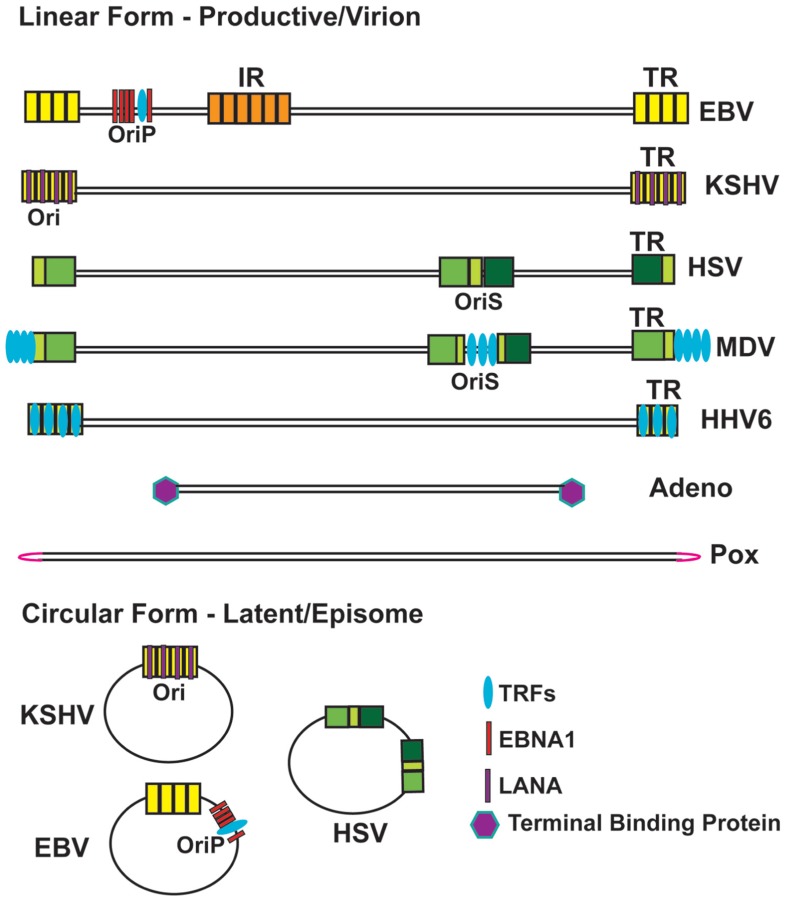
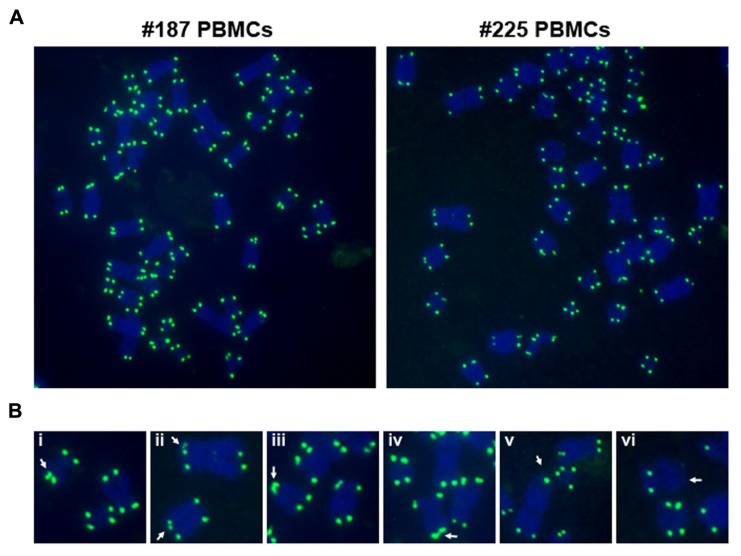
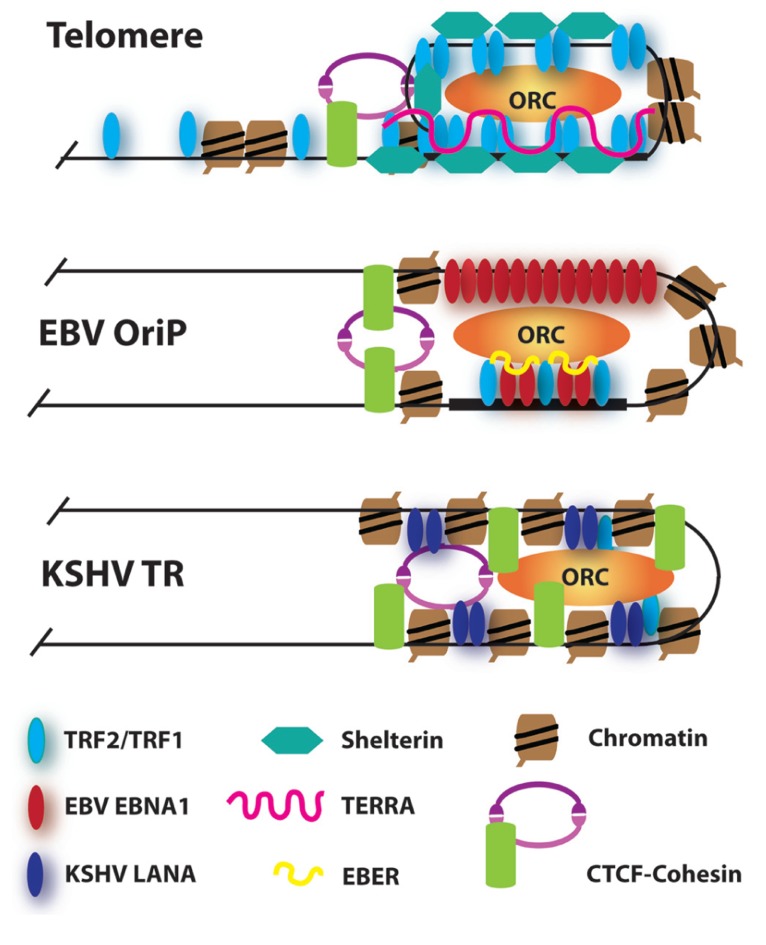
Genome maintenance mechanisms actively suppress genetic instability associated with cancer and aging. Some viruses provoke genetic instability by subverting the host's control of genome maintenance. Viruses have their own specialized strategies for genome maintenance, which can mimic and modify host cell processes. Here, we review some of the common features of genome maintenance utilized by viruses and host chromosomes, with a particular focus on terminal repeat (TR) elements. The TRs of cellular chromosomes, better known as telomeres, have well-established roles in cellular chromosome stability. Cellular telomeres are themselves maintained by viral-like mechanisms, including self-propagation by reverse transcription, recombination, and retrotransposition. Viral TR elements, like cellular telomeres, are essential for viral genome stability and propagation. We review the structure and function of viral repeat elements and discuss how they may share telomere-like structures and genome protection functions. We consider how viral infections modulate telomere regulatory factors for viral repurposing and can alter normal host telomere structure and chromosome stability. Understanding the common strategies of viral and cellular genome maintenance may provide new insights into viral-host interactions and the mechanisms driving genetic instability in cancer.
基因组维护机制积极抑制与癌症和衰老相关的遗传不稳定性。一些病毒通过颠覆宿主对基因组维护的控制来引发遗传不稳定性。病毒有其自己专门的基因组维护策略,可以模拟和修饰宿主细胞的过程。在这里,我们回顾了病毒和宿主染色体所利用的一些常见的基因组维护特征,特别关注末端重复(TR)元件。细胞染色体的 TR,更常见的是端粒,在细胞染色体稳定性中具有既定的作用。细胞端粒本身通过类似于病毒的机制来维持,包括通过逆转录、重组和反转录进行自我复制。病毒 TR 元件与细胞端粒一样,是病毒基因组稳定性和传播所必需的。我们回顾了病毒重复元件的结构和功能,并讨论了它们如何可能共享端粒样结构和基因组保护功能。我们考虑了病毒感染如何调节端粒调节因子以实现病毒的重新利用,以及如何改变正常宿主端粒结构和染色体稳定性。了解病毒和细胞基因组维护的共同策略可能为病毒-宿主相互作用以及驱动癌症中遗传不稳定性的机制提供新的见解。