Computational Biology Program, Memorial Sloan-Kettering Cancer Center, New York, NY 10065, USA.
Cell Host Microbe. 2012 Aug 16;12(2):233-45. doi: 10.1016/j.chom.2012.06.008.
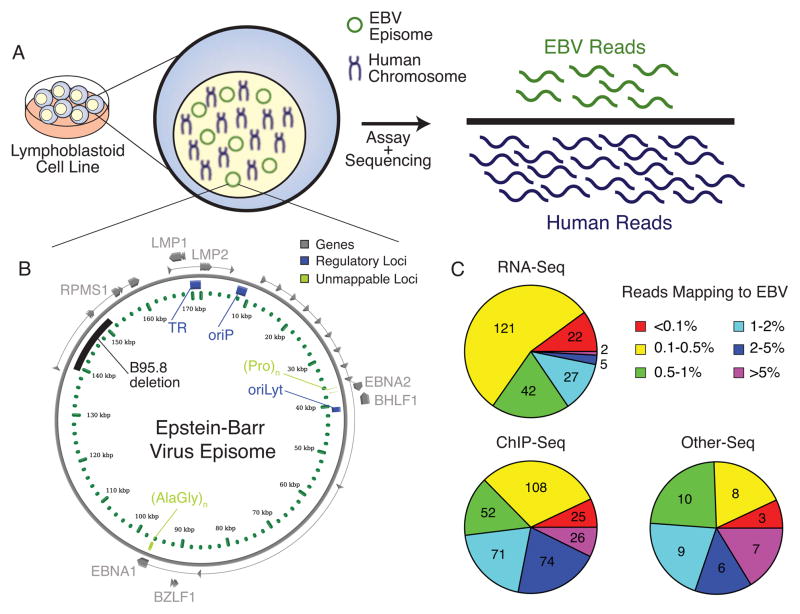
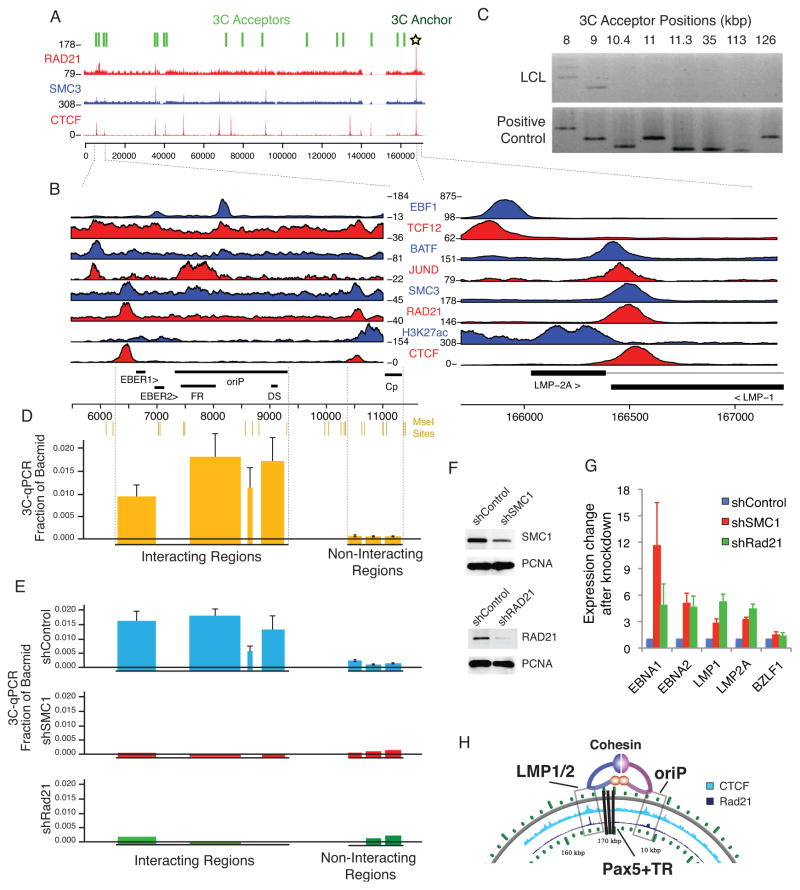
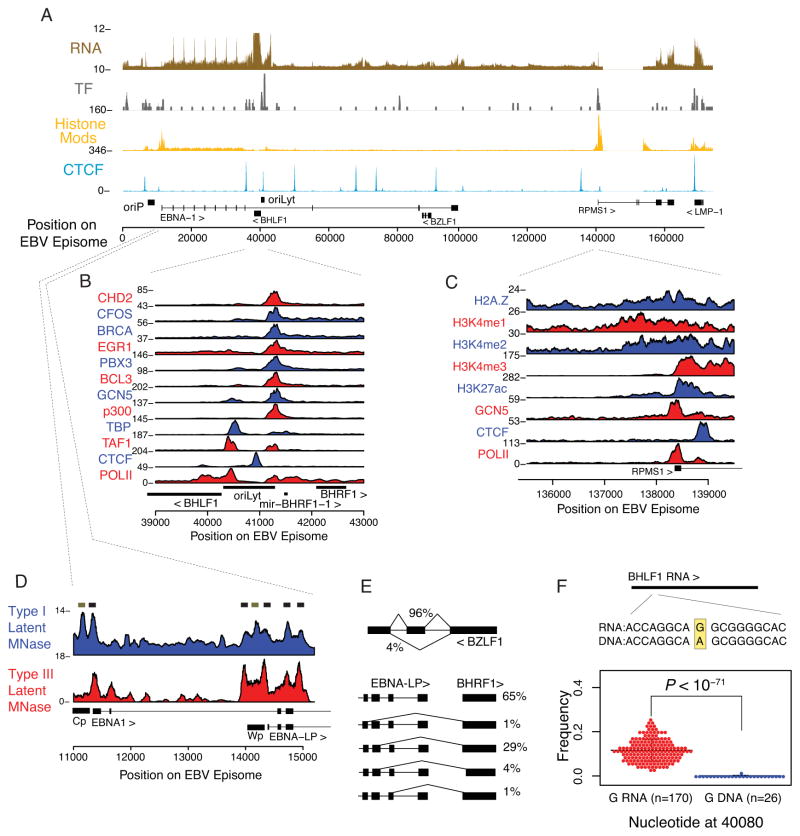
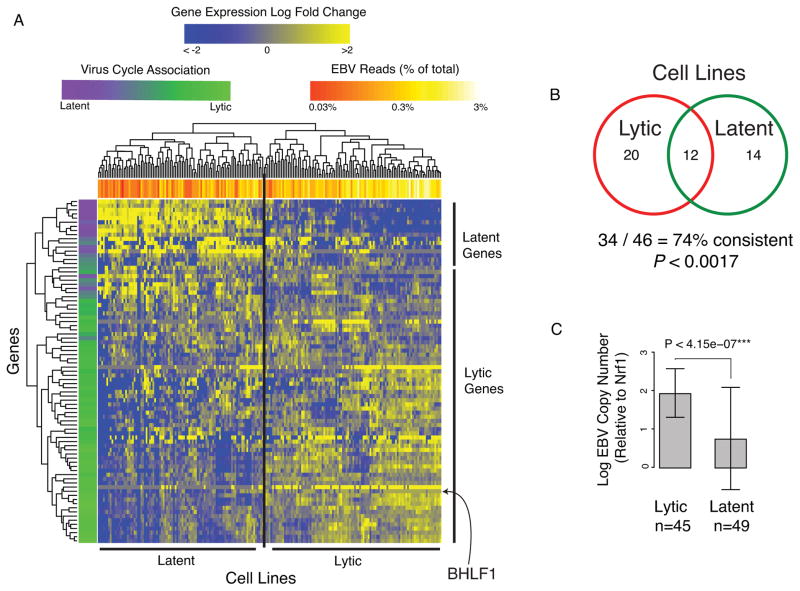
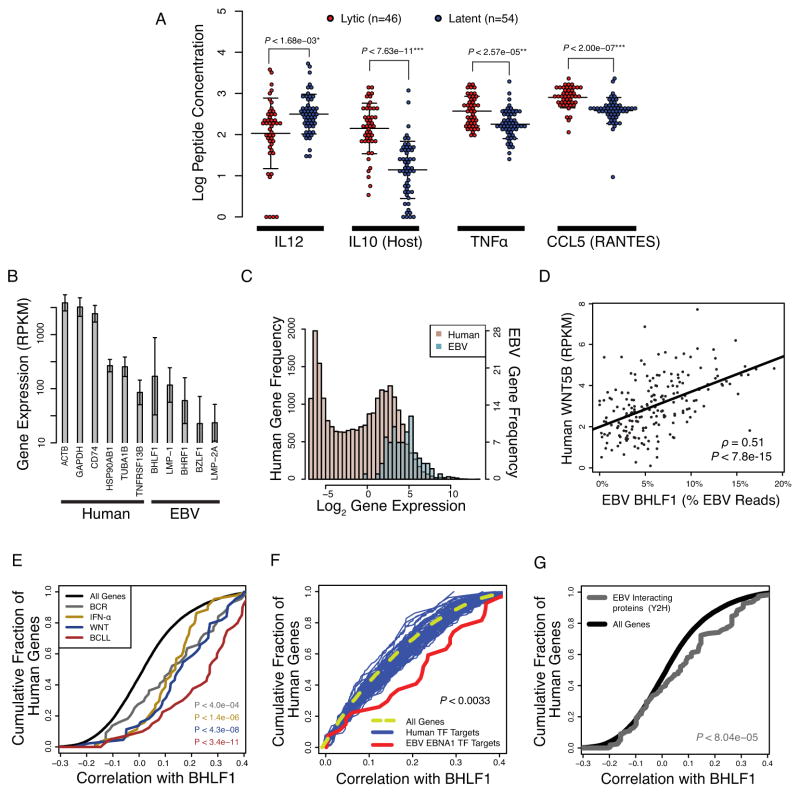
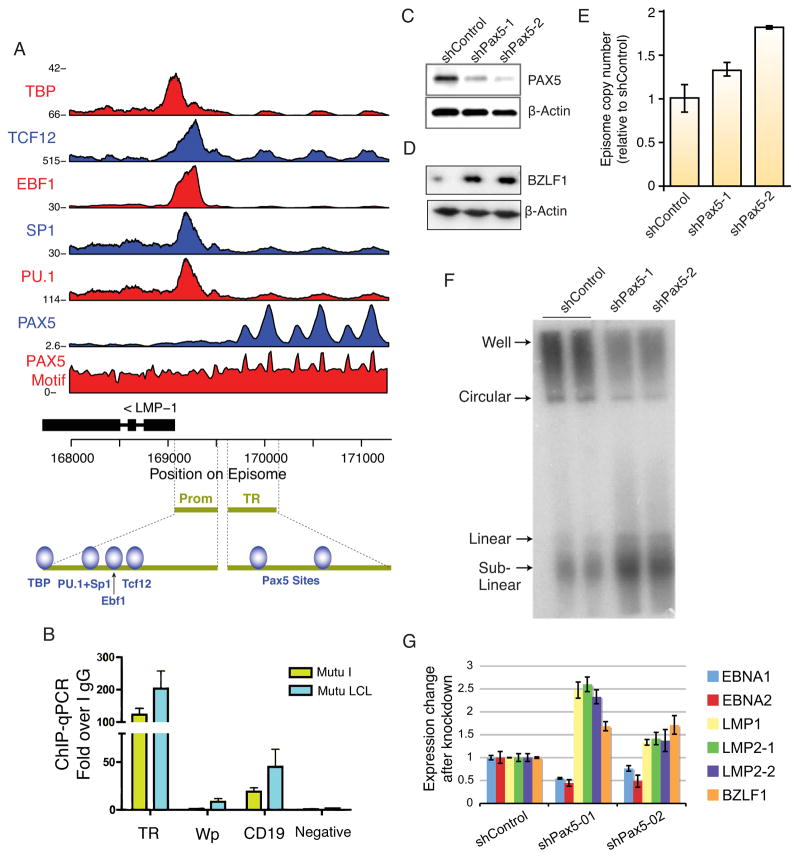
Epstein-Barr virus (EBV), which is associated with multiple human tumors, persists as a minichromosome in the nucleus of B lymphocytes and induces malignancies through incompletely understood mechanisms. Here, we present a large-scale functional genomic analysis of EBV. Our experimentally generated nucleosome positioning maps and viral protein binding data were integrated with over 700 publicly available high-throughput sequencing data sets for human lymphoblastoid cell lines mapped to the EBV genome. We found that viral lytic genes are coexpressed with cellular cancer-associated pathways, suggesting that the lytic cycle may play an unexpected role in virus-mediated oncogenesis. Host regulators of viral oncogene expression and chromosome structure were identified and validated, revealing a role for the B cell-specific protein Pax5 in viral gene regulation and the cohesin complex in regulating higher order chromatin structure. Our findings provide a deeper understanding of latent viral persistence in oncogenesis and establish a valuable viral genomics resource for future exploration.
EB 病毒(EBV)与多种人类肿瘤相关,在 B 淋巴细胞的细胞核中以微染色体的形式存在,并通过尚未完全了解的机制诱导恶性肿瘤。在这里,我们对 EBV 进行了大规模的功能基因组分析。我们生成的实验核小体定位图谱和病毒蛋白结合数据与超过 700 个公开的人淋巴母细胞系的高通量测序数据集整合,这些数据集被映射到 EBV 基因组上。我们发现,病毒裂解基因与细胞癌变相关途径共同表达,这表明裂解周期可能在病毒介导的致癌作用中发挥了意想不到的作用。鉴定并验证了宿主病毒致癌基因表达和染色体结构的调节因子,发现了 B 细胞特异性蛋白 Pax5 在病毒基因调控中的作用以及黏合蛋白复合物在调节高级染色质结构中的作用。我们的研究结果提供了对致癌作用中潜伏病毒持续性的更深入理解,并为未来的探索建立了有价值的病毒基因组学资源。