Department of Psychology, University of North Carolina.
Department of Psychology, Northeastern University.
Psychol Bull. 2013 Jan;139(1):255-263. doi: 10.1037/a0029038.
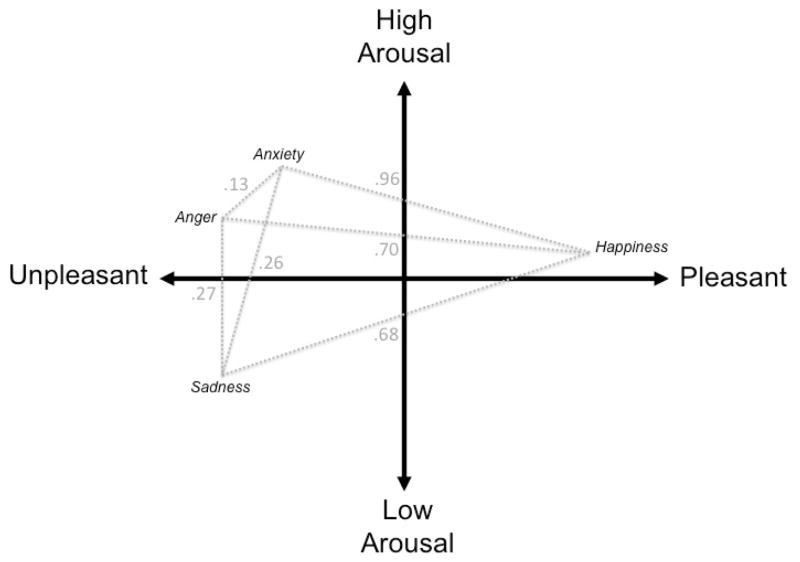
For the last century, there has been a continuing debate about the nature of emotion. In the most recent offering in this scientific dialogue, Lench, Flores, and Bench (2011) reported a meta-analysis of emotion induction research and claimed support for the natural kind hypothesis that discrete emotions (e.g., happiness, sadness, anger, and anxiety) elicit specific changes in cognition, judgment, behavior, experience, and physiology. In this article, we point out that Lench et al. (2011) is not the final word on the emotion debate. First, we point out that Lench et al.'s findings do not support their claim that discrete emotions organize cognition, judgment, experience, and physiology because they did not demonstrate emotion-consistent and emotion-specific directional changes in these measurement domains. Second, we point out that Lench et al.'s findings are in fact consistent with the alternative (a psychological constructionist approach to emotion). We close by appealing for a construct validity approach to emotion research, which we hope will lead to greater consensus on the operationalization of the natural kind and psychological construction approaches, as well as the criteria required to finally resolve the emotion debate.
在上个世纪,关于情绪的本质一直存在着持续的争论。在这场科学对话的最新成果中,Lench、Flores 和 Bench(2011)报告了一项情绪诱发研究的元分析,声称支持离散情绪(如快乐、悲伤、愤怒和焦虑)会引起认知、判断、行为、体验和生理特定变化的自然种类假说。在本文中,我们指出 Lench 等人(2011)并不是情绪争论的最终结论。首先,我们指出 Lench 等人的发现并不支持他们的说法,即离散情绪组织认知、判断、体验和生理,因为他们没有在这些测量领域中证明情绪一致和情绪特异性的方向性变化。其次,我们指出 Lench 等人的发现实际上与替代观点(即情绪的心理建构主义方法)一致。最后,我们呼吁对情绪研究采取建构有效性方法,我们希望这将导致对自然种类和心理建构方法的操作性以及最终解决情绪争论所需的标准达成更大的共识。