Neurodegeneration Research Laboratory, Molecular Biology and Genetics Department, Bogazici University, Istanbul, Turkey.
PLoS One. 2013;8(1):e53042. doi: 10.1371/journal.pone.0053042. Epub 2013 Jan 3.
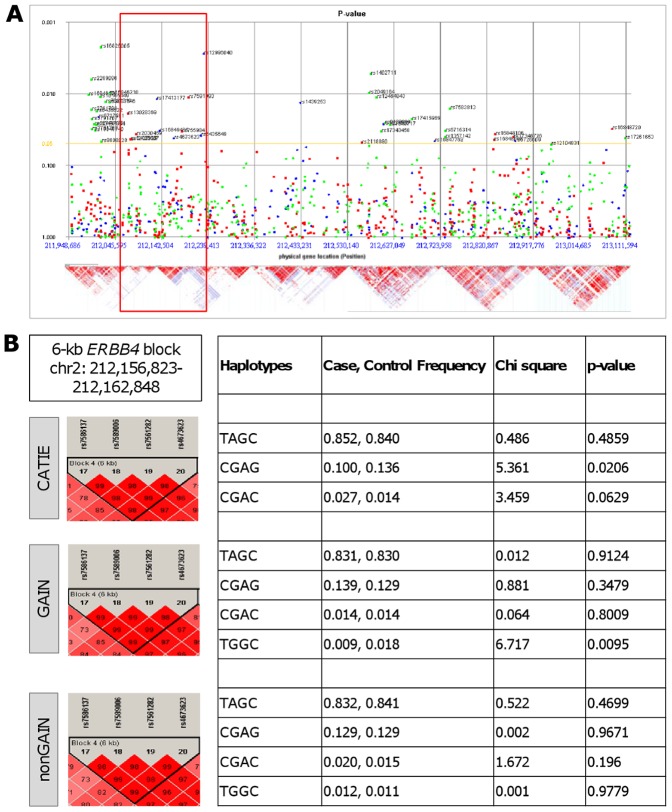
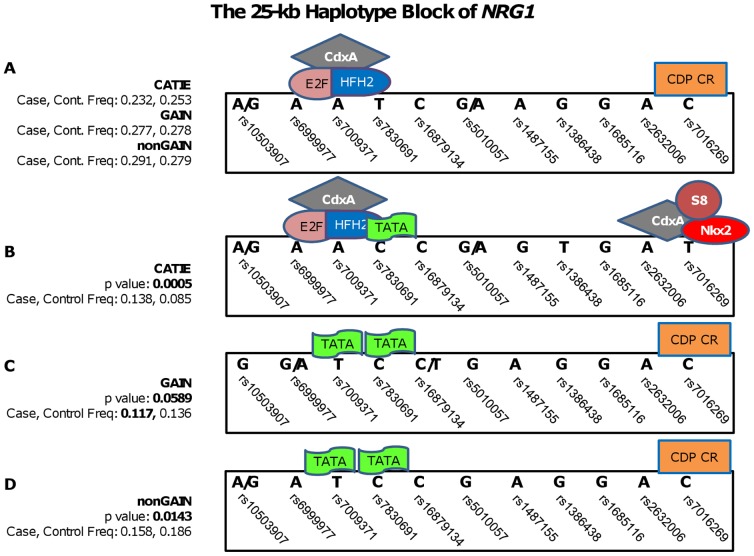
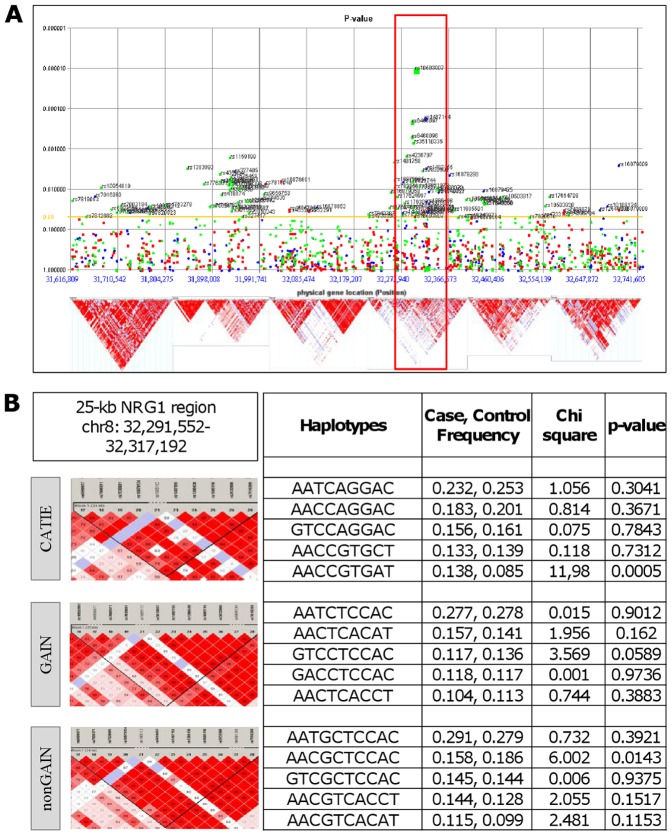
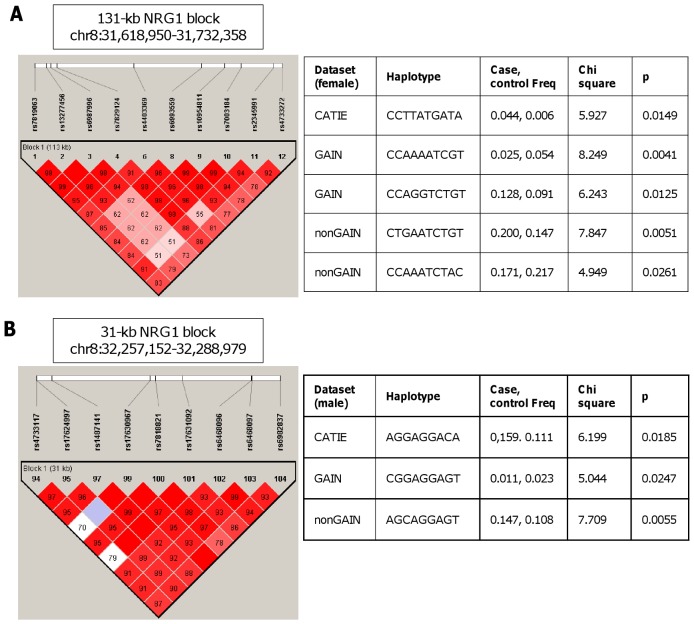
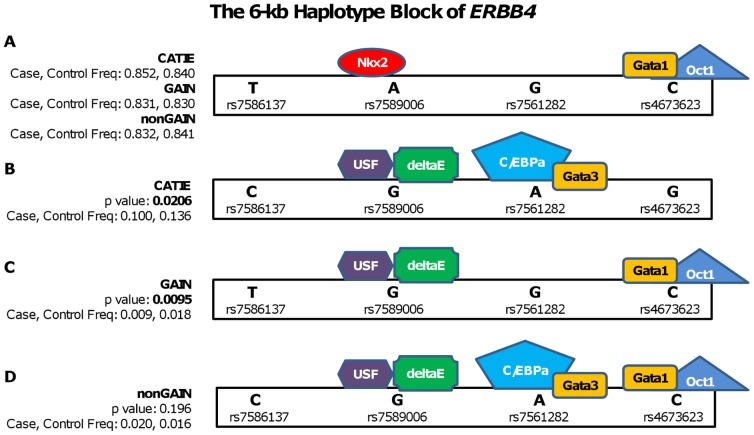
Schizophrenia is one of the most common and complex neuropsychiatric disorders, which is contributed both by genetic and environmental exposures. Recently, it is shown that NRG1-mediated ErbB4 signalling regulates many important cellular and molecular processes such as cellular growth, differentiation and death, particularly in myelin-producing cells, glia and neurons. Recent association studies have revealed genomic regions of NRG1 and ERBB4, which are significantly associated with risk of developing schizophrenia; however, inconsistencies exist in terms of validation of findings between distinct populations. In this study, we aim to validate the previously identified regions and to discover novel haplotypes of NRG1 and ERBB4 using logistic regression models and Haploview analyses in three independent datasets from GWAS conducted on European subjects, namely, CATIE, GAIN and nonGAIN. We identified a significant 6-kb block in ERBB4 between chromosome locations 212,156,823 and 212,162,848 in CATIE and GAIN datasets (p = 0.0206 and 0.0095, respectively). In NRG1, a significant 25-kb block, between 32,291,552 and 32,317,192, was associated with risk of schizophrenia in all CATIE, GAIN, and nonGAIN datasets (p = 0.0005, 0.0589, and 0.0143, respectively). Fine mapping and FastSNP analysis of genetic variation located within significantly associated regions proved the presence of binding sites for several transcription factors such as SRY, SOX5, CEPB, and ETS1. In this study, we have discovered and validated haplotypes of ERBB4 and NRG1 in three independent European populations. These findings suggest that these haplotypes play an important role in the development of schizophrenia by affecting transcription factor binding affinity.
精神分裂症是最常见和最复杂的神经精神疾病之一,其发病既受遗传因素影响,也受环境暴露因素影响。最近的研究表明,NRG1 介导的 ErbB4 信号转导调节许多重要的细胞和分子过程,如细胞生长、分化和死亡,尤其是在髓鞘形成细胞、神经胶质细胞和神经元中。最近的关联研究揭示了 NRG1 和 ERBB4 的基因组区域与精神分裂症发病风险显著相关;然而,不同人群之间的研究结果存在不一致性。在这项研究中,我们旨在通过逻辑回归模型和 Haploview 分析,在三个欧洲人群的 GWAS 数据集(CATIE、GAIN 和非 GAIN)中验证先前确定的区域,并发现 NRG1 和 ERBB4 的新单倍型。我们在 CATIE 和 GAIN 数据集中发现 ERBB4 染色体位置 212,156,823 和 212,162,848 之间存在一个显著的 6-kb 块(p=0.0206 和 0.0095)。在 NRG1 中,32,291,552 和 32,317,192 之间存在一个显著的 25-kb 块,与 CATIE、GAIN 和非 GAIN 数据集中的精神分裂症风险相关(p=0.0005、0.0589 和 0.0143)。对显著相关区域内遗传变异的精细作图和 FastSNP 分析证明,存在多个转录因子的结合位点,如 SRY、SOX5、CEPB 和 ETS1。在这项研究中,我们在三个独立的欧洲人群中发现并验证了 ERBB4 和 NRG1 的单倍型。这些发现表明,这些单倍型通过影响转录因子结合亲和力,在精神分裂症的发病机制中发挥重要作用。