Molecular Mechanisms in Neurodegenerative Dementia Laboratory, Inserm U710, Montpellier, France.
PLoS One. 2013;8(1):e53117. doi: 10.1371/journal.pone.0053117. Epub 2013 Jan 2.
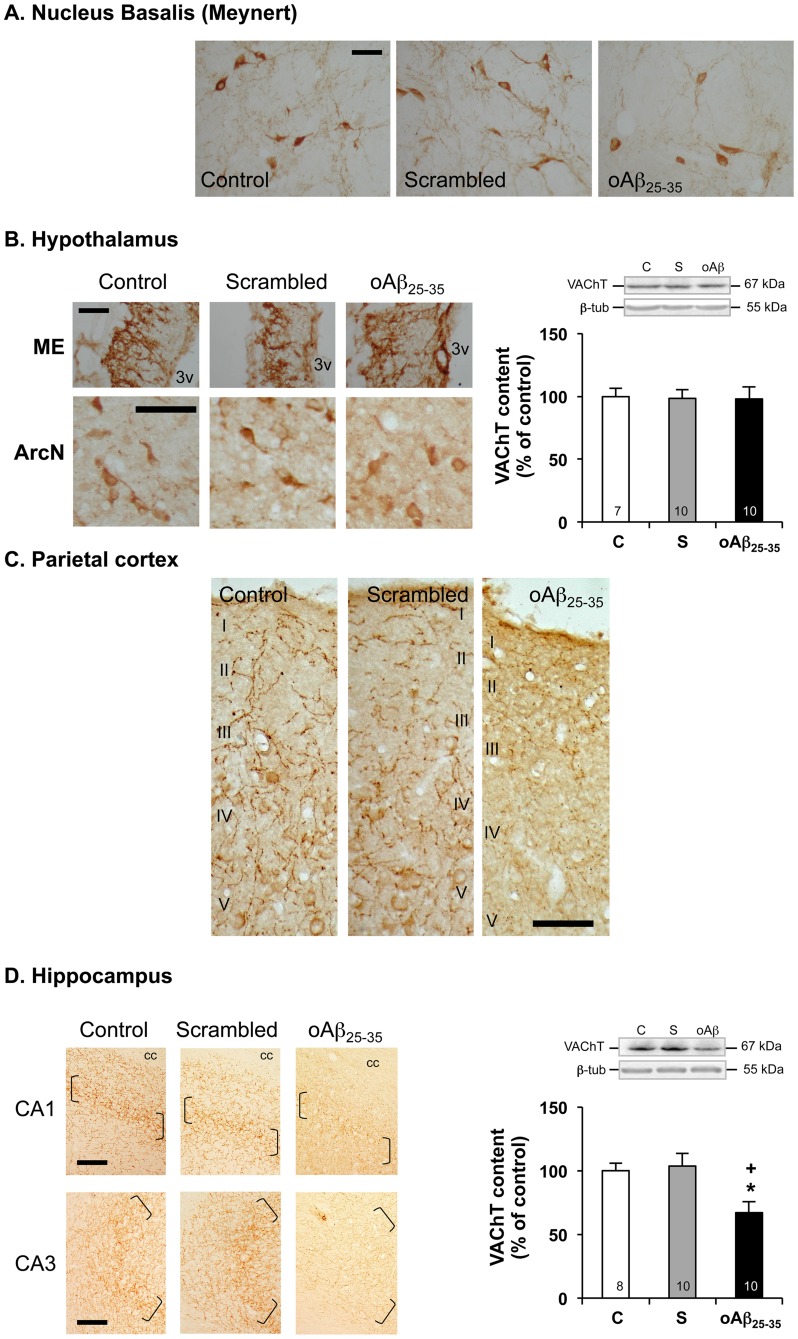
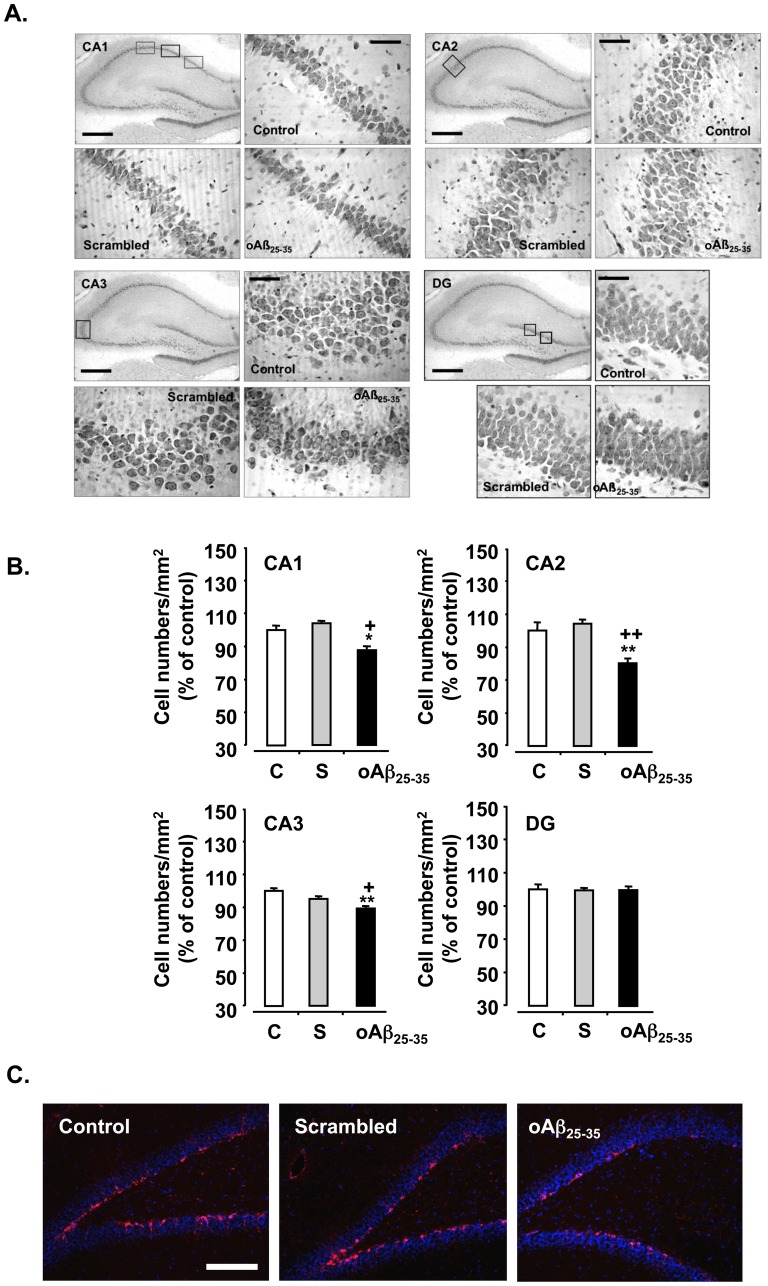
Alzheimer's disease (AD) is a neurodegenerative pathology associated with aging characterized by the presence of senile plaques and neurofibrillary tangles that finally result in synaptic and neuronal loss. The major component of senile plaques is an amyloid-β protein (Aβ). Recently, we characterized the effects of a single intracerebroventricular (icv) injection of Aβ fragment (25-35) oligomers (oAβ(25-35)) for up to 3 weeks in rats and established a clear parallel with numerous relevant signs of AD. To clarify the long-term effects of oAβ(25-35) and its potential role in the pathogenesis of AD, we determined its physiological, behavioral, biochemical and morphological impacts 6 weeks after injection in rats. oAβ(25-35) was still present in the brain after 6 weeks. oAβ(25-35) injection did not affect general activity and temperature rhythms after 6 weeks, but decreased body weight, induced short- and long-term memory impairments, increased corticosterone plasma levels, brain oxidative (lipid peroxidation), mitochondrial (caspase-9 levels) and reticulum stress (caspase-12 levels), astroglial and microglial activation. It provoked cholinergic neuron loss and decreased brain-derived neurotrophic factor levels. It induced cell loss in the hippocampic CA subdivisions and decreased hippocampic neurogenesis. Moreover, oAβ(25-35) injection resulted in increased APP expression, Aβ(1-42) generation, and increased Tau phosphorylation. In conclusion, this in vivo study evidenced that the soluble oligomeric forms of short fragments of Aβ, endogenously identified in AD patient brains, not only provoked long-lasting pathological alterations comparable to the human disease, but may also directly contribute to the progressive increase in amyloid load and Tau pathology, involved in the AD physiopathology.
阿尔茨海默病(AD)是一种与衰老相关的神经退行性病变,其特征是存在老年斑和神经原纤维缠结,最终导致突触和神经元丧失。老年斑的主要成分是淀粉样β蛋白(Aβ)。最近,我们描述了单次脑室内(icv)注射 Aβ片段(25-35)寡聚物(oAβ(25-35))长达 3 周对大鼠的影响,并建立了与 AD 众多相关症状的明确平行关系。为了阐明 oAβ(25-35)的长期影响及其在 AD 发病机制中的潜在作用,我们在注射后 6 周确定了其对大鼠的生理、行为、生化和形态影响。oAβ(25-35)在 6 周后仍存在于大脑中。oAβ(25-35)注射不会影响 6 周后的一般活动和体温节律,但会降低体重,引起短期和长期记忆障碍,增加皮质酮血浆水平,大脑氧化(脂质过氧化)、线粒体(caspase-9 水平)和内质网应激(caspase-12 水平)、星形胶质细胞和小胶质细胞激活。它引起胆碱能神经元丧失和脑源性神经营养因子水平降低。它诱导海马 CA 亚区细胞丢失和海马神经发生减少。此外,oAβ(25-35)注射导致 APP 表达增加、Aβ(1-42)生成增加和 Tau 磷酸化增加。总之,这项体内研究表明,AD 患者大脑中内源性鉴定的 Aβ短片段的可溶性寡聚形式不仅引起了与人类疾病相当的持久的病理改变,而且可能直接导致淀粉样蛋白负荷和 Tau 病理学的逐渐增加,参与 AD 病理生理学。