• 文献检索
  • 文档翻译
  • 深度研究
  • 学术资讯
  • Suppr Zotero 插件Zotero 插件
  • 邀请有礼
  • 套餐&价格
  • 历史记录
应用&插件
Suppr Zotero 插件Zotero 插件浏览器插件Mac 客户端Windows 客户端微信小程序
定价
高级版会员购买积分包购买API积分包
服务
文献检索文档翻译深度研究API 文档MCP 服务
关于我们
关于 Suppr公司介绍联系我们用户协议隐私条款
关注我们

Suppr 超能文献

核心技术专利:CN118964589B侵权必究
粤ICP备2023148730 号-1Suppr @ 2026

文献检索

告别复杂PubMed语法,用中文像聊天一样搜索,搜遍4000万医学文献。AI智能推荐,让科研检索更轻松。

立即免费搜索

文件翻译

保留排版,准确专业,支持PDF/Word/PPT等文件格式,支持 12+语言互译。

免费翻译文档

深度研究

AI帮你快速写综述,25分钟生成高质量综述,智能提取关键信息,辅助科研写作。

立即免费体验

氰化物解毒剂治疗大量伤亡:肌内注射用 3-巯基丙酮酸的二硫烯(磺萘根)水溶性盐。

Cyanide antidotes for mass casualties: water-soluble salts of the dithiane (sulfanegen) from 3-mercaptopyruvate for intramuscular administration.

机构信息

Center for Drug Design, Academic Health Center, University of Minnesota, Minneapolis, Minnesota 55455, USA.

出版信息

J Med Chem. 2013 Feb 14;56(3):1346-9. doi: 10.1021/jm301633x. Epub 2013 Jan 30.

DOI:10.1021/jm301633x
PMID:23301495
原文链接:https://pmc.ncbi.nlm.nih.gov/articles/PMC3575131/
Abstract

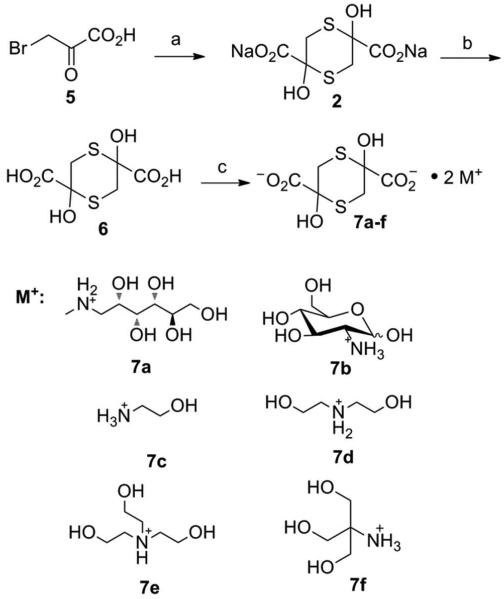
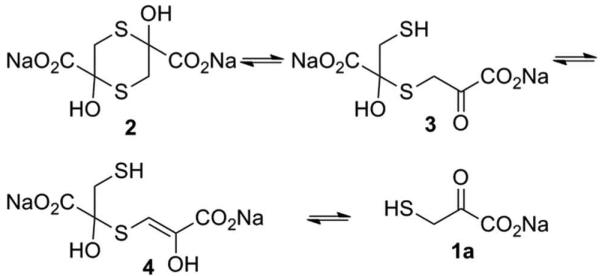
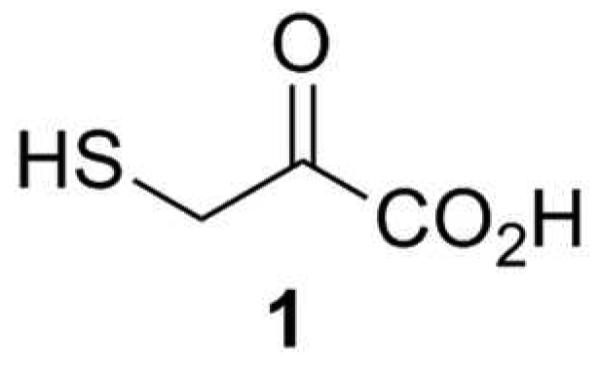
Current cyanide antidotes are administered by IV infusion, which is suboptimal for mass casualties. Therefore, in a cyanide disaster, intramuscular (IM) injectable antidotes would be more appropriate. We report the discovery of the highly water-soluble sulfanegen triethanolamine as a promising lead for development as an IM injectable cyanide antidote.

摘要

目前的氰化物解毒剂通过静脉输注给药,对于大量伤亡情况来说并不理想。因此,在氰化物灾难中,肌肉内(IM)注射解毒剂更为合适。我们报告了高度水溶性的磺酸钠三乙醇胺的发现,它是作为一种有前途的 IM 注射用氰化物解毒剂开发的先导化合物。
https://cdn.ncbi.nlm.nih.gov/pmc/blobs/46a2/3575131/ef0a772f8dff/nihms-441034-f0003.jpg
https://cdn.ncbi.nlm.nih.gov/pmc/blobs/46a2/3575131/0ea5636e889d/nihms-441034-f0001.jpg
https://cdn.ncbi.nlm.nih.gov/pmc/blobs/46a2/3575131/9b1993a112e4/nihms-441034-f0002.jpg
https://cdn.ncbi.nlm.nih.gov/pmc/blobs/46a2/3575131/ef0a772f8dff/nihms-441034-f0003.jpg
https://cdn.ncbi.nlm.nih.gov/pmc/blobs/46a2/3575131/0ea5636e889d/nihms-441034-f0001.jpg
https://cdn.ncbi.nlm.nih.gov/pmc/blobs/46a2/3575131/9b1993a112e4/nihms-441034-f0002.jpg
https://cdn.ncbi.nlm.nih.gov/pmc/blobs/46a2/3575131/ef0a772f8dff/nihms-441034-f0003.jpg

相似文献

1
Cyanide antidotes for mass casualties: water-soluble salts of the dithiane (sulfanegen) from 3-mercaptopyruvate for intramuscular administration.氰化物解毒剂治疗大量伤亡:肌内注射用 3-巯基丙酮酸的二硫烯(磺萘根)水溶性盐。
J Med Chem. 2013 Feb 14;56(3):1346-9. doi: 10.1021/jm301633x. Epub 2013 Jan 30.
2
Development of sulfanegen for mass cyanide casualties.用于大规模氰化物中毒伤员的硫代硫酸钠的研发。
Ann N Y Acad Sci. 2016 Jun;1374(1):202-9. doi: 10.1111/nyas.13114. Epub 2016 Jun 16.
3
The combination of cobinamide and sulfanegen is highly effective in mouse models of cyanide poisoning.考比酰胺与磺胺乙胺联合使用在氰化物中毒的小鼠模型中具有高度疗效。
Clin Toxicol (Phila). 2011 Jun;49(5):366-73. doi: 10.3109/15563650.2011.584879.
4
Cobinamide is superior to other treatments in a mouse model of cyanide poisoning.钴胺酰胺在氰化物中毒的小鼠模型中优于其他治疗方法。
Clin Toxicol (Phila). 2010 Aug;48(7):709-17. doi: 10.3109/15563650.2010.505197.
5
Intramuscular cobinamide sulfite in a rabbit model of sublethal cyanide toxicity.亚致死氰化物毒性兔模型中的肌肉内 cobinamide 亚硫酸盐。
Ann Emerg Med. 2010 Apr;55(4):352-63. doi: 10.1016/j.annemergmed.2009.12.002. Epub 2010 Jan 4.
6
Which cyanide antidote?哪种氰化物解毒剂?
Crit Rev Toxicol. 2009;39(7):541-52. doi: 10.1080/10408440802304944.
7
Novel, orally effective cyanide antidotes.新型口服有效的氰化物解毒剂。
J Med Chem. 2007 Dec 27;50(26):6462-4. doi: 10.1021/jm7011497. Epub 2007 Nov 27.
8
Sodium Nitrite and Sodium Thiosulfate Are Effective Against Acute Cyanide Poisoning When Administered by Intramuscular Injection.亚硝酸钠和硫代硫酸钠经肌肉注射给药时对急性氰化物中毒有效。
Ann Emerg Med. 2017 Jun;69(6):718-725.e4. doi: 10.1016/j.annemergmed.2016.09.034. Epub 2016 Dec 29.
9
Rapid and complete bioavailability of antidotes for organophosphorus nerve agent and cyanide poisoning in minipigs after intraosseous administration.经皮骨内给药后,小型猪体内的抗毒蕈碱药物和氰化物解毒剂可快速且完全发挥生物利用度。
Ann Emerg Med. 2012 Oct;60(4):424-30. doi: 10.1016/j.annemergmed.2012.05.013. Epub 2012 Jun 26.
10
[Anticyan--a new highly effective antidote in cyanide poisoning].[抗氰剂——氰化物中毒的一种新型高效解毒剂]
Lik Sprava. 1995 May-Jun(5-6):175-6.

引用本文的文献

1
Role of 3-Mercaptopyruvate Sulfurtransferase (3-MST) in Physiology and Disease.3-巯基丙酮酸硫转移酶(3-MST)在生理与疾病中的作用
Antioxidants (Basel). 2023 Mar 1;12(3):603. doi: 10.3390/antiox12030603.
2
Azure B as a novel cyanide antidote: Preclinical in-vivo studies.新型氰化物解毒剂天青B:临床前体内研究
Toxicol Rep. 2020 Oct 20;7:1459-1464. doi: 10.1016/j.toxrep.2020.10.015. eCollection 2020.
3
Antidotal effects of methylene blue against cyanide neurological toxicity: in vivo and in vitro studies.亚甲蓝对抗氰化物神经毒性的解毒作用:体内和体外研究。

本文引用的文献

1
Cyanide toxicity in juvenile pigs and its reversal by a new prodrug, sulfanegen sodium.氰化物毒性在幼年猪和其逆转的一个新的前体药物,磺胺钠。
Anesth Analg. 2012 May;114(5):956-61. doi: 10.1213/ANE.0b013e31824c4eb5. Epub 2012 Mar 5.
2
[Development of assay methods for endogenous inorganic sulfur compounds and sulfurtransferases and evaluation of the physiological functions of bound sulfur].[内源性无机硫化合物和硫转移酶检测方法的开发及结合硫生理功能的评估]
Yakugaku Zasshi. 2008 Jun;128(6):881-900. doi: 10.1248/yakushi.128.881.
3
Novel, orally effective cyanide antidotes.
Ann N Y Acad Sci. 2020 Nov;1479(1):108-121. doi: 10.1111/nyas.14353. Epub 2020 May 6.
4
Antidotal Effects of the Phenothiazine Chromophore Methylene Blue Following Cyanide Intoxication.亚甲蓝作为一种苯并噻嗪类染料,对氰化物中毒有解毒作用。
Toxicol Sci. 2019 Jul 1;170(1):82-94. doi: 10.1093/toxsci/kfz081.
5
Revisiting the physiological effects of methylene blue as a treatment of cyanide intoxication.重新审视亚甲蓝作为氰化物中毒治疗的生理效应。
Clin Toxicol (Phila). 2018 Sep;56(9):828-840. doi: 10.1080/15563650.2018.1429615. Epub 2018 Feb 16.
6
Sealing Effects on the Storage Stability of the Cyanide Antidotal Candidate, Dimethyl Trisulfide.二甲基三硫醚作为氰化物解毒剂候选药物的储存稳定性的密封效果。
Drugs R D. 2018 Mar;18(1):45-49. doi: 10.1007/s40268-017-0220-x.
7
An Official American Thoracic Society Workshop Report: Chemical Inhalational Disasters. Biology of Lung Injury, Development of Novel Therapeutics, and Medical Preparedness.美国胸科学会官方研讨会报告:化学吸入性灾害。肺损伤生物学、新型治疗药物的开发和医疗准备。
Ann Am Thorac Soc. 2017 Jun;14(6):1060-1072. doi: 10.1513/AnnalsATS.201704-297WS.
8
In-vitro mercaptopyruvate sulfurtransferase species comparison in humans and common laboratory animals.人类与常见实验动物的体外巯基丙酮酸硫转移酶物种比较
Toxicol Lett. 2017 May 15;274:64-68. doi: 10.1016/j.toxlet.2017.04.005. Epub 2017 Apr 12.
9
A highly efficient dinuclear Cu(II) chemosensor for colorimetric and fluorescent detection of cyanide in water.一种用于比色和荧光检测水中氰化物的高效双核铜(II)化学传感器。
RSC Adv. 2014;4(97):54263-54267. doi: 10.1039/C4RA10813B. Epub 2014 Oct 17.
10
Development of sulfanegen for mass cyanide casualties.用于大规模氰化物中毒伤员的硫代硫酸钠的研发。
Ann N Y Acad Sci. 2016 Jun;1374(1):202-9. doi: 10.1111/nyas.13114. Epub 2016 Jun 16.
新型口服有效的氰化物解毒剂。
J Med Chem. 2007 Dec 27;50(26):6462-4. doi: 10.1021/jm7011497. Epub 2007 Nov 27.
4
A novel paradigm for assessing efficacies of potential antidotes against neurotoxins in mice.一种评估小鼠体内潜在神经毒素解毒剂功效的新范式。
Toxicol Lett. 2007 Dec 10;175(1-3):111-7. doi: 10.1016/j.toxlet.2007.10.001. Epub 2007 Oct 10.
5
Ternary complexes of flurbiprofen with HP-beta-CD and ethanolamines characterization and transdermal delivery.氟比洛芬与羟丙基-β-环糊精和乙醇胺的三元复合物:表征与透皮给药
Drug Dev Ind Pharm. 2007 Mar;33(3):311-26. doi: 10.1080/03639040600901978.
6
The mercaptopyruvate pathway in cysteine catabolism: a physiologic role and related disease of the multifunctional 3-mercaptopyruvate sulfurtransferase.半胱氨酸分解代谢中的巯基丙酮酸途径:多功能3-巯基丙酮酸硫转移酶的生理作用及相关疾病
Curr Med Chem. 2006;13(10):1219-30. doi: 10.2174/092986706776360914.
7
Comparison of a miniaturized shake-flask solubility method with automated potentiometric acid/base titrations and calculated solubilities.一种小型摇瓶溶解度方法与自动电位酸碱滴定法及计算溶解度的比较。
J Pharm Sci. 2005 Jan;94(1):1-16. doi: 10.1002/jps.20212.
8
INFRARED ABSORPTION RATIO METHOD FOR DETERMINATION OF TRIETHANOLAMINE SALICYLATE IN OINTMENT.红外吸收比值法测定软膏剂中水杨酸三乙醇胺
J Pharm Sci. 1964 Dec;53:1553-4. doi: 10.1002/jps.2600531235.
9
Enzymatic desulfuration of beta-mercaptopyruvate to pyruvate.β-巯基丙酮酸的酶促脱硫生成丙酮酸。
J Biol Chem. 1954 Feb;206(2):561-75.
10
Do antidotes for acute cyanide poisoning act on mercaptopyruvate sulfurtransferase to facilitate detoxification?急性氰化物中毒的解毒剂是否作用于巯基丙酮酸硫转移酶以促进解毒?
Curr Drug Targets Immune Endocr Metabol Disord. 2003 Sep;3(3):198-204. doi: 10.2174/1568008033340162.