L. J. Roberts Alzheimer's Disease Center, Banner Sun Health Research Institute, Sun City, Arizona, United States of America.
PLoS One. 2013;8(1):e53349. doi: 10.1371/journal.pone.0053349. Epub 2013 Jan 8.
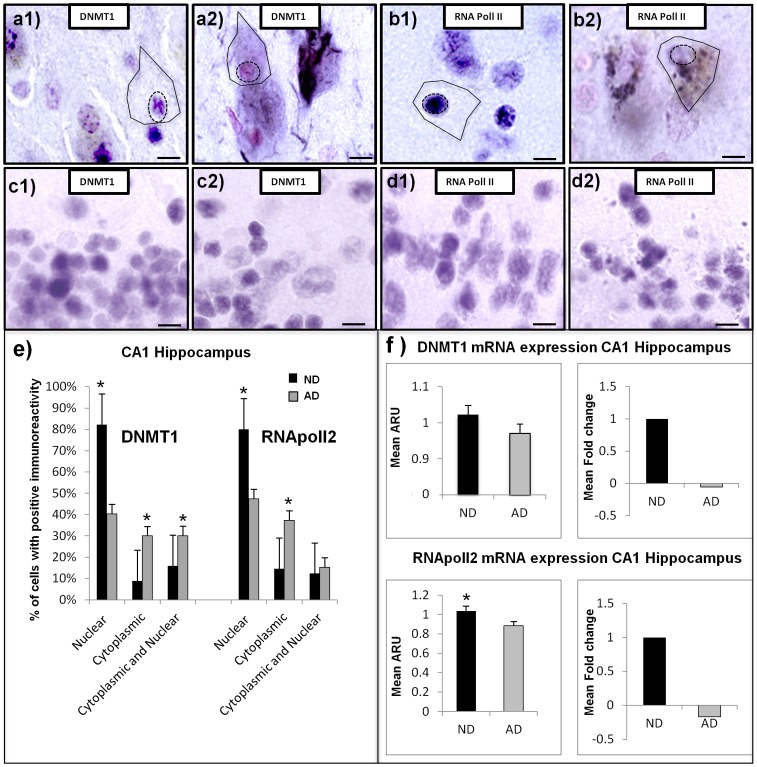
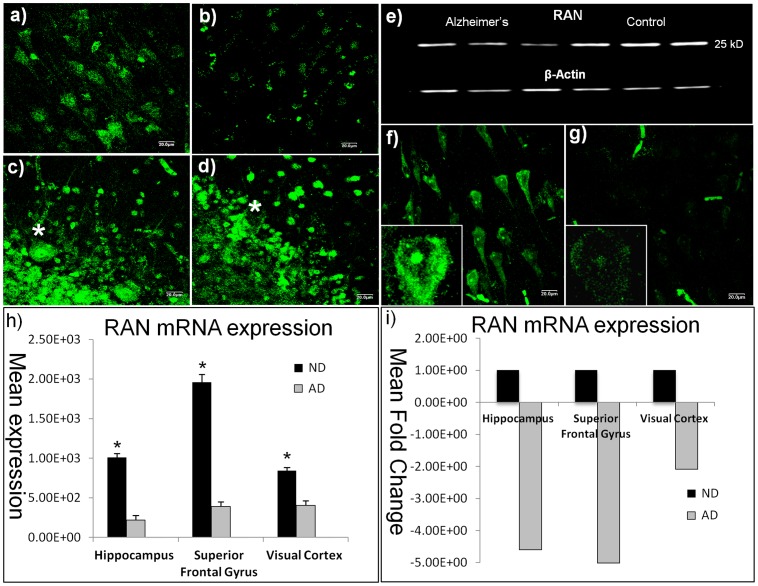
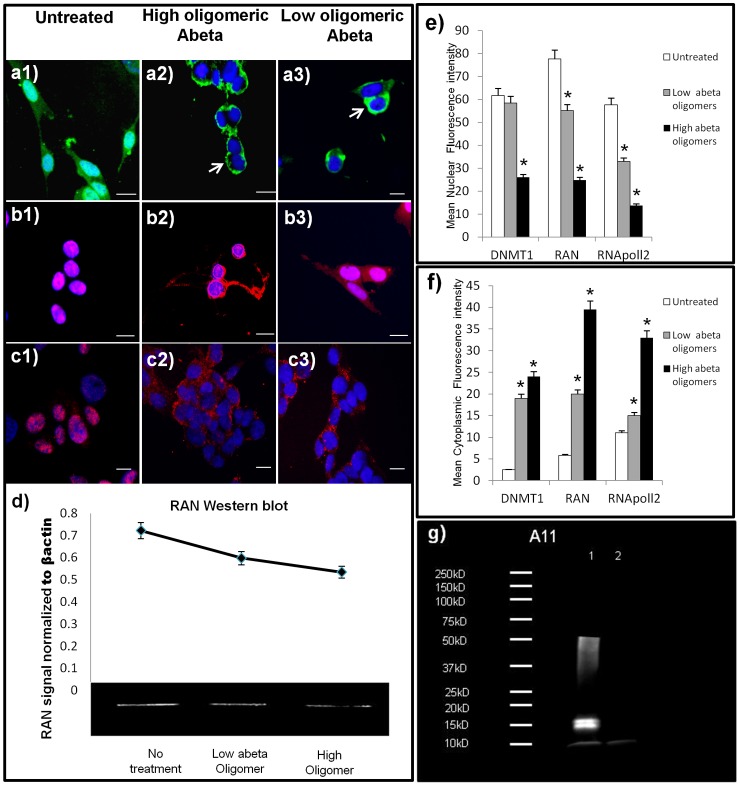
Transcription of DNA is essential for cell maintenance and survival; inappropriate localization of proteins that are involved in transcription would be catastrophic. In Alzheimer's disease brains, and in vitro studies, we have found qualitative and quantitative deficits in transport into the nucleus of DNA methyltransferase 1 (DNMT1) and RNA polymerase II (RNA pol II), accompanied by their abnormal sequestration in the cytoplasm. RAN (RAs-related Nuclear protein) knockdown, by siRNA and oligomeric Aβ42 treatment in neurons, replicate human data which indicate that transport disruption in AD may be mechanistically linked to reduced expression of RAN, a pivotal molecule in nucleocytoplasmic transport. In vitro studies also indicate a significant role for oligomeric Aβ42 in the observed phenomena. We propose a model in which reduced transcription regulators in the nucleus and their increased presence in the cytoplasm may lead to many of the cellular manifestations of Alzheimer's disease.
DNA 的转录对于细胞的维持和生存至关重要;参与转录的蛋白质如果定位不当,将会造成灾难性的后果。在阿尔茨海默病患者的大脑和体外研究中,我们发现 DNA 甲基转移酶 1(DNMT1)和 RNA 聚合酶 II(RNA pol II)进入细胞核的质量和数量都存在缺陷,同时它们在细胞质中异常隔离。RAN(与 RAs 相关的核蛋白)的 siRNA 和寡聚体 Aβ42 敲低,在神经元中复制了人类数据,表明 AD 中的运输中断可能与 RAN 的表达降低有关,RAN 是核质运输的关键分子。体外研究也表明寡聚体 Aβ42 在观察到的现象中起着重要作用。我们提出了一个模型,其中核内转录调节剂的减少及其在细胞质中的增加可能导致阿尔茨海默病的许多细胞表现。