Department of Medicine, Division of Allergy, Pulmonary, and Critical Care Medicine, Vanderbilt University School of Medicine, Nashville, TN, USA.
Crit Care Med. 2013 Mar;41(3):784-90. doi: 10.1097/CCM.0b013e3182741a54.
To determine the association of circulating cell-free hemoglobin with poor clinical outcomes in patients with sepsis and to characterize the potential protective effects of acetaminophen, an inhibitor of hemoprotein-mediated oxidation.
Retrospective observational study.
A total of 391 critically ill patients with sepsis in multiple ICUs in an academic tertiary care hospital.
None.
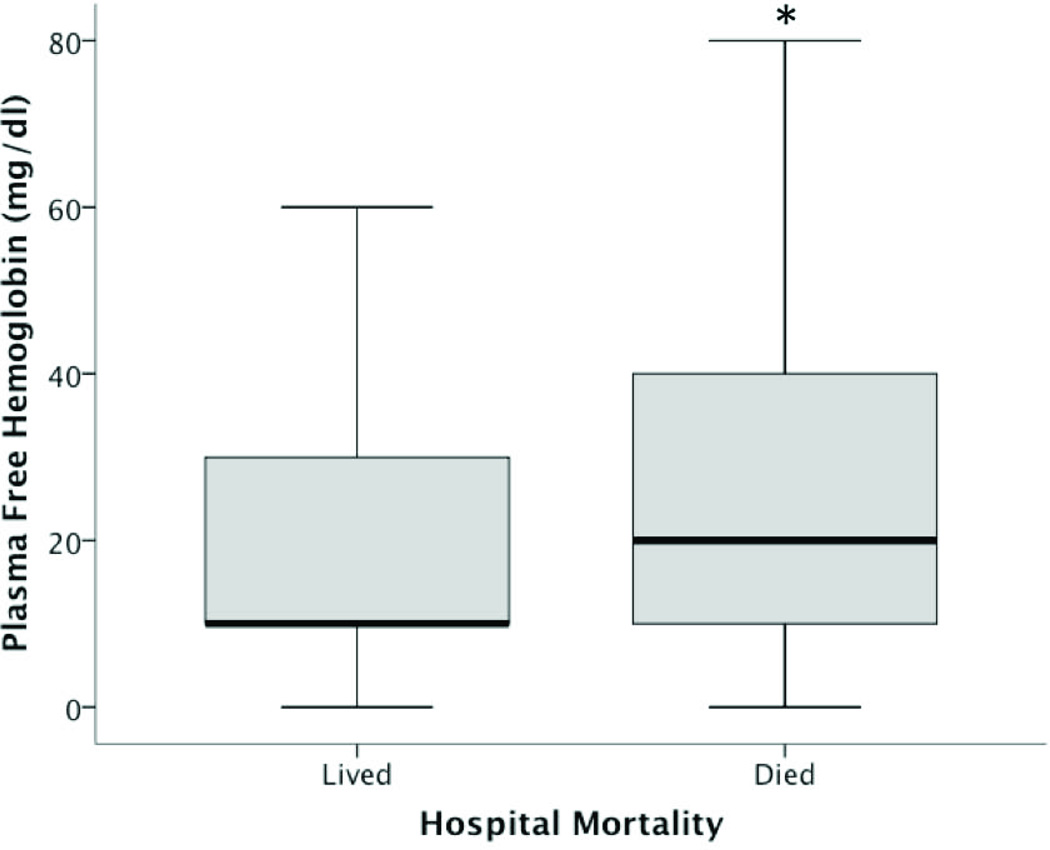
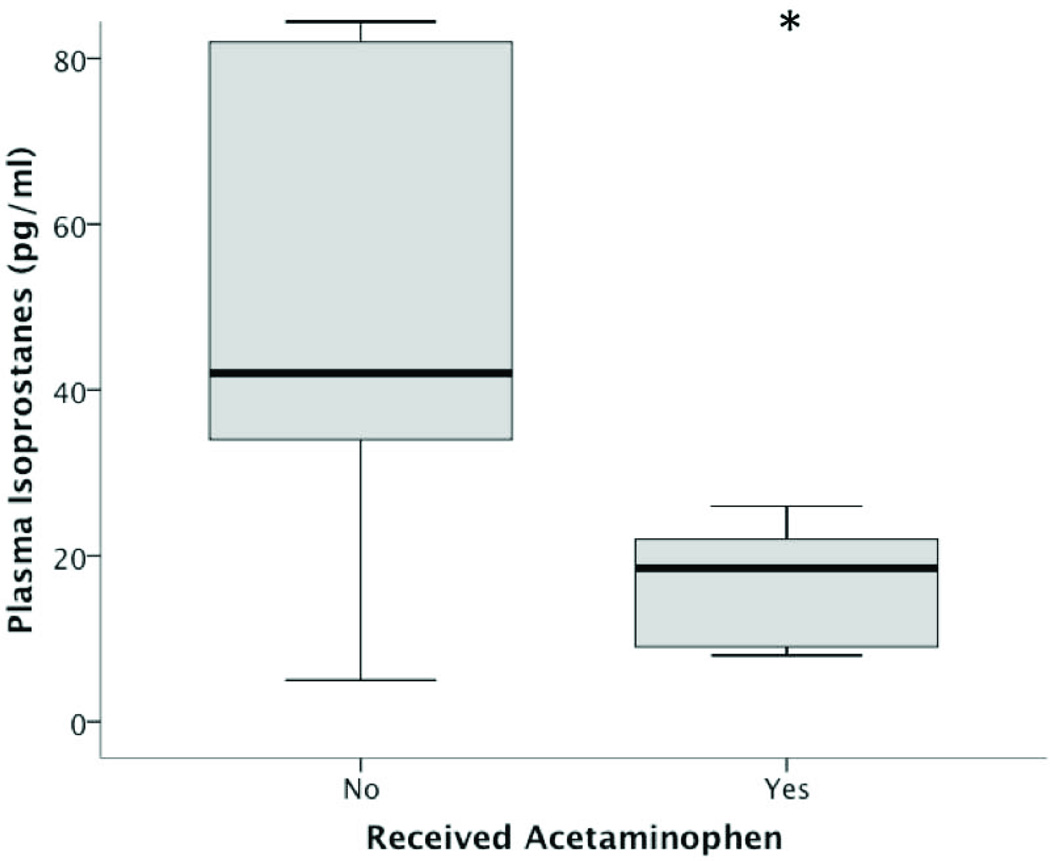
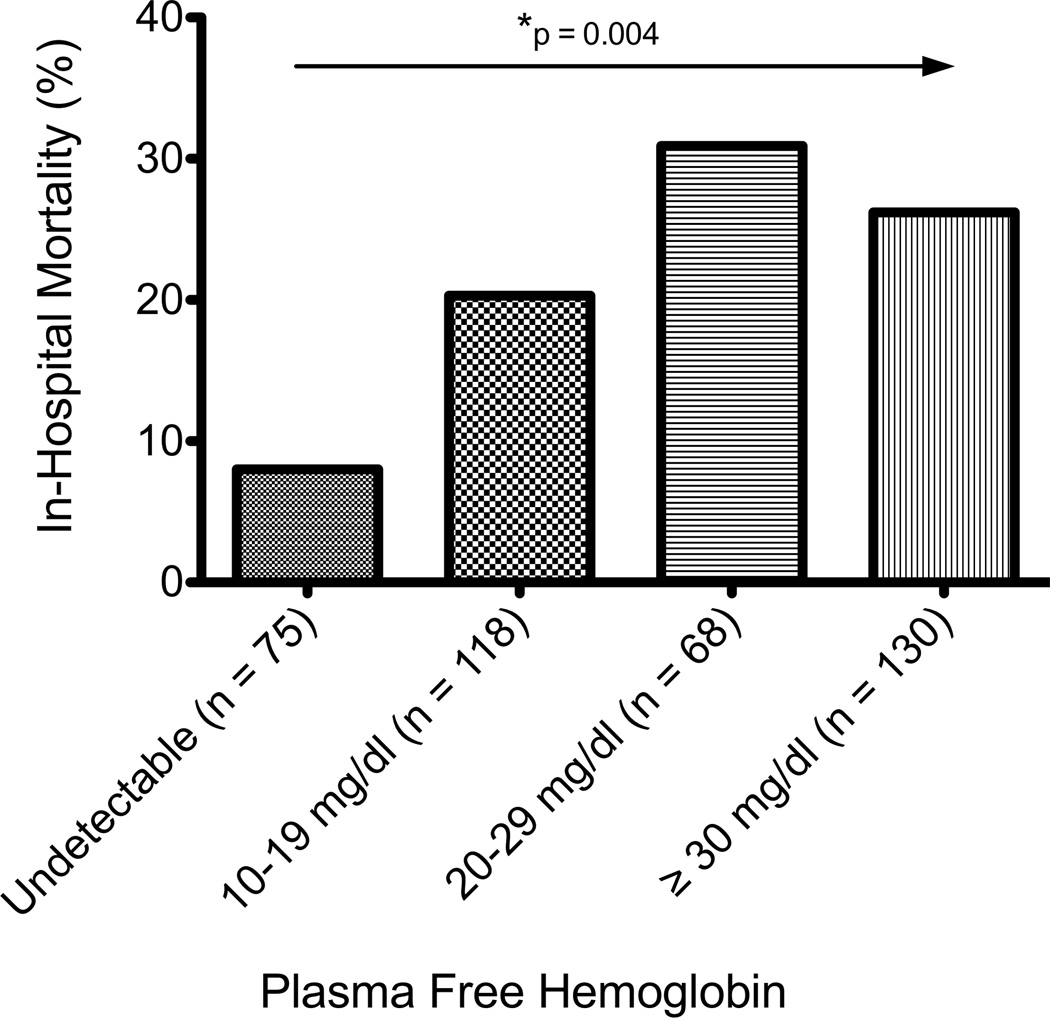
Nonsurvivors had significantly higher plasma cell-free hemoglobin concentrations (median 20mg/dL, interquartile range 10-40) measured on enrollment compared to survivors (10mg/dL, interquartile range 10-30, p = 0.002). After controlling for potential confounders, patients with higher cell-free hemoglobin concentrations were significantly more likely to die in the hospital (odds ratio 1.078, 95% confidence interval 1.012-1.149, p = 0.02). In addition, receiving acetaminophen in the setting of increased cell-free hemoglobin was independently associated with a protective effect against death (odds ratio 0.48, 95% confidence interval 0.25-0.91, p = 0.026) and lower plasma concentrations of the lipid peroxidation product F2-isoprostanes (18.5 pg/mL, interquartile range 9-22.2) compared to no acetaminophen (42 pg/mL, interquartile range 29.7-86, p = 0.009).
In critically ill patients with sepsis, elevated concentrations of circulating cell-free hemoglobin are independently associated with an increased risk of death. Acetaminophen may exert a protective effect by reducing cell-free hemoglobin-induced oxidative injury.
确定循环无细胞血红蛋白与脓毒症患者不良临床结局的关联,并描述乙酰氨基酚(一种抑制血红素蛋白介导的氧化的抑制剂)的潜在保护作用。
回顾性观察性研究。
来自学术三级护理医院多个 ICU 的共 391 例患有脓毒症的危重症患者。
无。
与幸存者(中位数 10mg/dL,四分位距 10-30)相比,登记时非幸存者的血浆无细胞血红蛋白浓度(中位数 20mg/dL,四分位距 10-40)明显更高(p = 0.002)。在控制了潜在的混杂因素后,无细胞血红蛋白浓度较高的患者在医院死亡的可能性明显更高(优势比 1.078,95%置信区间 1.012-1.149,p = 0.02)。此外,在增加无细胞血红蛋白的情况下使用乙酰氨基酚与死亡保护作用独立相关(优势比 0.48,95%置信区间 0.25-0.91,p = 0.026),并且与未使用乙酰氨基酚(42pg/mL,四分位距 29.7-86)相比,血浆脂质过氧化产物 F2-异前列腺素浓度较低(18.5pg/mL,四分位距 9-22.2,p = 0.009)。
在患有脓毒症的危重症患者中,循环无细胞血红蛋白浓度升高与死亡风险增加独立相关。乙酰氨基酚通过减少无细胞血红蛋白诱导的氧化损伤可能发挥保护作用。