Department of Molecular Cardiology and Joseph J Jacob Center for Thrombosis and Vascular Biology, Lerner Research Institute, Cleveland Clinic, Cleveland, OH 44195, USA.
J Am Heart Assoc. 2012 Dec;1(6):e005967. doi: 10.1161/JAHA.112.005967. Epub 2012 Dec 19.
Hyperglycemia is an independent risk factor for the development of vascular diabetic complications, which are characterized by endothelial dysfunction and tissue-specific aberrant angiogenesis. Tumor growth is also dependent on angiogenesis. Diabetes affects several cancers in a tissue-specific way. For example, it positively correlates with the incidence of breast cancer but negatively correlates with the incidence of prostate cancer. The tissue-specific molecular mechanisms activated by hyperglycemia that control angiogenesis are unknown. Here we describe a novel tissue- and cell-specific molecular pathway that is activated by high glucose and regulates angiogenesis.
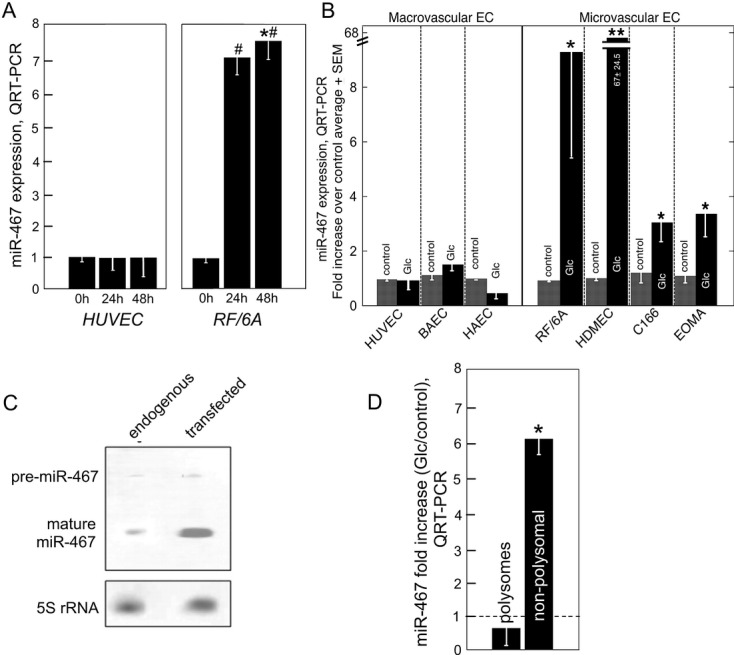
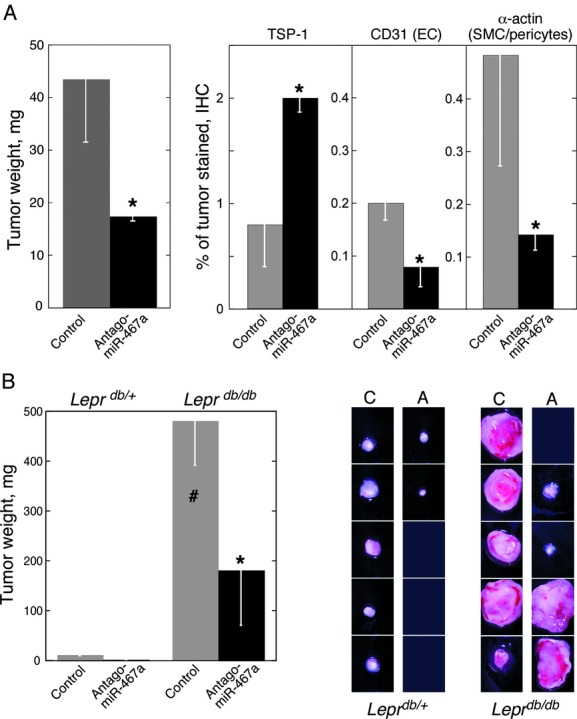
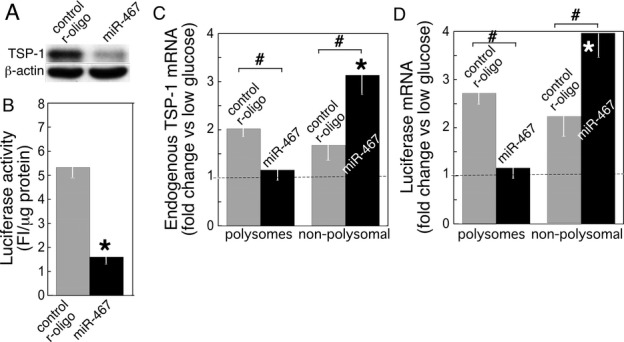
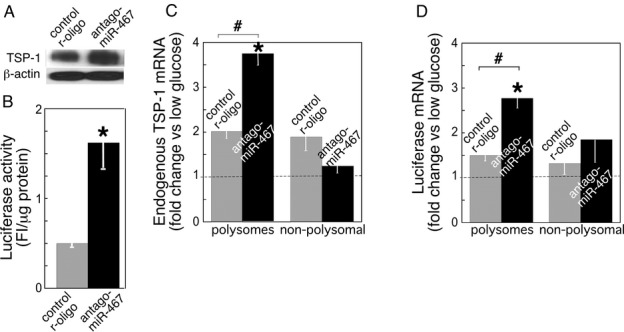
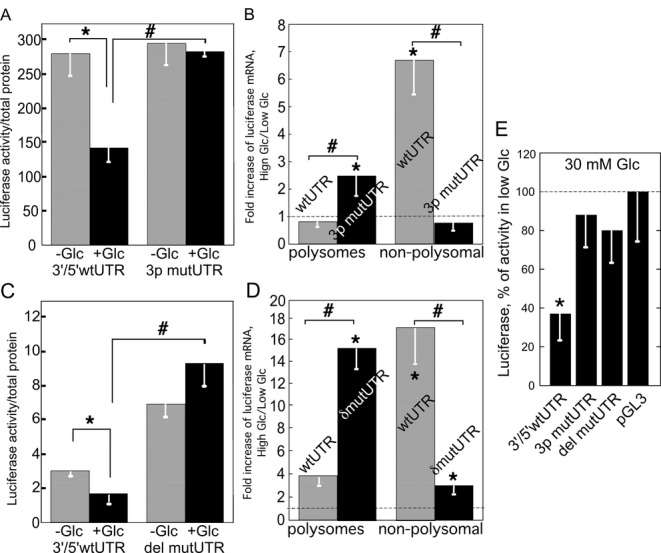
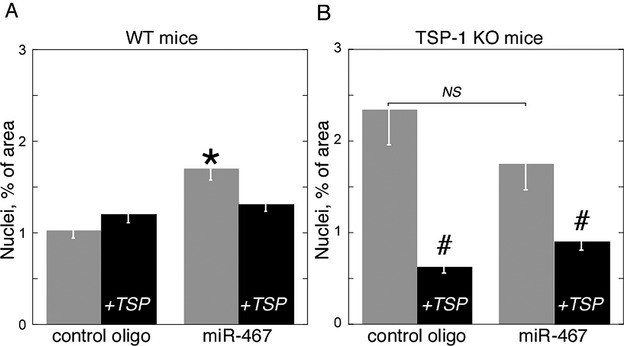
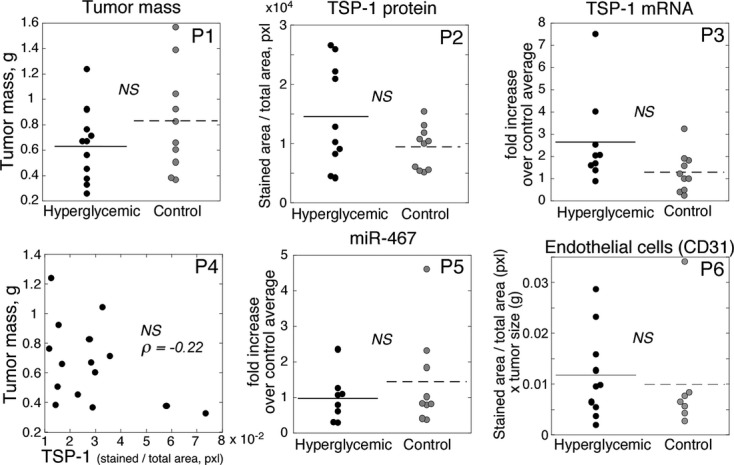
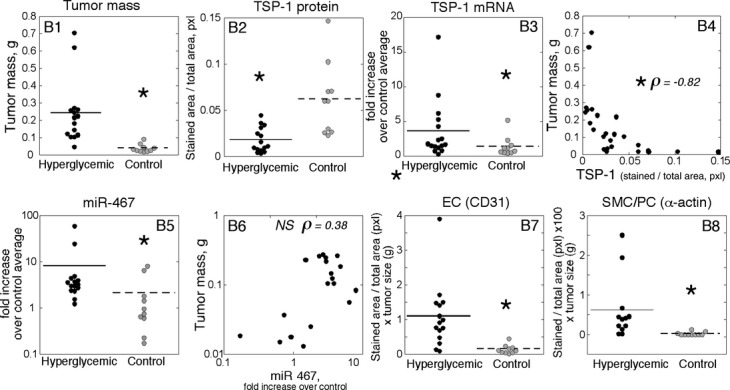
We have identified microRNA 467 (miR-467) as a translational suppressor of thrombospondin-1 (TSP-1), a potent antiangiogenic protein that is implicated in the pathogenesis of several diabetic complications. miR-467 was upregulated by hyperglycemia in a tissue-specific manner. It was induced by high glucose in microvascular endothelial cells and in breast cancer cells, where it suppressed the production of TSP-1 by sequestering mRNA in the nonpolysomal fraction. Mutation of the miR-467 binding site in TSP-1 3' UTR or miR-467 inhibitor relieved the translational silencing and restored TSP-1 production. In in vivo angiogenesis models, miR-467 promoted the growth of blood vessels, and TSP-1 was the main mediator of this effect. Breast cancer tumors showed increased growth in hyperglycemic mice and expressed higher levels of miR-467. The antagonist of miR-467 prevented the hyperglycemia-induced tumor growth.
Our results demonstrate that miR-467 is implicated in the control of angiogenesis in response to high glucose, which makes it an attractive tissue-specific potential target for therapeutic regulation of aberrant angiogenesis and cancer growth in diabetes.
高血糖是血管性糖尿病并发症发展的一个独立危险因素,这些并发症的特征是内皮功能障碍和组织特异性异常血管生成。肿瘤的生长也依赖于血管生成。糖尿病以组织特异性的方式影响几种癌症。例如,它与乳腺癌的发病率呈正相关,但与前列腺癌的发病率呈负相关。高血糖激活的控制血管生成的组织特异性分子机制尚不清楚。在这里,我们描述了一个新的组织和细胞特异性分子途径,该途径被高葡萄糖激活并调节血管生成。
我们已经确定 microRNA 467(miR-467)作为血小板反应蛋白-1(TSP-1)的翻译抑制剂,TSP-1 是一种有效的抗血管生成蛋白,与几种糖尿病并发症的发病机制有关。miR-467 被高血糖以组织特异性的方式上调。它被高葡萄糖在微血管内皮细胞和乳腺癌细胞中诱导,在那里它通过将 mRNA 隔离在非多核糖体部分来抑制 TSP-1 的产生。TSP-1 3'UTR 中的 miR-467 结合位点的突变或 miR-467 抑制剂减轻了翻译沉默并恢复了 TSP-1 的产生。在体内血管生成模型中,miR-467 促进了血管的生长,而 TSP-1 是这种作用的主要介导者。在高血糖小鼠中,乳腺癌肿瘤显示出更高的生长速度,并且表达更高水平的 miR-467。miR-467 的拮抗剂可预防高血糖引起的肿瘤生长。
我们的研究结果表明,miR-467 参与了对高葡萄糖的血管生成的控制,这使其成为治疗性调节糖尿病中异常血管生成和癌症生长的有吸引力的组织特异性潜在靶点。