Thundimadathil Jyothi
American Peptide Company Inc., Sunnyvale, CA 94086, USA.
J Amino Acids. 2012;2012:967347. doi: 10.1155/2012/967347. Epub 2012 Dec 20.
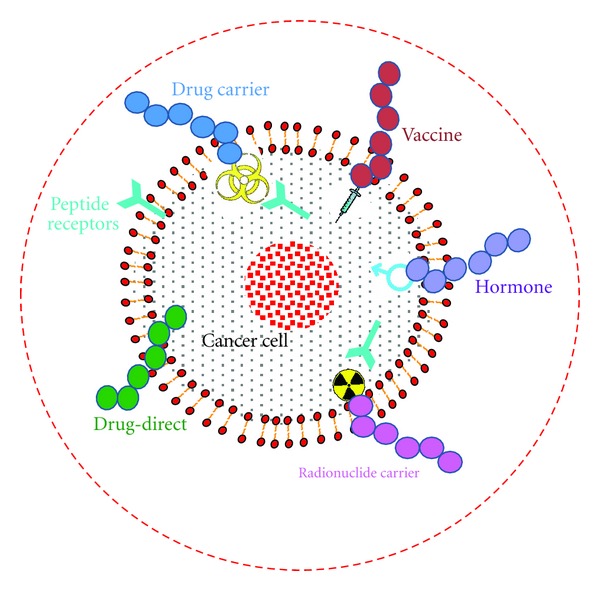
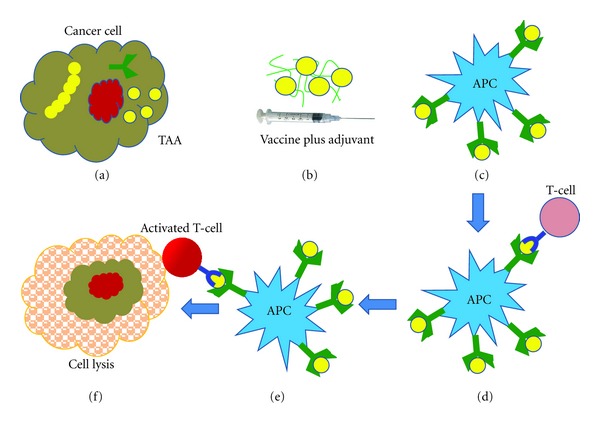
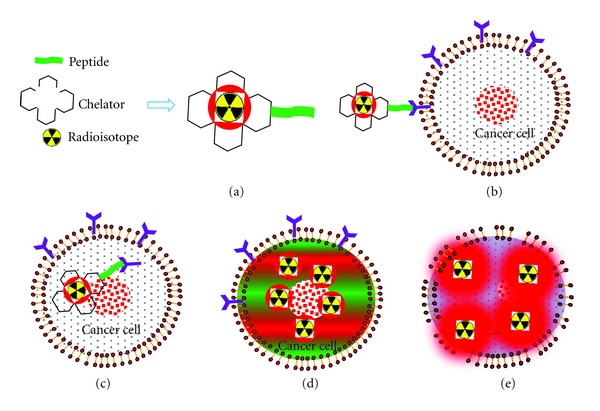
This paper discusses the role of peptides in cancer therapy with special emphasis on peptide drugs which are already approved and those in clinical trials. The potential of peptides in cancer treatment is evident from a variety of different strategies that are available to address the progression of tumor growth and propagation of the disease. Use of peptides that can directly target cancer cells without affecting normal cells (targeted therapy) is evolving as an alternate strategy to conventional chemotherapy. Peptide can be utilized directly as a cytotoxic agent through various mechanisms or can act as a carrier of cytotoxic agents and radioisotopes by specifically targeting cancer cells. Peptide-based hormonal therapy has been extensively studied and utilized for the treatment of breast and prostate cancers. Tremendous amount of clinical data is currently available attesting to the efficiency of peptide-based cancer vaccines. Combination therapy is emerging as an important strategy to achieve synergistic effects in fighting cancer as a single method alone may not be efficient enough to yield positive results. Combining immunotherapy with conventional therapies such as radiation and chemotherapy or combining an anticancer peptide with a nonpeptidic cytotoxic drug is an example of this emerging field.
本文讨论了肽在癌症治疗中的作用,特别强调了已获批的肽类药物以及那些正在进行临床试验的肽类药物。肽在癌症治疗中的潜力从多种不同的策略中可见一斑,这些策略可用于应对肿瘤生长的进展和疾病的传播。使用能够直接靶向癌细胞而不影响正常细胞的肽(靶向治疗)正在成为传统化疗的替代策略。肽可以通过各种机制直接用作细胞毒性剂,或者通过特异性靶向癌细胞充当细胞毒性剂和放射性同位素的载体。基于肽的激素疗法已被广泛研究并用于治疗乳腺癌和前列腺癌。目前有大量临床数据证明基于肽的癌症疫苗的有效性。联合治疗正在成为一种重要策略,以在对抗癌症中实现协同效应,因为单一方法可能不足以产生积极效果。将免疫疗法与放疗和化疗等传统疗法相结合,或者将抗癌肽与非肽类细胞毒性药物相结合,就是这个新兴领域的一个例子。