Zhou Yanjiao, Gao Hongyu, Mihindukulasuriya Kathie A, La Rosa Patricio S, Wylie Kristine M, Vishnivetskaya Tatiana, Podar Mircea, Warner Barb, Tarr Phillip I, Nelson David E, Fortenberry J Dennis, Holland Martin J, Burr Sarah E, Shannon William D, Sodergren Erica, Weinstock George M
Genome Biol. 2013 Jan 14;14(1):R1. doi: 10.1186/gb-2013-14-1-r1.
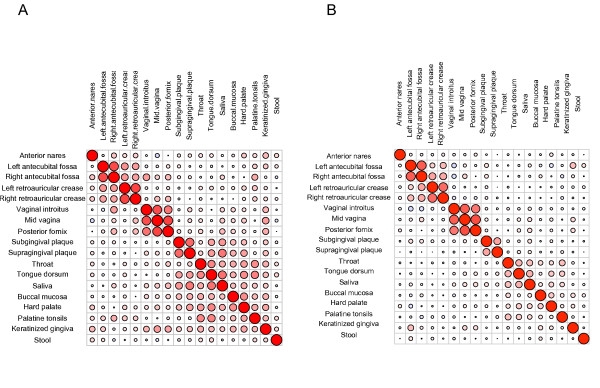
Characterizing the biogeography of the microbiome of healthy humans is essential for understanding microbial associated diseases. Previous studies mainly focused on a single body habitat from a limited set of subjects. Here, we analyzed one of the largest microbiome datasets to date and generated a biogeographical map that annotates the biodiversity, spatial relationships, and temporal stability of 22 habitats from 279 healthy humans.
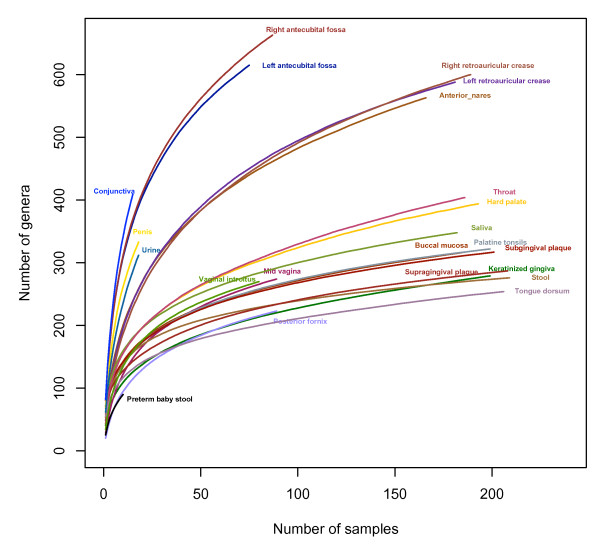
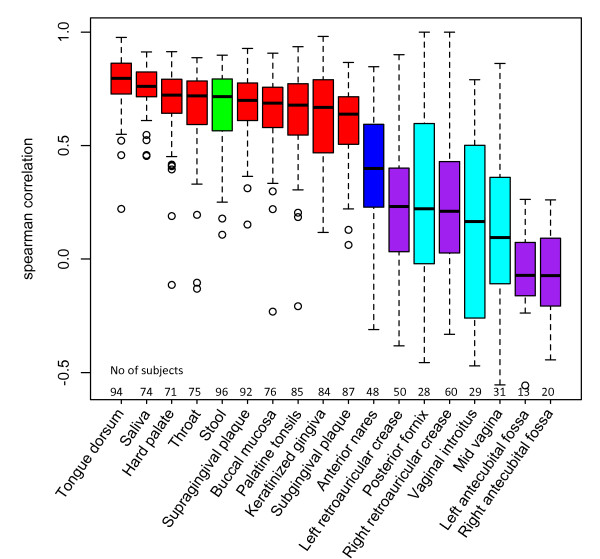
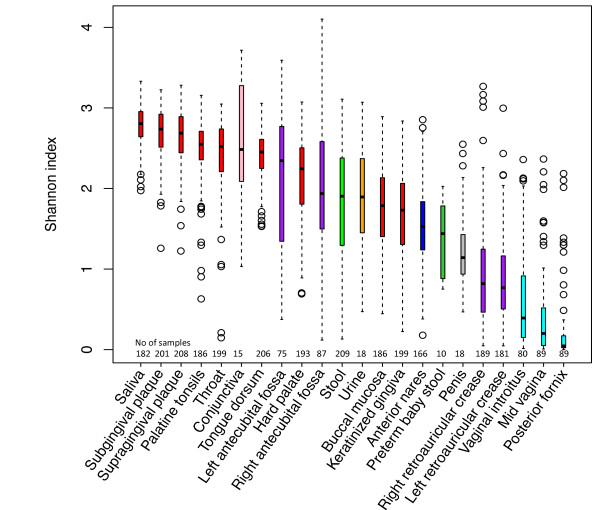
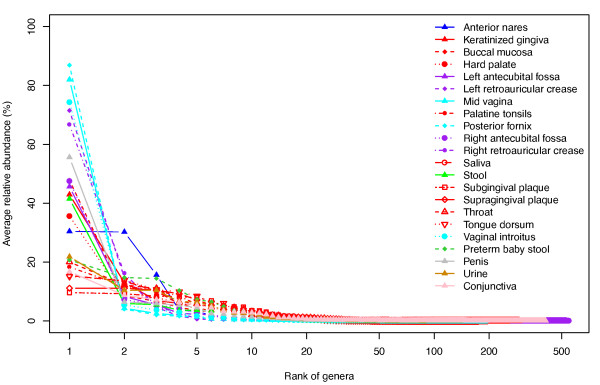
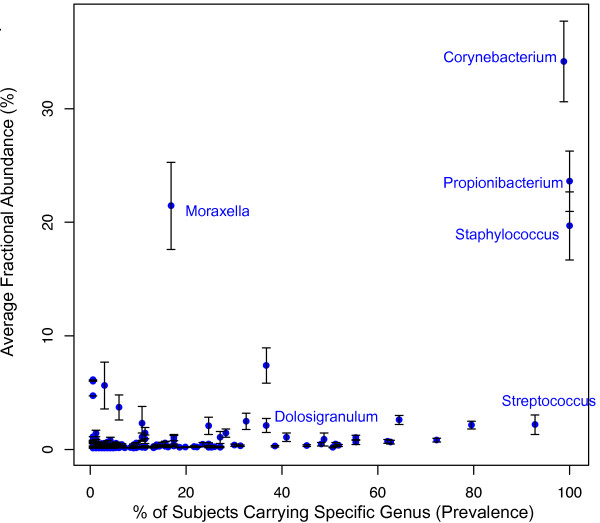
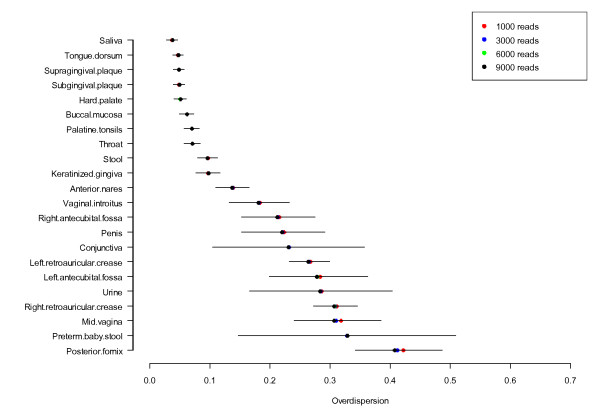
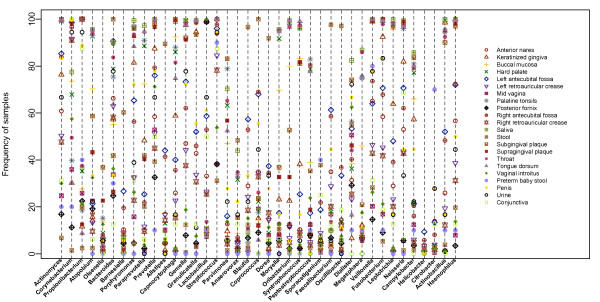
We identified 929 genera from more than 24 million 16S rRNA gene sequences of 22 habitats, and we provide a baseline of inter-subject variation for healthy adults. The oral habitat has the most stable microbiota with the highest alpha diversity, while the skin and vaginal microbiota are less stable and show lower alpha diversity. The level of biodiversity in one habitat is independent of the biodiversity of other habitats in the same individual. The abundances of a given genus at a body site in which it dominates do not correlate with the abundances at body sites where it is not dominant. Additionally, we observed the human microbiota exhibit both cosmopolitan and endemic features. Finally, comparing datasets of different projects revealed a project-based clustering pattern, emphasizing the significance of standardization of metagenomic studies.
The data presented here extend the definition of the human microbiome by providing a more complete and accurate picture of human microbiome biogeography, addressing questions best answered by a large dataset of subjects and body sites that are deeply sampled by sequencing.
了解健康人类微生物组的生物地理学特征对于理解微生物相关疾病至关重要。以往的研究主要集中于有限数量受试者的单一身体栖息地。在此,我们分析了迄今为止最大的微生物组数据集之一,并生成了一幅生物地理图谱,该图谱标注了来自279名健康人的22个栖息地的生物多样性、空间关系和时间稳定性。
我们从22个栖息地的超过2400万个16S rRNA基因序列中鉴定出929个属,并为健康成年人提供了个体间变异的基线。口腔栖息地的微生物群最稳定,α多样性最高,而皮肤和阴道微生物群稳定性较差,α多样性较低。一个栖息地的生物多样性水平与同一个体中其他栖息地的生物多样性无关。在一个身体部位占主导地位的特定属的丰度与其在非主导身体部位的丰度不相关。此外,我们观察到人类微生物群既具有世界性特征,也具有地方性特征。最后,比较不同项目的数据集揭示了基于项目的聚类模式,强调了宏基因组学研究标准化的重要性。
本文所呈现的数据通过提供更完整、准确的人类微生物组生物地理图谱,扩展了人类微生物组的定义,解决了通过对大量受试者和身体部位进行深度测序采样的数据集才能最好回答的问题。