aDepartment of Physiology and Biophysics, School of Medicine, University of Mississippi Medical Center, 2500 North State St., Jackson, MS 39216, USA.
Curr Drug Targets. 2013 Mar;14(3):325-34. doi: 10.2174/1389450111314030004.
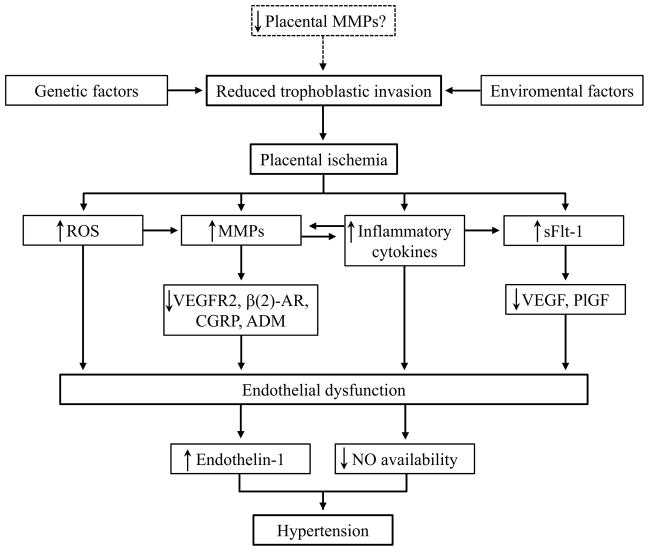
Preeclampsia is an important syndrome complicating pregnancy. While the pathogenesis of preeclampsia is not entirely known, poor placental perfusion leading to widespread maternal endothelial dysfunction is accepted as a major mechanism. It has been suggested that altered placental expression of matrix metalloproteinases (MMPs) may cause shallow cytotrophoblastic invasion and incomplete remodeling of the spiral arteries. MMPs are also thought to link placental ischemia to the cardiovascular alterations of preeclampsia. In fact, MMPs may promote vasoconstriction and surface receptors cleavage affecting the vasculature. Therefore, the overall goal of this review article is to provide an overview of the pathophisiology of preeclampsia, more specifically regarding the role of MMPs in the pathogenesis of preeclampsia and the potential of MMP inhibitors as therapeutic options.
子痫前期是一种重要的妊娠并发症。虽然子痫前期的发病机制尚未完全清楚,但广泛的母体血管内皮功能障碍导致胎盘灌注不良被认为是主要机制。有人认为,基质金属蛋白酶(MMPs)在胎盘的表达改变可能导致浅绒毛滋养细胞浸润和螺旋动脉的不完全重塑。MMPs 也被认为将胎盘缺血与子痫前期的心血管改变联系起来。事实上,MMPs 可能通过促进血管收缩和影响血管的表面受体裂解来发挥作用。因此,本文综述的总体目标是提供对子痫前期病理生理学的概述,更具体地说,是关于 MMPs 在子痫前期发病机制中的作用以及 MMP 抑制剂作为治疗选择的潜力。