Draus-Barini Jolanta, Walsh Susan, Pośpiech Ewelina, Kupiec Tomasz, Głąb Henryk, Branicki Wojciech, Kayser Manfred
Institute of Forensic Research, Section of Forensic Genetics, Kraków, Poland.
Department of Forensic Molecular Biology, Erasmus MC University Medical Center Rotterdam, Rotterdam, The Netherlands.
Investig Genet. 2013 Jan 14;4(1):3. doi: 10.1186/2041-2223-4-3.
DNA analysis of ancient skeletal remains is invaluable in evolutionary biology for exploring the history of species, including humans. Contemporary human bones and teeth, however, are relevant in forensic DNA analyses that deal with the identification of perpetrators, missing persons, disaster victims or family relationships. They may also provide useful information towards unravelling controversies that surround famous historical individuals. Retrieving information about a deceased person's externally visible characteristics can be informative in both types of DNA analyses. Recently, we demonstrated that human eye and hair colour can be reliably predicted from DNA using the HIrisPlex system. Here we test the feasibility of the novel HIrisPlex system at establishing eye and hair colour of deceased individuals from skeletal remains of various post-mortem time ranges and storage conditions.
Twenty-one teeth between 1 and approximately 800 years of age and 5 contemporary bones were subjected to DNA extraction using standard organic protocol followed by analysis using the HIrisPlex system.
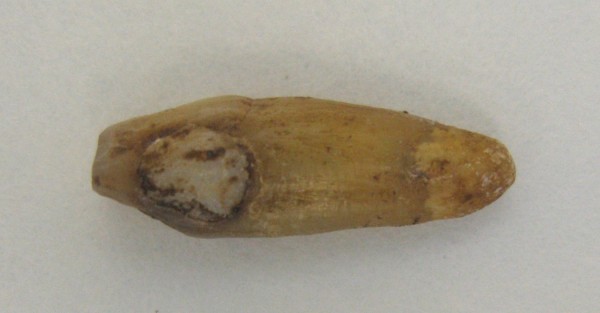
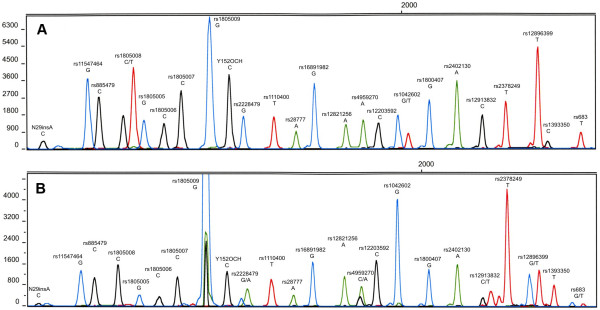
Twenty-three out of 26 bone DNA extracts yielded the full 24 SNP HIrisPlex profile, therefore successfully allowing model-based eye and hair colour prediction. HIrisPlex analysis of a tooth from the Polish general Władysław Sikorski (1881 to 1943) revealed blue eye colour and blond hair colour, which was positively verified from reliable documentation. The partial profiles collected in the remaining three cases (two contemporary samples and a 14th century sample) were sufficient for eye colour prediction.
Overall, we demonstrate that the HIrisPlex system is suitable, sufficiently sensitive and robust to successfully predict eye and hair colour from ancient and contemporary skeletal remains. Our findings, therefore, highlight the HIrisPlex system as a promising tool in future routine forensic casework involving skeletal remains, including ancient DNA studies, for the prediction of eye and hair colour of deceased individuals.
对古代骨骼遗骸进行DNA分析在进化生物学中对于探索包括人类在内的物种历史具有极高价值。然而,当代人类的骨骼和牙齿在涉及犯罪者、失踪人员、灾难受害者或亲属关系鉴定的法医DNA分析中也具有重要意义。它们还可能为解开围绕著名历史人物的争议提供有用信息。在这两种DNA分析中,获取有关死者外部可见特征的信息都可能具有参考价值。最近,我们证明了使用HIrisPlex系统可以从DNA可靠地预测人类眼睛和头发的颜色。在此,我们测试了新型HIrisPlex系统在根据不同死后时间范围和储存条件的骨骼遗骸确定死者眼睛和头发颜色方面的可行性。
对21颗年龄在1岁至约800岁之间的牙齿和5块当代骨骼采用标准有机方法进行DNA提取,随后使用HIrisPlex系统进行分析。
26份骨骼DNA提取物中有23份产生了完整的24个单核苷酸多态性(SNP)的HIrisPlex图谱,因此成功实现了基于模型的眼睛和头发颜色预测。对波兰将军瓦迪斯瓦夫·西科尔斯基(1881年至1943年)的一颗牙齿进行的HIrisPlex分析显示其眼睛为蓝色,头发为金色,这一点从可靠文献中得到了肯定验证。其余三个案例(两个当代样本和一个14世纪的样本)所收集的部分图谱足以进行眼睛颜色预测。
总体而言,我们证明了HIrisPlex系统适用于、足够灵敏且稳健,能够成功地从古代和当代骨骼遗骸中预测眼睛和头发颜色。因此,我们的研究结果突出了HIrisPlex系统作为未来涉及骨骼遗骸的常规法医案件工作(包括古代DNA研究)中预测死者眼睛和头发颜色的一种有前景的工具。