Computer-Aided Molecular Design Laboratory, Mayo Clinic, Rochester, MN 55905, USA.
Sci Rep. 2013;3:1068. doi: 10.1038/srep01068. Epub 2013 Jan 15.
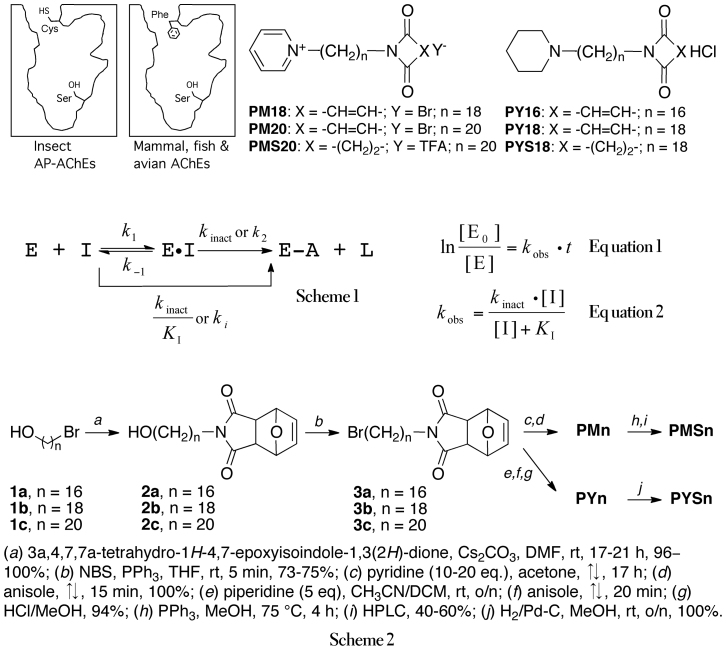
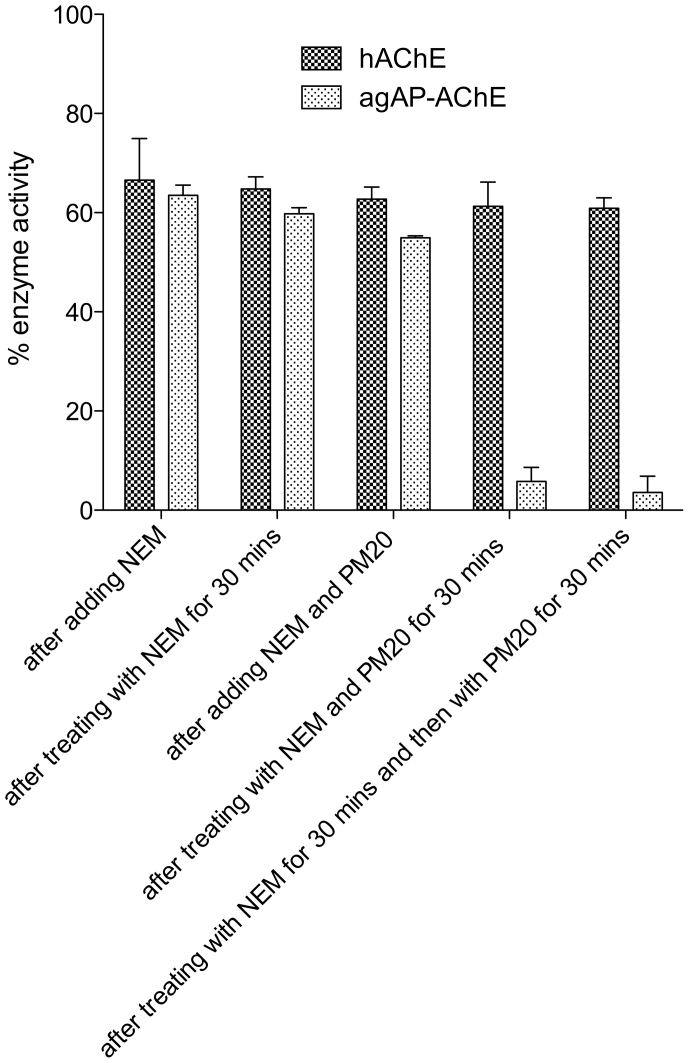
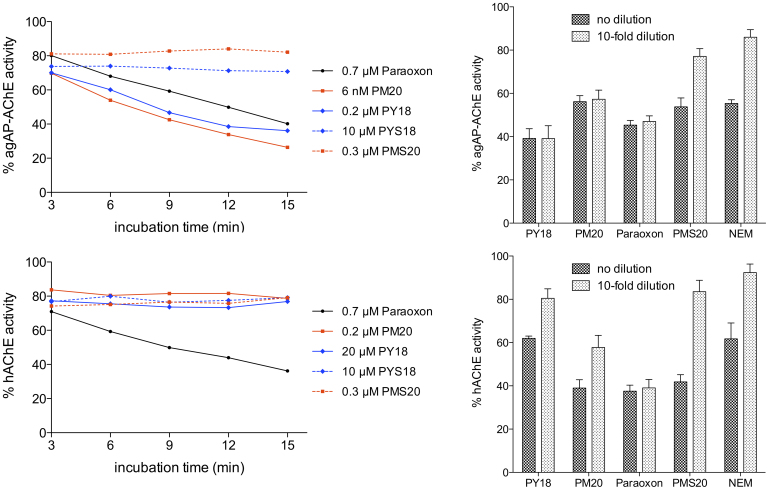
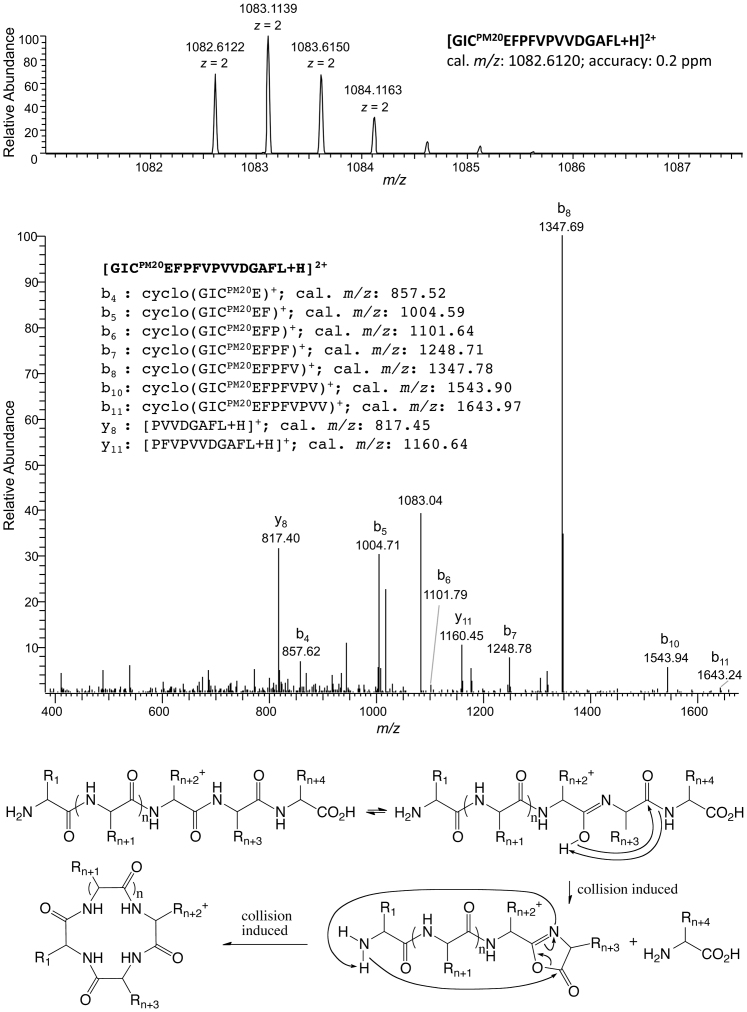
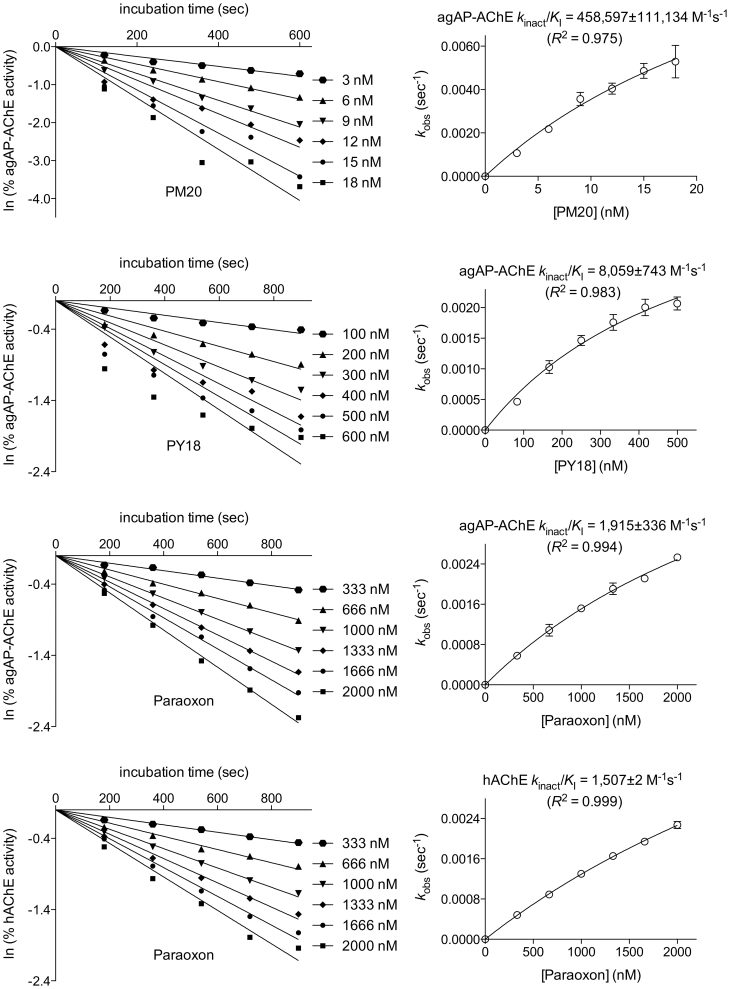
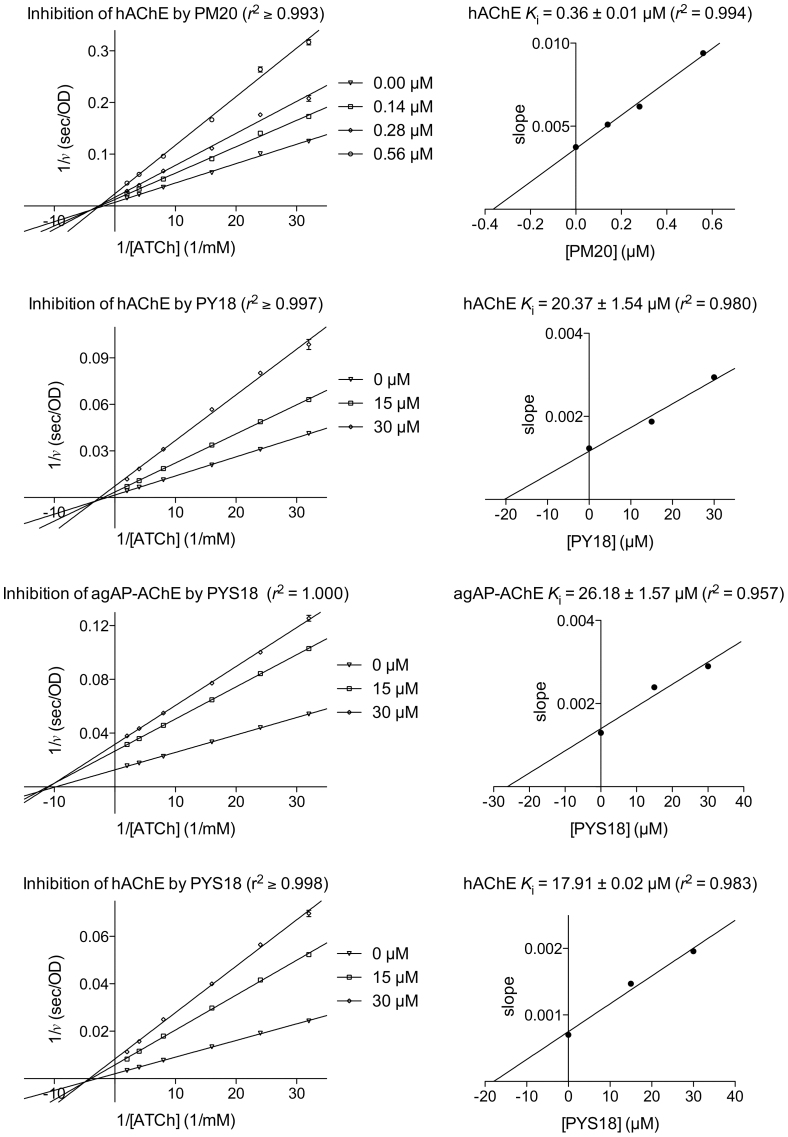
We reported previously that insect acetylcholinesterases (AChEs) could be selectively and irreversibly inhibited by methanethiosulfonates presumably through conjugation to an insect-specific cysteine in these enzymes. However, no direct proof for the conjugation has been published to date, and doubts remain about whether such cysteine-targeting inhibitors have desirable kinetic properties for insecticide use. Here we report mass spectrometric proof of the conjugation and new chemicals that irreversibly inhibited African malaria mosquito AChE with bimolecular inhibition rate constants (k(inact)/K(I)) of 3,604-458,597 M(-1)sec(-1) but spared human AChE. In comparison, the insecticide paraoxon irreversibly inhibited mosquito and human AChEs with k(inact)/K(I) values of 1,915 and 1,507 M(-1)sec(-1), respectively, under the same assay conditions. These results further support our hypothesis that the insect-specific AChE cysteine is a unique and unexplored target to develop new insecticides with reduced insecticide resistance and low toxicity to mammals, fish, and birds for the control of mosquito-borne diseases.
我们之前报道过,昆虫乙酰胆碱酯酶(AChE)可以被甲硫基磺酸酯类化合物选择性和不可逆地抑制,这可能是通过与这些酶中昆虫特有的半胱氨酸结合。然而,迄今为止还没有发表关于结合的直接证据,并且人们仍然怀疑这种针对半胱氨酸的抑制剂是否具有用于杀虫剂的理想动力学特性。在这里,我们通过质谱法证明了结合,并报道了新的化学物质,它们不可逆地抑制了非洲疟蚊 AChE,双分子抑制常数(k(inact)/K(I))为 3,604-458,597 M(-1)sec(-1),但对人 AChE 没有影响。相比之下,在相同的测定条件下,杀虫剂对氧磷不可逆地抑制蚊子和人 AChE 的 k(inact)/K(I) 值分别为 1,915 和 1,507 M(-1)sec(-1)。这些结果进一步支持了我们的假设,即昆虫特异性 AChE 半胱氨酸是一个独特的、尚未开发的靶点,可以开发出具有降低杀虫剂抗性和对哺乳动物、鱼类和鸟类低毒性的新型杀虫剂,用于控制蚊媒疾病。