Department of Pediatric Cardiology and Congenital Heart Disease, Deutsches Herzzentrum München, Klinikum an der Technischen Universität München, Lazarettstrasse 36, Munich, Germany.
J Cardiovasc Magn Reson. 2013 Jan 16;15(1):3. doi: 10.1186/1532-429X-15-3.
Optimal ECG triggering is of paramount importance for correct blood flow quantification during cardiovascular magnetic resonance (CMR). However, optimal ECG triggering and therefore blood flow quantification is impaired in many patients with congenital heart disease (CHD) due to complex QRS patterns. Therefore, a new ECG-trigger algorithm was developed to address triggering problems due to complex QRS patterns.The aim of this study was to test this new ECG-trigger algorithm in routine patients with CHD and its impact on blood flow quantification.
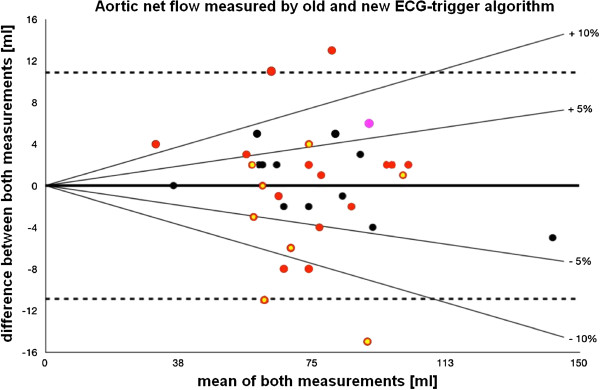
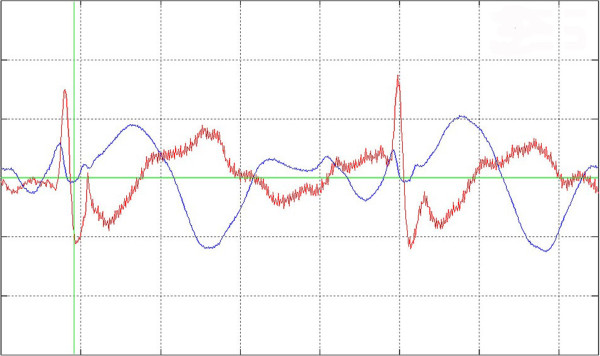
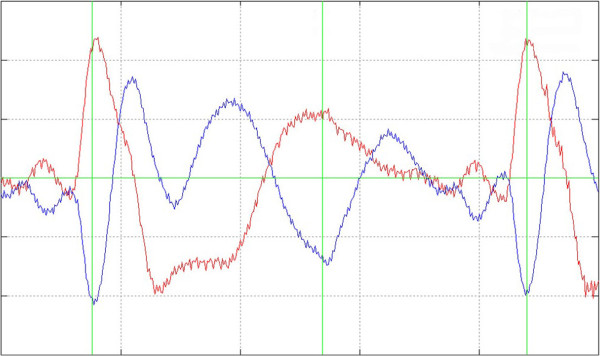
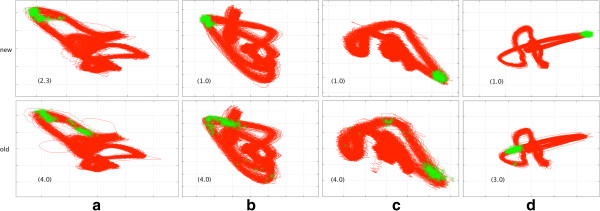
35 consecutive routine patients with CHD undergoing CMR were included in the study. (40% Fallot's Tetralogy, 20% aortic arch pathology, 14% transposition of the great arteries, 26% others; age 26+/-11 yrs).In all patients, blood flow in the ascending aorta was quantified using the old ECG-trigger algorithm and the new ECG-trigger algorithm in random order. Blood flow quantified using the old or new ECG-trigger algorithm was compared by Bland-Altman analysis.Three blinded investigators evaluated the vector clouds and trigger points of both ECG-trigger methods. Evaluation criteria were false positive and false negative triggered QRS complexes (specificity and sensitivity), and accuracy of detection. Accuracy of detection was defined as time scatter of the trigger around the correct trigger point.
Specificity, sensitivity, and accuracy of detection significantly increased using the new ECG-trigger algorithm compared to the old ECG-trigger algorithm.Blood flow quantification using the old or new ECG-trigger algorithm differed more than 5% in 31% of the cases.
Our results suggest that optimizing ECG triggering during CMR using our new algorithm can avoid errors of >5% in approximately 1/3 of routine patients with congenital heart disease (CHD). We furthermore suggest that incorrect ECG triggering appears to be problematic for blood flow quantification of many patients with CHD undergoing routine CMR.
在心血管磁共振(CMR)中,最佳心电图触发对于正确的血流定量至关重要。然而,由于复杂的 QRS 模式,许多患有先天性心脏病(CHD)的患者的心电图触发和血流定量都会受到影响。因此,开发了一种新的心电图触发算法来解决由于复杂的 QRS 模式而导致的触发问题。本研究旨在测试这种新的心电图触发算法在患有 CHD 的常规患者中的应用及其对血流定量的影响。
本研究纳入了 35 例连续接受 CMR 的 CHD 常规患者(40%法洛四联症,20%主动脉弓病变,14%大动脉转位,26%其他;年龄 26+/-11 岁)。在所有患者中,使用旧的心电图触发算法和新的心电图触发算法以随机顺序对升主动脉的血流进行定量。使用新旧心电图触发算法定量的血流通过 Bland-Altman 分析进行比较。三位盲法研究者评估了两种心电图触发方法的向量云和触发点。评估标准为假阳性和假阴性触发 QRS 复合体(特异性和敏感性)以及检测准确性。检测准确性定义为围绕正确触发点的触发时间散布。
与旧的心电图触发算法相比,新的心电图触发算法显著提高了特异性、敏感性和检测准确性。在 31%的病例中,使用旧或新的心电图触发算法定量的血流差异超过 5%。
我们的结果表明,使用我们的新算法优化 CMR 期间的心电图触发可以避免大约 1/3的患有先天性心脏病(CHD)的常规患者出现超过 5%的误差。我们还建议,对于许多接受常规 CMR 的 CHD 患者,不正确的心电图触发似乎会对血流定量产生问题。