Laboratory of Genome Maintenance, The Rockefeller University, New York 10065, USA.
Nature. 2013 Jan 17;493(7432):356-63. doi: 10.1038/nature11863.
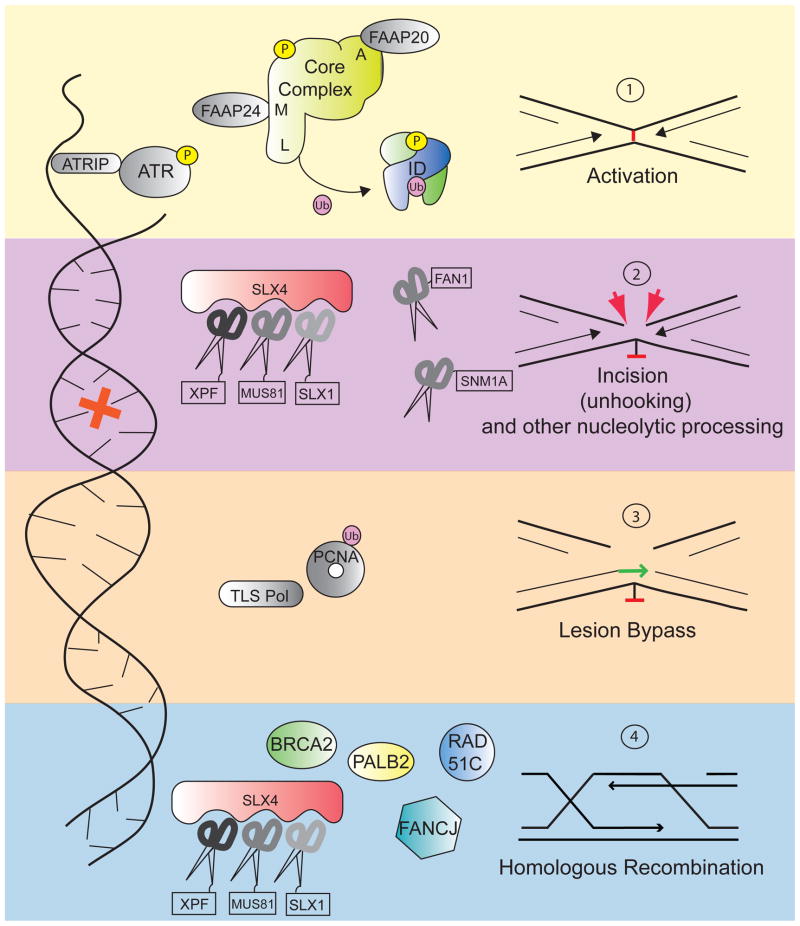
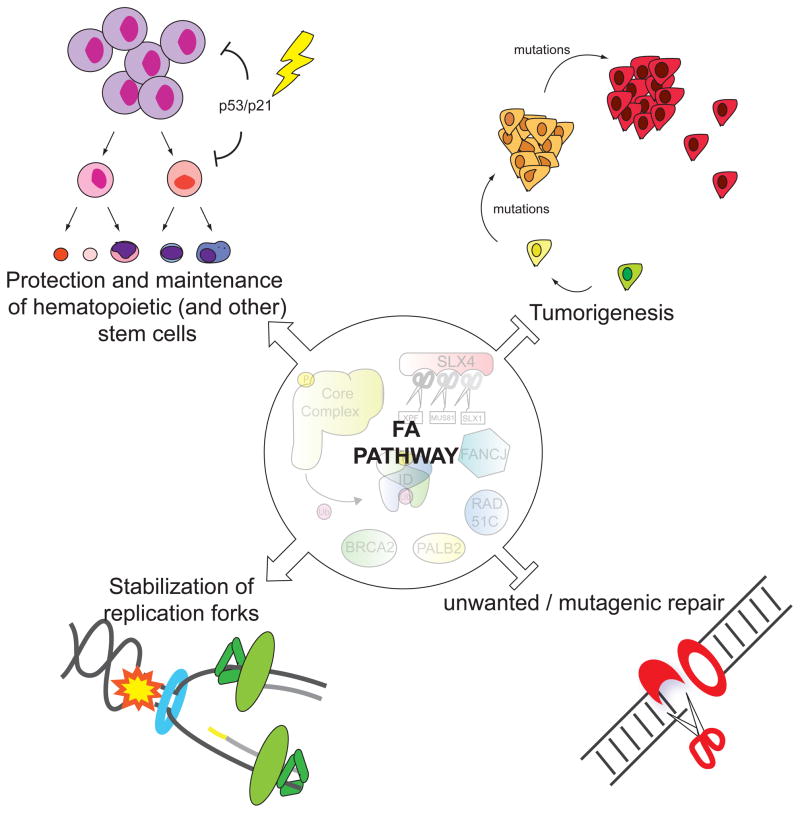
The function of Fanconi anaemia proteins is to maintain genomic stability. Their main role is in the repair of DNA interstrand crosslinks, which, by covalently binding the Watson and the Crick strands of DNA, impede replication and transcription. Inappropriate repair of interstrand crosslinks causes genomic instability, leading to cancer; conversely, the toxicity of crosslinking agents makes them a powerful chemotherapeutic. Fanconi anaemia proteins can promote stem-cell function, prevent tumorigenesis, stabilize replication forks and inhibit inaccurate repair. Recent advances have identified endogenous aldehydes as possible culprits of DNA damage that may induce the phenotypes seen in patients with Fanconi anaemia.
范可尼贫血蛋白的功能是维持基因组稳定性。它们的主要作用是修复 DNA 链间交联,交联通过共价键结合 DNA 的 Watson 和 Crick 链,阻碍复制和转录。交联的不正确修复会导致基因组不稳定,从而引发癌症;相反,交联剂的毒性使它们成为强大的化疗药物。范可尼贫血蛋白可以促进干细胞功能,预防肿瘤发生,稳定复制叉并抑制不准确的修复。最近的研究进展表明,内源性醛类可能是导致 DNA 损伤的罪魁祸首,这种损伤可能会导致范可尼贫血患者出现的表型。