Graduate Institute of Molecular and Cell Biology, Tzu Chi University, Hualien, Taiwan.
PLoS One. 2013;8(1):e51459. doi: 10.1371/journal.pone.0051459. Epub 2013 Jan 10.
3T3-L1 cells are widely used to study adipogenesis and insulin response. Their adipogenic potential decreases with time in the culture. Expressing exogenous genes in 3T3-L1 cells can be challenging. This work tries to establish and characterize an alternative model of cultured adipocytes that is easier to work with than the 3T3-L1 cells.
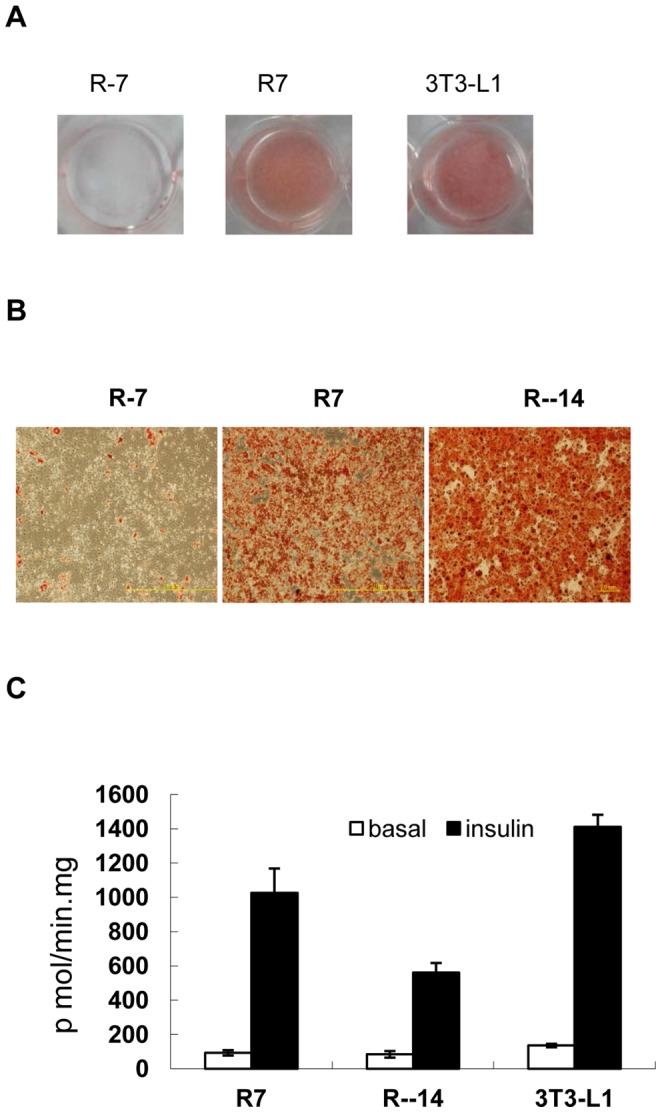
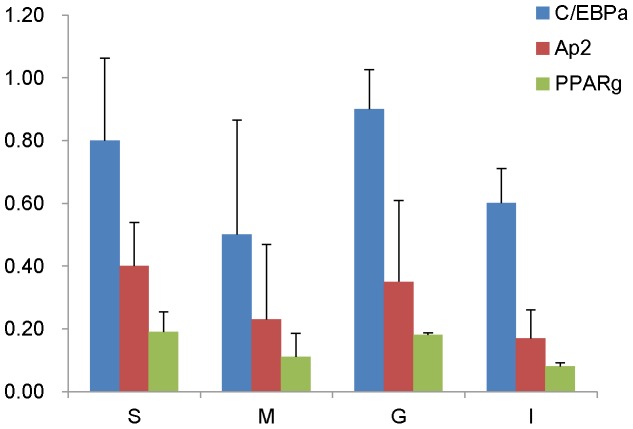
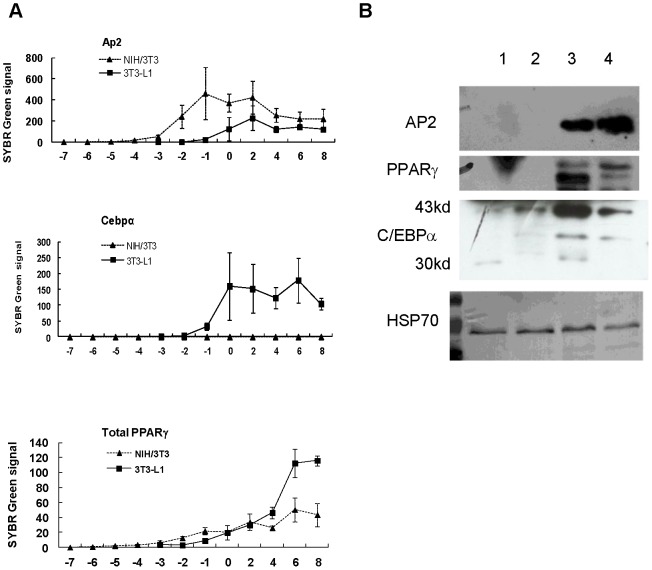
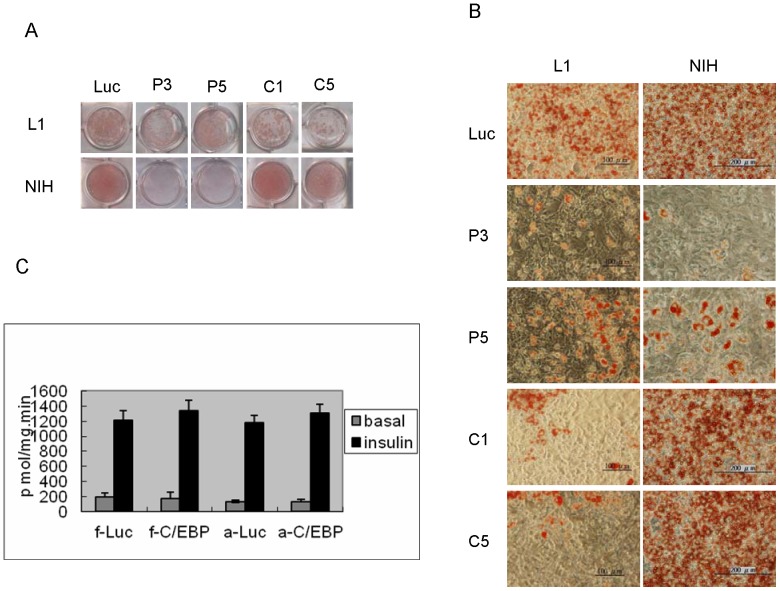
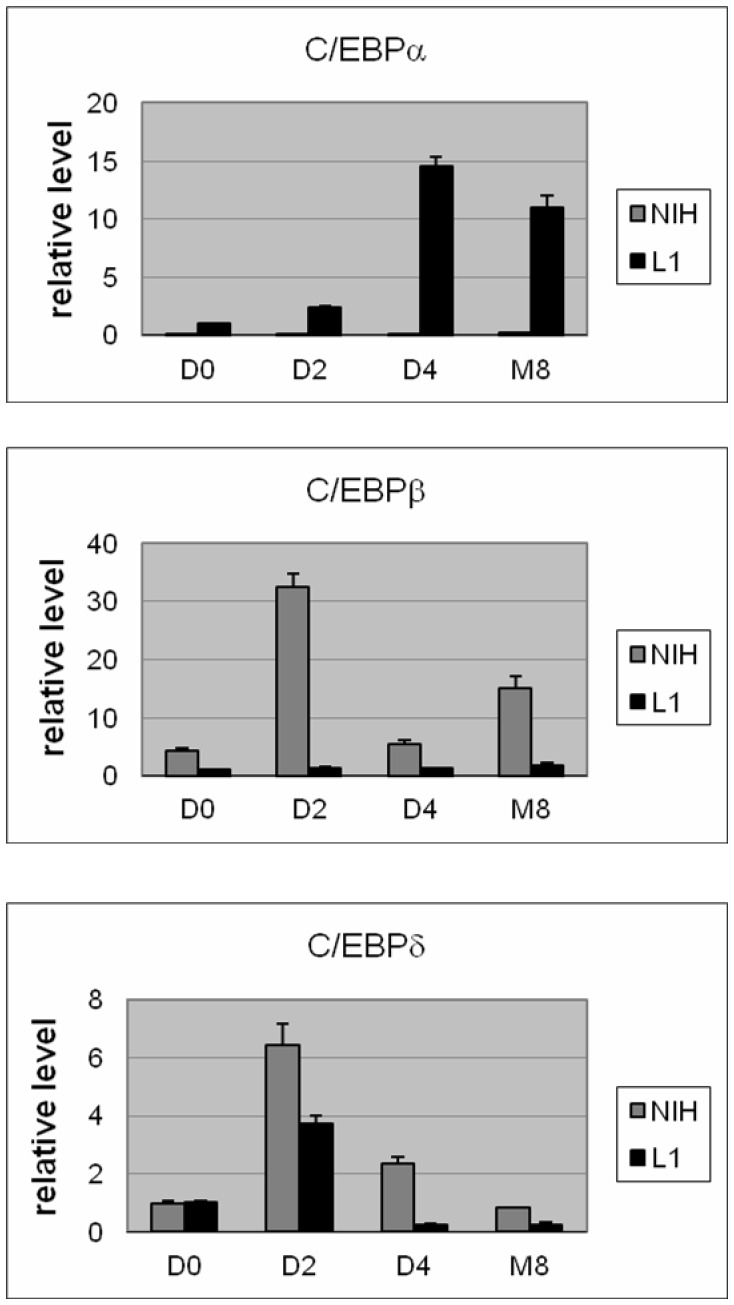
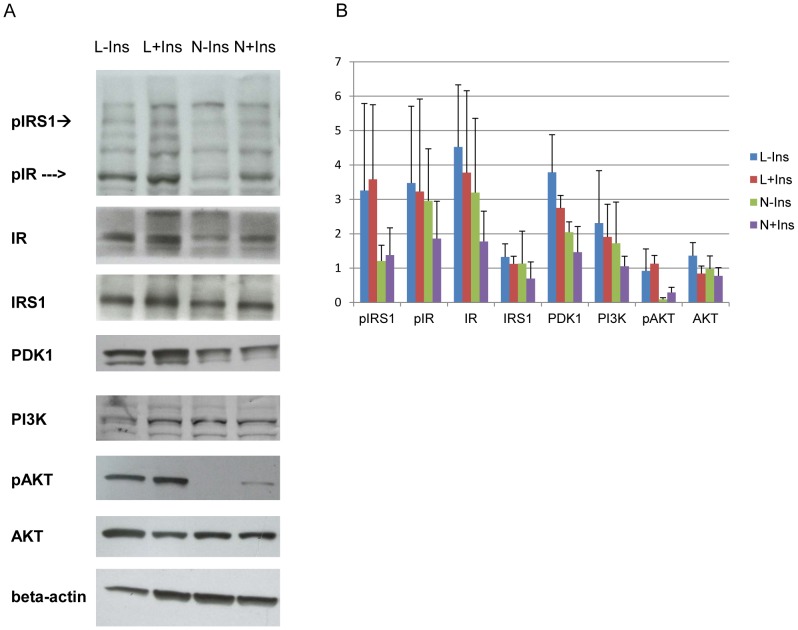
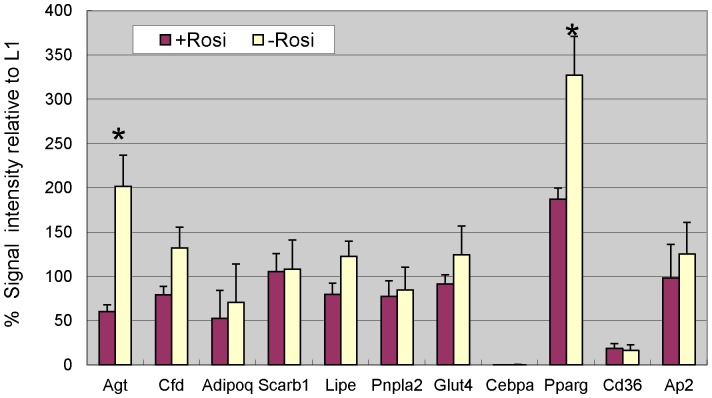
METHODOLOGY/PRINCIPAL FINDINGS: INDUCED CELLS WERE IDENTIFIED AS ADIPOCYTES BASED ON THE FOLLOWING THREE CHARACTERISTICS: (1) Accumulation of triglyceride droplets as demonstrated by oil red O stain. (2) Transport rate of 2-deoxyglucose increased after insulin stimulation. (3) Expression of fat specific genes such as Fabp4 (aP2), Slc2a4 (Glut4) and Pparg (PPARγ). Among the cell lines induced under different conditions in this study, only NIH/3T3 cells differentiated into adipocytes after prolonged incubation in 3T3-L1 induction medium containing 20% instead of 10% fetal bovine serum. Rosiglitazone added to the induction medium shortened the incubation period from 14 to 7 days. The PI3K/AKT pathway showed similar changes upon insulin stimulation in these two adipocytes. C/EBPα mRNA was barely detectable in NIH/3T3 adipocytes. NIH/3T3 adipocytes induced in the presence of rosiglitazone showed higher 2-deoxyglucose transport rate after insulin stimulation, expressed less Agt (angiotensinogen) and more PPARγ. Knockdown of C/EBPα using shRNA blocked 3T3-L1 but not NIH/3T3 cell differentiation. Mouse adipose tissues from various anatomical locations showed comparable levels of C/EBPα mRNA.
CONCLUSIONS/SIGNIFICANCE: NIH/3T3 cells were capable of differentiating into adipocytes without genetic engineering. They were an adipocyte model that did not require the reciprocal activation between C/EBPα and PPARγ to differentiate. Future studies in the C/EBPα independent pathways leading to insulin responsiveness may reveal new targets to diabetes treatment.
3T3-L1 细胞广泛用于研究脂肪生成和胰岛素反应。它们的脂肪生成潜力随着培养时间的延长而降低。在 3T3-L1 细胞中表达外源基因具有挑战性。本工作试图建立和表征一种替代的培养脂肪细胞模型,该模型比 3T3-L1 细胞更容易操作。
方法/主要发现:基于以下三个特征,将诱导细胞鉴定为脂肪细胞:(1)油红 O 染色显示甘油三酯滴的积累。(2)胰岛素刺激后 2-脱氧葡萄糖的转运率增加。(3)脂肪特异性基因如 Fabp4(aP2)、Slc2a4(Glut4)和 Pparg(PPARγ)的表达。在本研究中,在不同条件下诱导的细胞系中,只有 NIH/3T3 细胞在含有 20%而不是 10%胎牛血清的 3T3-L1 诱导培养基中长时间孵育后才分化为脂肪细胞。罗格列酮添加到诱导培养基中将孵育期从 14 天缩短至 7 天。在这两种脂肪细胞中,胰岛素刺激后 PI3K/AKT 途径也发生了类似的变化。NIH/3T3 脂肪细胞中 C/EBPα mRNA 几乎检测不到。在有罗格列酮存在的情况下诱导的 NIH/3T3 脂肪细胞在胰岛素刺激后显示出更高的 2-脱氧葡萄糖转运率,表达较少的 Agt(血管紧张素原)和更多的 PPARγ。使用 shRNA 敲低 C/EBPα 阻断了 3T3-L1 但不是 NIH/3T3 细胞的分化。来自不同解剖部位的小鼠脂肪组织显示出相当水平的 C/EBPα mRNA。
结论/意义:NIH/3T3 细胞无需基因工程即可分化为脂肪细胞。它们是一种不需要 C/EBPα 和 PPARγ 相互激活即可分化的脂肪细胞模型。未来关于导致胰岛素反应性的 C/EBPα 独立途径的研究可能会揭示新的糖尿病治疗靶点。