Department of Biomedical Engineering, Boston University, Boston, Massachusetts, United States of America.
PLoS One. 2013;8(1):e53934. doi: 10.1371/journal.pone.0053934. Epub 2013 Jan 9.
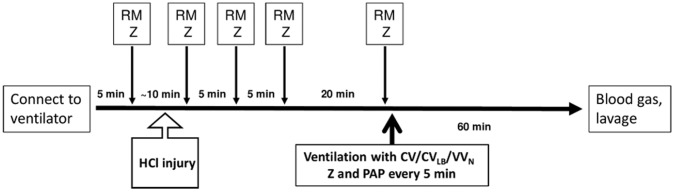
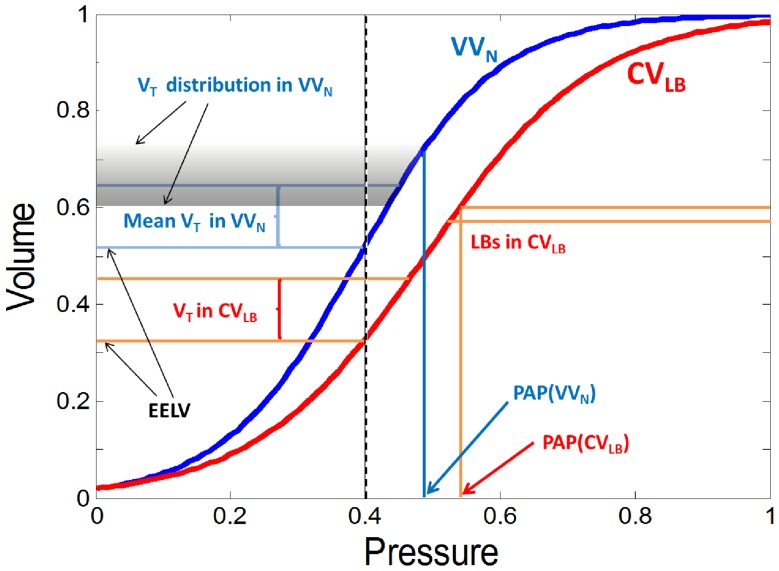
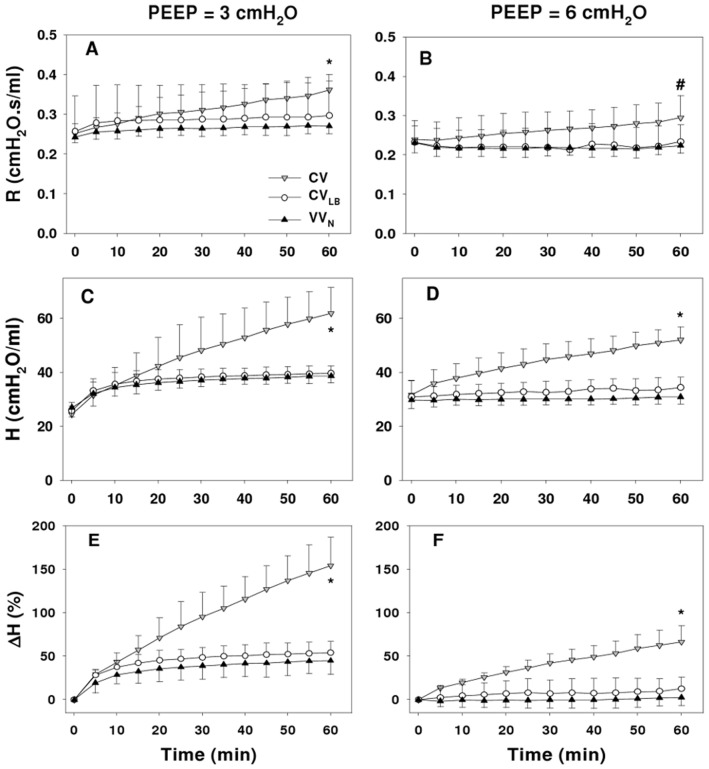
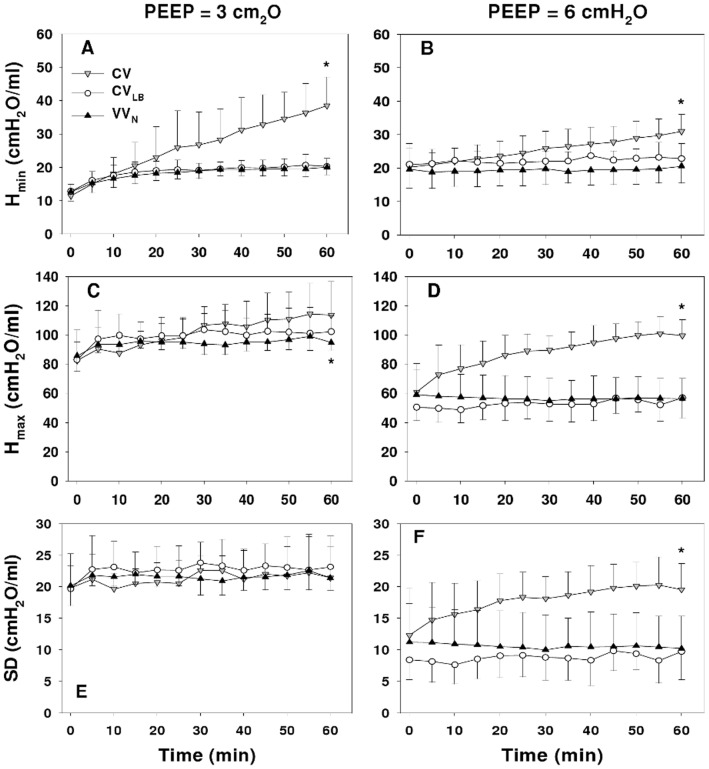
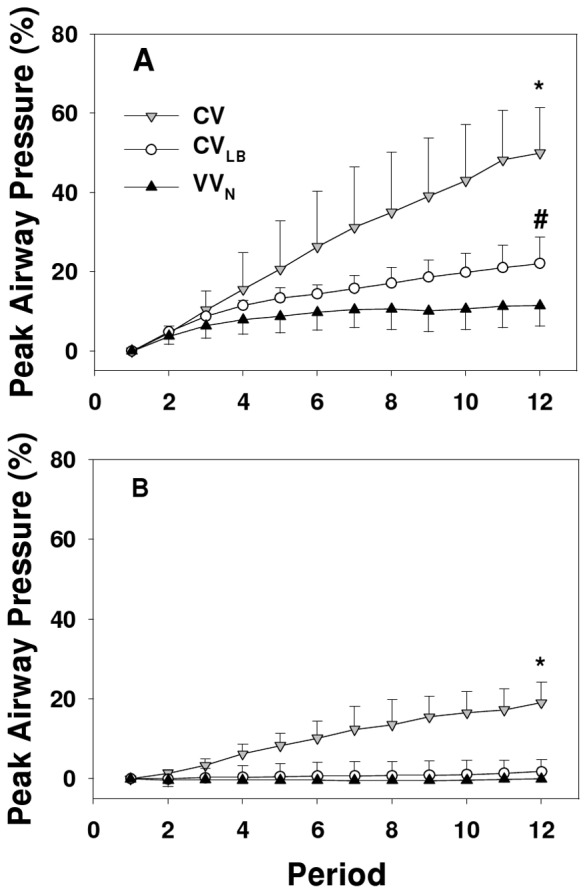
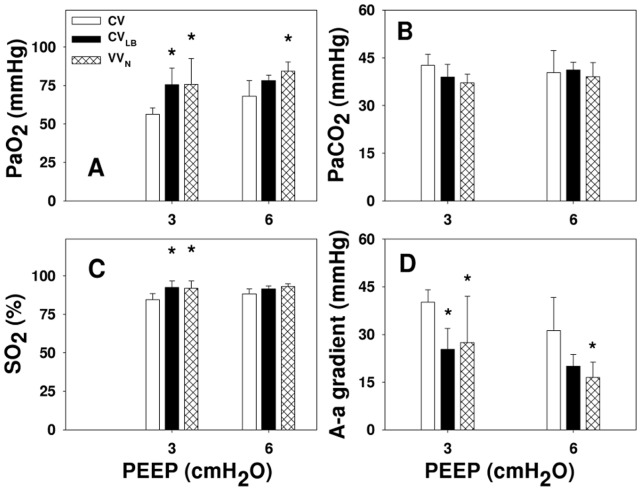
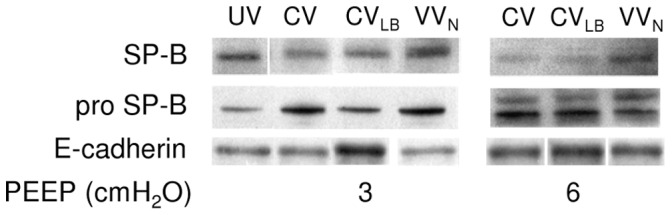
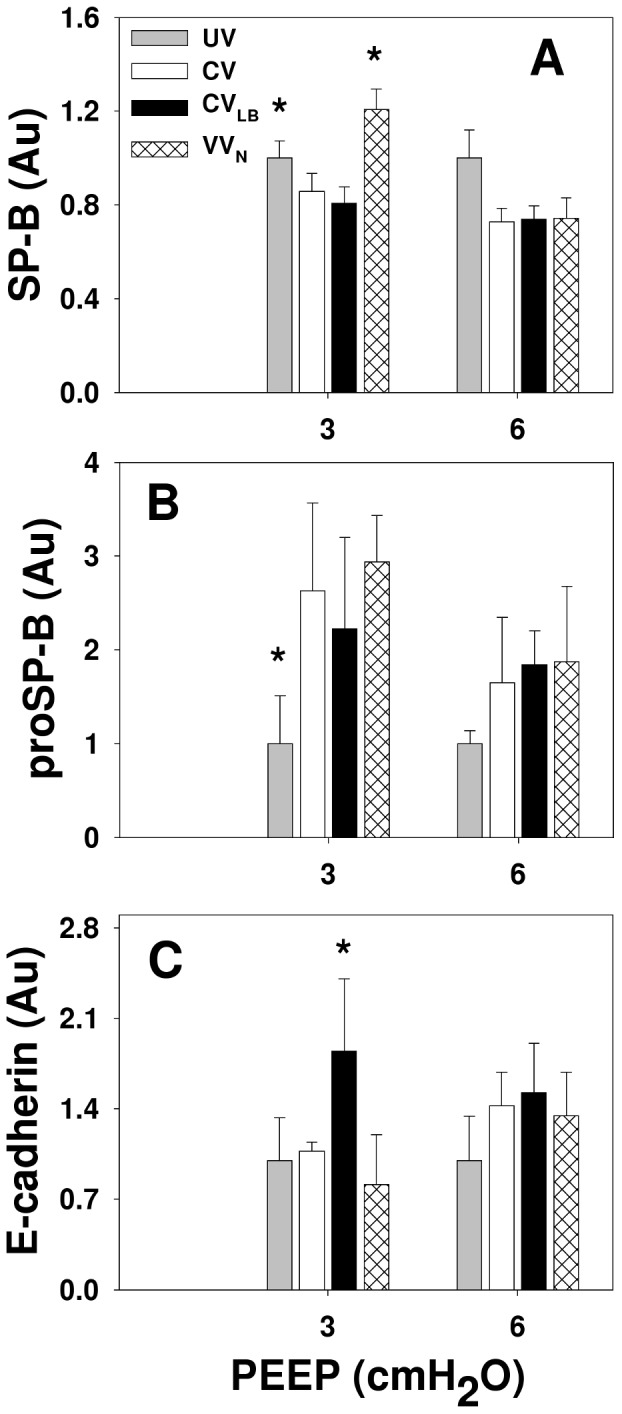
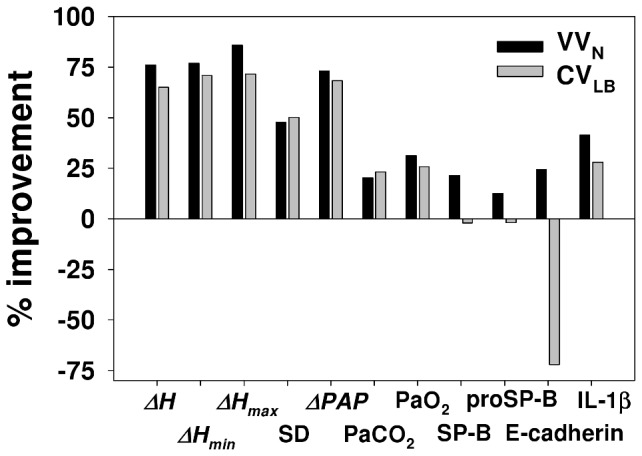
The accepted protocol to ventilate patients with acute lung injury is to use low tidal volume (V(T)) in combination with recruitment maneuvers or positive end-expiratory pressure (PEEP). However, an important aspect of mechanical ventilation has not been considered: the combined effects of PEEP and ventilation modes on the integrity of the epithelium. Additionally, it is implicitly assumed that the best PEEP-V(T) combination also protects the epithelium. We aimed to investigate the effects of ventilation mode and PEEP on respiratory mechanics, peak airway pressures and gas exchange as well as on lung surfactant and epithelial cell integrity in mice with acute lung injury. HCl-injured mice were ventilated at PEEPs of 3 and 6 cmH(2)O with conventional ventilation (CV), CV with intermittent large breaths (CV(LB)) to promote recruitment, and a new mode, variable ventilation, optimized for mice (VV(N)). Mechanics and gas exchange were measured during ventilation and surfactant protein (SP)-B, proSP-B and E-cadherin levels were determined from lavage and lung homogenate. PEEP had a significant effect on mechanics, gas exchange and the epithelium. The higher PEEP reduced lung collapse and improved mechanics and gas exchange but it also down regulated surfactant release and production and increased epithelial cell injury. While CV(LB) was better than CV, VV(N) outperformed CV(LB) in recruitment, reduced epithelial injury and, via a dynamic mechanotransduction, it also triggered increased release and production of surfactant. For long-term outcome, selection of optimal PEEP and ventilation mode may be based on balancing lung physiology with epithelial injury.
目前,人们普遍接受的急性肺损伤机械通气策略是采用小潮气量(V(T))联合肺复张或呼气末正压通气(PEEP)。然而,机械通气的一个重要方面尚未得到考虑:PEEP 和通气模式对上皮细胞完整性的综合影响。此外,人们还隐含地认为,最佳的 PEEP-V(T) 组合也能保护上皮细胞。我们旨在研究通气模式和 PEEP 对呼吸力学、气道峰压和气体交换以及肺泡表面活性物质和上皮细胞完整性的影响,从而探讨急性肺损伤小鼠模型中的相关问题。采用盐酸诱导建立急性肺损伤小鼠模型,分别在 3 cmH(2)O 和 6 cmH(2)O 的 PEEP 下,采用常规通气(CV)、CV 联合间歇大通气(CV(LB)) 以促进肺复张,以及一种新的、针对小鼠优化的通气模式(VV(N))。在通气过程中测量力学和气体交换,通过支气管肺泡灌洗和肺匀浆测定肺表面活性蛋白(SP)-B、前 SP-B 和 E-钙黏蛋白的水平。PEEP 对力学、气体交换和上皮细胞有显著影响。较高的 PEEP 可减少肺萎陷,改善力学和气体交换,但也会下调表面活性物质的释放和产生,增加上皮细胞损伤。虽然 CV(LB) 优于 CV,但 VV(N) 在肺复张方面优于 CV(LB),并通过动态机械转导,还可触发表面活性物质的释放和产生增加。对于长期预后,最佳 PEEP 和通气模式的选择可能需要在平衡肺生理学和上皮细胞损伤之间做出权衡。