Dental Research Institute, Faculty of Dentistry, University of Toronto, Toronto, Ontario, Canada.
PLoS One. 2013;8(1):e54291. doi: 10.1371/journal.pone.0054291. Epub 2013 Jan 11.
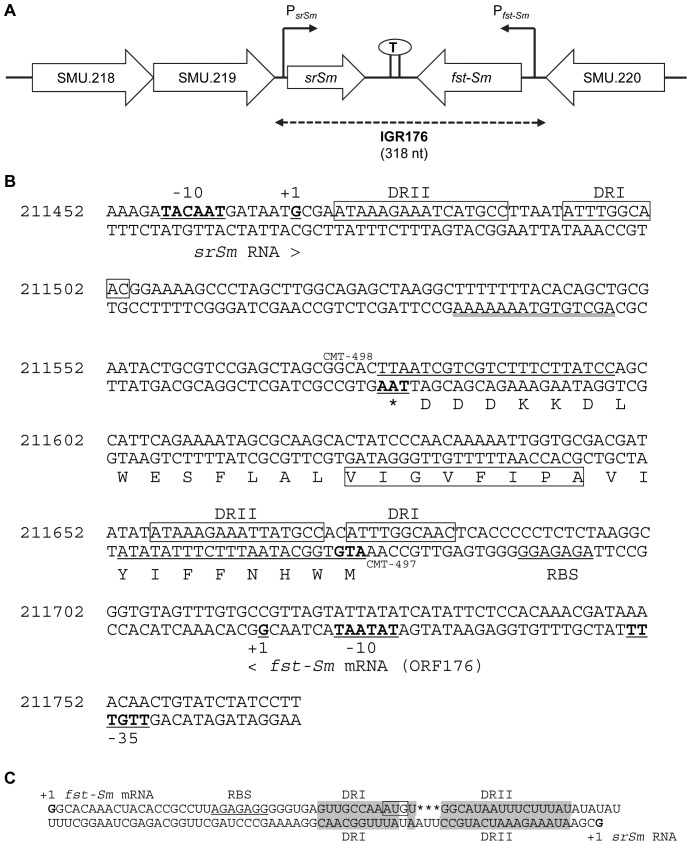
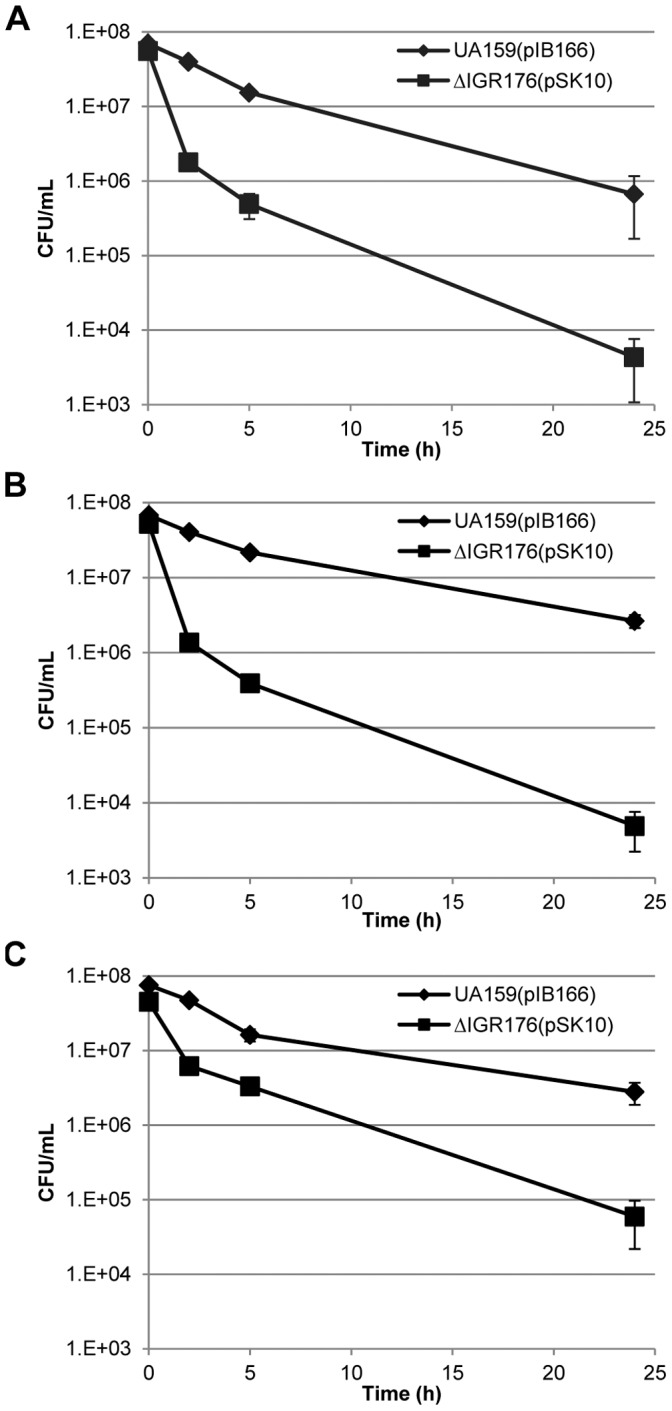
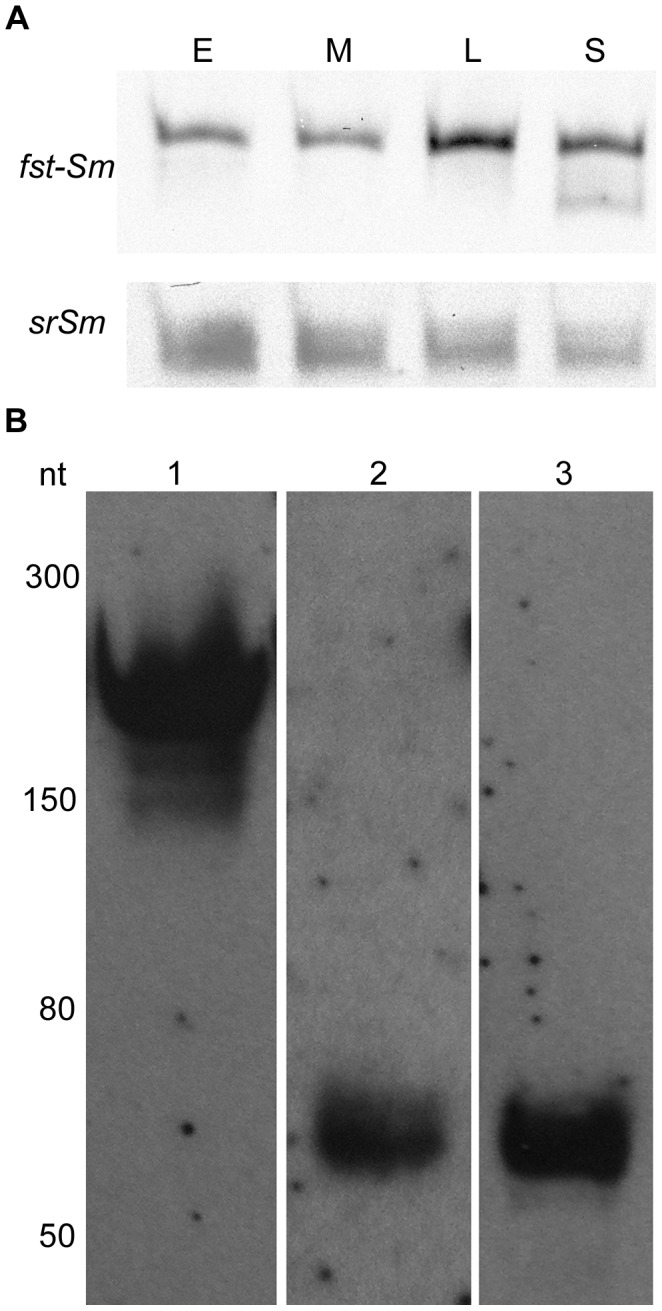
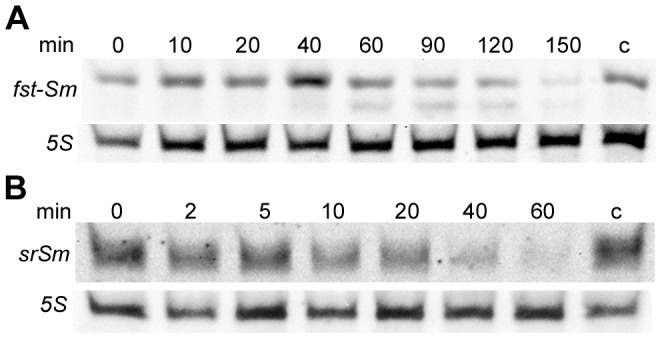
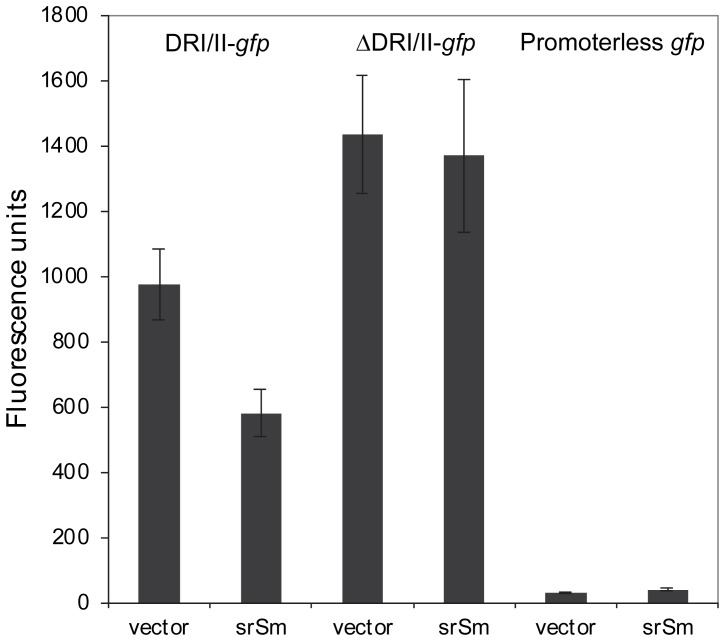
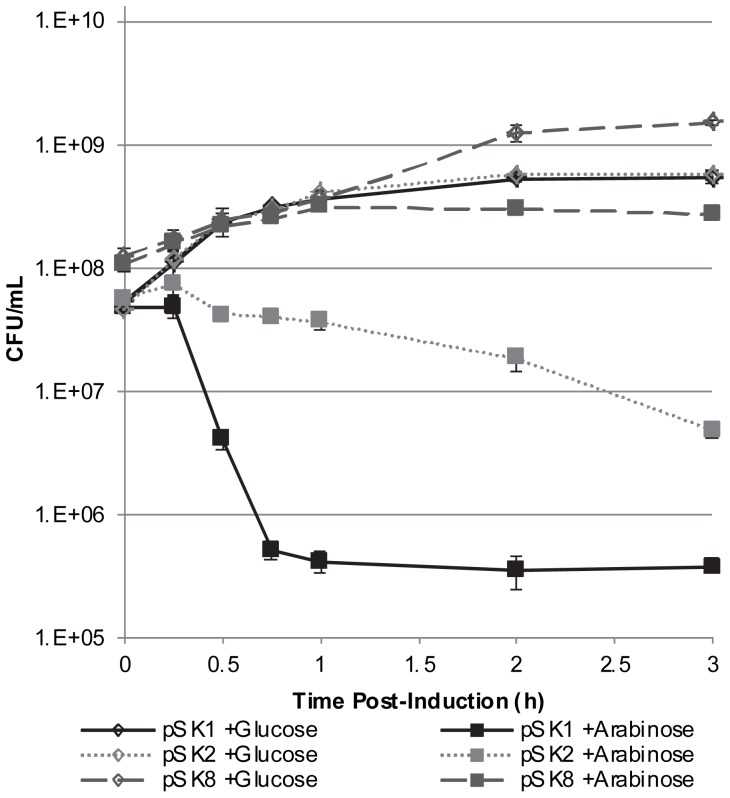
Toxin-antitoxin (TA) modules consist of a pair of genes that encode two components: a protein toxin and an antitoxin, which may be in the form of either a labile protein or an antisense small RNA. Here we describe, to the best of our knowledge, the first functional chromosomal type I TA system in streptococci. Our model organism is the oral pathogen Streptococcus mutans. Our results showed that the genome of S. mutans UA159 reference strain harbors a previously unannotated Fst-like toxin (Fst-Sm) and its cis-encoded small RNA antitoxin (srSm) converging towards the end of the toxin gene in IGR176, a small intergenic region of 318 nt. Fst-Sm is a small hydrophobic peptide of 32 amino acid residues with homology to the Fst toxin family. Transcripts of ∼200 nt and ∼70 nt specific to fst-Sm mRNA and srSm RNA, respectively, were detected by Northern blot analysis throughout S. mutans growth. The toxin mRNA was considerably more stable than its cognate antitoxin. The half-life of srSm RNA was determined to be ∼30 min, while fst-Sm mRNA had a half-life of ∼90 min. Both fst-Sm and srSm RNAs were transcribed across direct tandem repeats providing a region of complementarity for inhibition of toxin translation. Overproduction of Fst-Sm had a toxic effect on E. coli and S. mutans cells which can be neutralized by coexpression of srSm RNA. Deletion of fst-Sm/srSm locus or overexpression of Fst-Sm/srSm had no effect on S. mutans cell growth in liquid medium and no differences in the total biofilm biomass were noted. In contrast, mild-overproduction of Fst-Sm/srSm type I TA system decreases the levels of persister cells tolerant to bacterial cell wall synthesis inhibitors.
毒素-抗毒素(TA)模块由一对基因组成,这对基因编码两种成分:一种是蛋白毒素,另一种是抗毒素,抗毒素可以是不稳定的蛋白,也可以是反义的小 RNA。在这里,我们描述了迄今为止在链球菌中发现的第一个功能性染色体 I 型 TA 系统。我们的模式生物是口腔病原体变形链球菌。我们的结果表明,口腔病原体变形链球菌 UA159 参考菌株的基因组中含有一个以前未注释的 Fst 样毒素(Fst-Sm)及其顺式编码的小 RNA 抗毒素(srSm),它们在 IGR176 中趋同,IGR176 是一个 318 个核苷酸的小基因间区。Fst-Sm 是一个由 32 个氨基酸残基组成的小疏水性肽,与 Fst 毒素家族同源。通过 Northern blot 分析,在整个变形链球菌的生长过程中,检测到约 200nt 和 70nt 的特异性 fst-Sm mRNA 和 srSm RNA 转录本。毒素 mRNA 的稳定性明显高于其对应的抗毒素。srSm RNA 的半衰期约为 30 分钟,而 fst-Sm mRNA 的半衰期约为 90 分钟。fst-Sm 和 srSm RNA 均横跨直接串联重复转录,为抑制毒素翻译提供了互补区域。Fst-Sm 的过表达对大肠杆菌和变形链球菌细胞有毒性作用,而 srSm RNA 的共表达可以中和这种毒性作用。fst-Sm/srSm 基因座的缺失或 fst-Sm/srSm 的过表达对变形链球菌在液体培养基中的生长没有影响,也没有注意到总生物膜生物量有差异。相比之下,轻度过表达 Fst-Sm/srSm I 型 TA 系统会降低对细菌细胞壁合成抑制剂有耐受性的持久细胞的水平。