Department of Ecology and Evolution, Stony Brook University, Stony Brook, New York, United States of America.
PLoS One. 2013;8(1):e54403. doi: 10.1371/journal.pone.0054403. Epub 2013 Jan 10.
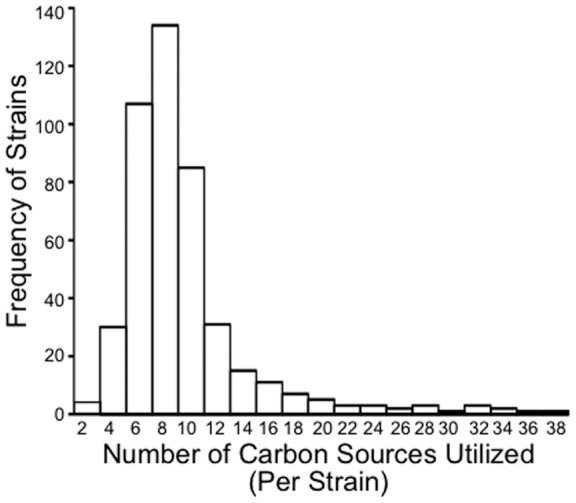
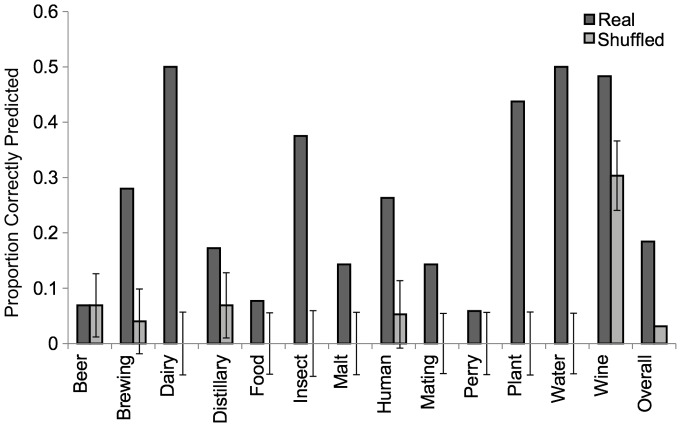
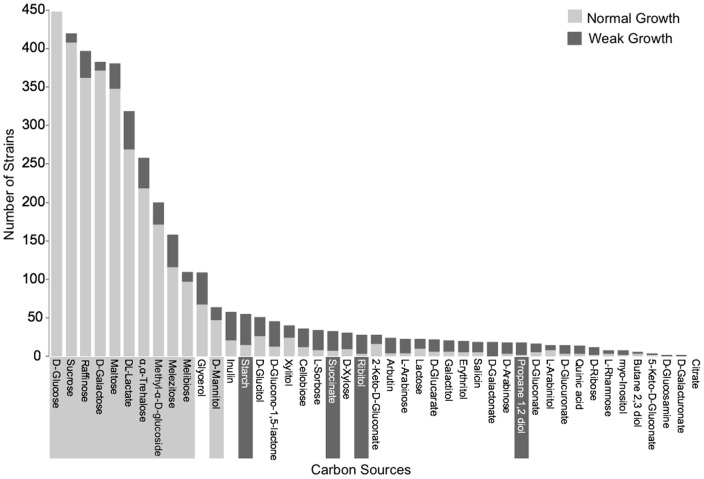
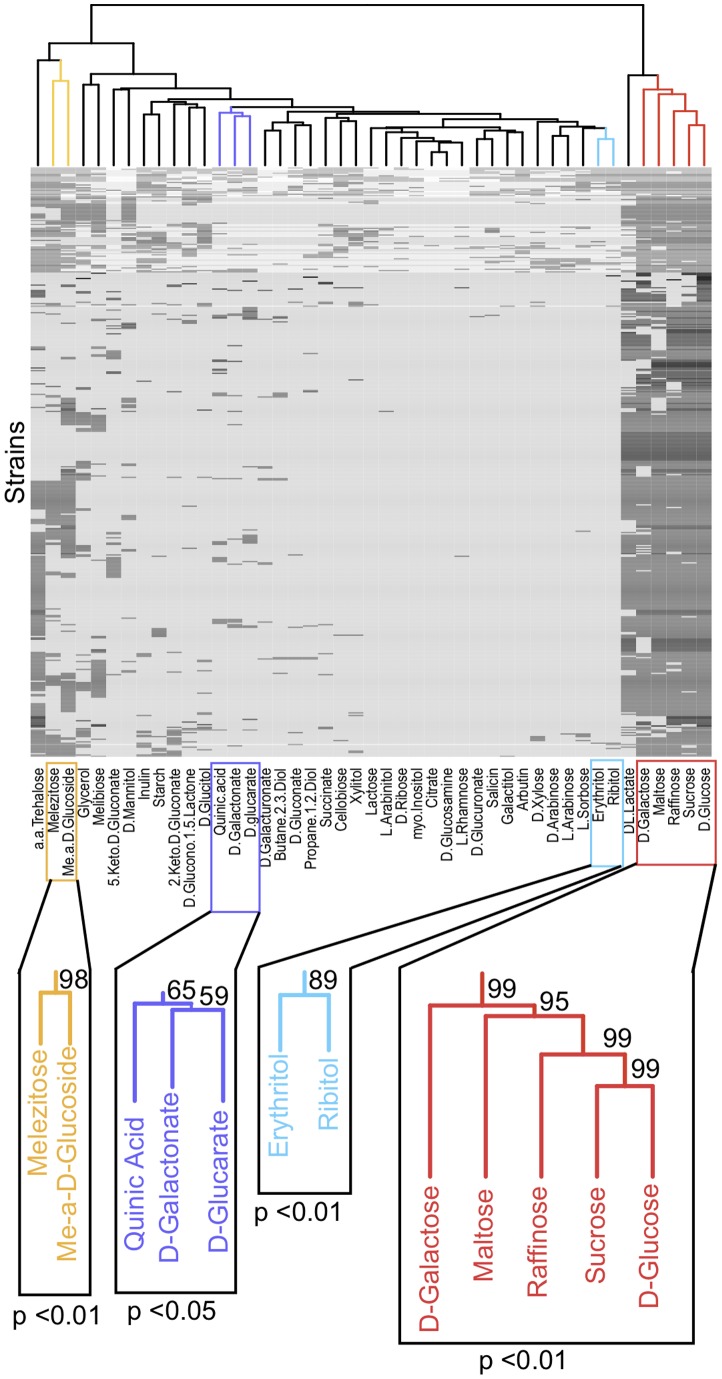
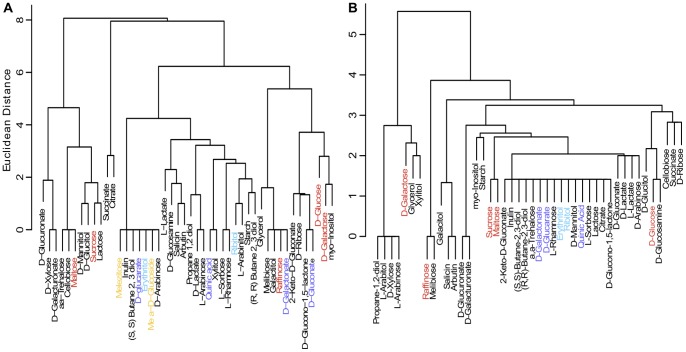
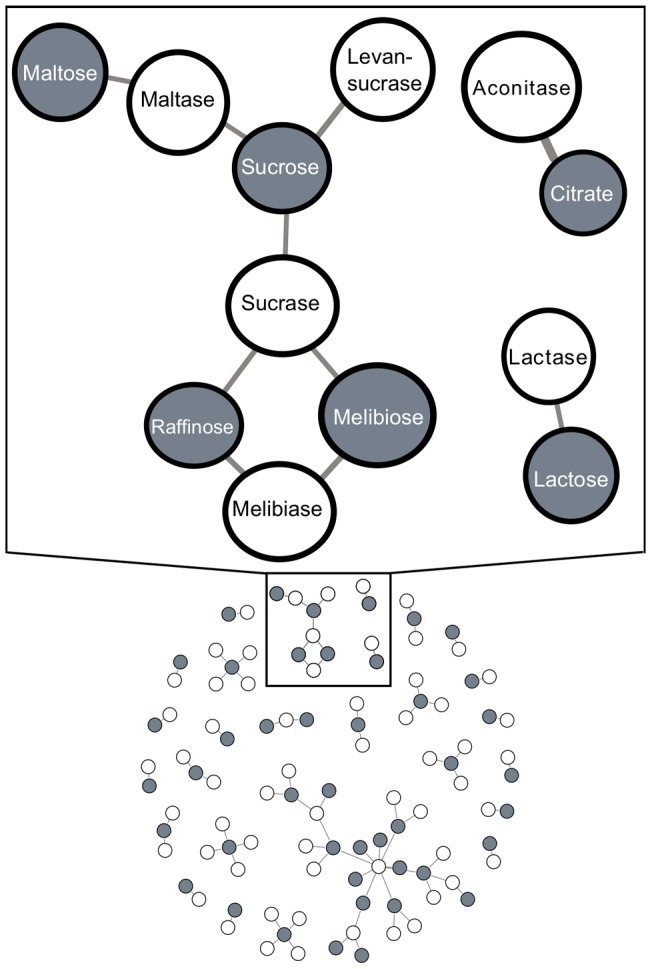
Phenotypic traits may be gained and lost together because of pleiotropy, the involvement of common genes and networks, or because of simultaneous selection for multiple traits across environments (multiple-trait coevolution). However, the extent to which network pleiotropy versus environmental coevolution shapes shared responses has not been addressed. To test these alternatives, we took advantage of the fact that the genus Saccharomyces has variation in habitat usage and diversity in the carbon sources that a given strain can metabolize. We examined patterns of gain and loss in carbon utilization traits across 488 strains of Saccharomyces to investigate whether the structure of metabolic pathways or selection pressure from common environments may have caused carbon utilization traits to be gained and lost together. While most carbon sources were gained and lost independently of each other, we found four clusters that exhibit non-random patterns of gain and loss across strains. Contrary to the network pleiotropy hypothesis, we did not find that these patterns are explained by the structure of metabolic pathways or shared enzymes. Consistent with the hypothesis that common environments shape suites of phenotypes, we found that the environment a strain was isolated from partially predicts the carbon sources it can assimilate.
表型特征可能由于多效性、共同基因和网络的参与,或者由于同时在多个环境中选择多个特征(多特征共同进化)而一起获得和丧失。然而,网络多效性与环境共同进化塑造共同反应的程度尚未得到解决。为了检验这些替代方案,我们利用了以下事实:酿酒酵母属在生境利用方面存在差异,而且给定菌株可以代谢的碳源种类也存在多样性。我们研究了 488 株酿酒酵母的碳利用特征的获得和丧失模式,以调查代谢途径的结构或来自共同环境的选择压力是否可能导致碳利用特征一起获得和丧失。虽然大多数碳源彼此独立地获得和丧失,但我们发现了四个聚类,它们在菌株之间表现出非随机的获得和丧失模式。与网络多效性假说相反,我们发现这些模式不是由代谢途径的结构或共享酶解释的。与共同环境塑造表型组合的假说一致,我们发现菌株的分离环境部分预测了它可以同化的碳源。