Institute of Medical Biochemistry, University of Veterinary Medicine Vienna, Veterinärplatz 1, 1210 Vienna, Austria.
Gen Comp Endocrinol. 2013 Apr 1;184:67-74. doi: 10.1016/j.ygcen.2012.12.013. Epub 2013 Jan 16.
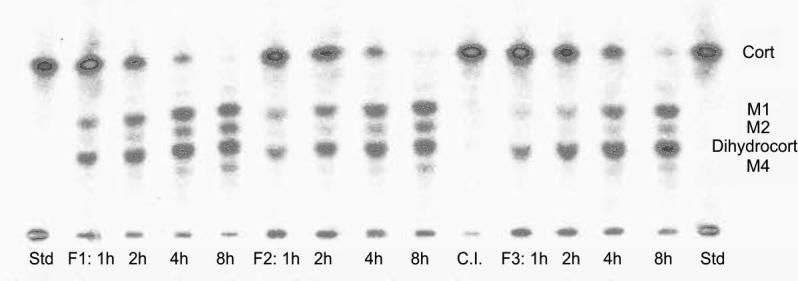
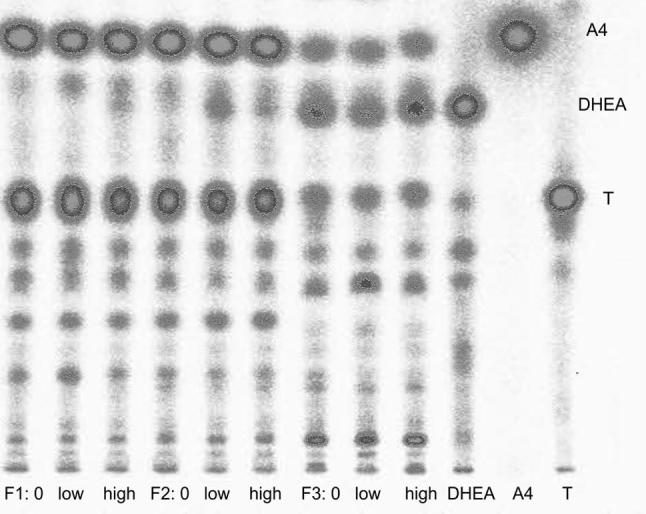
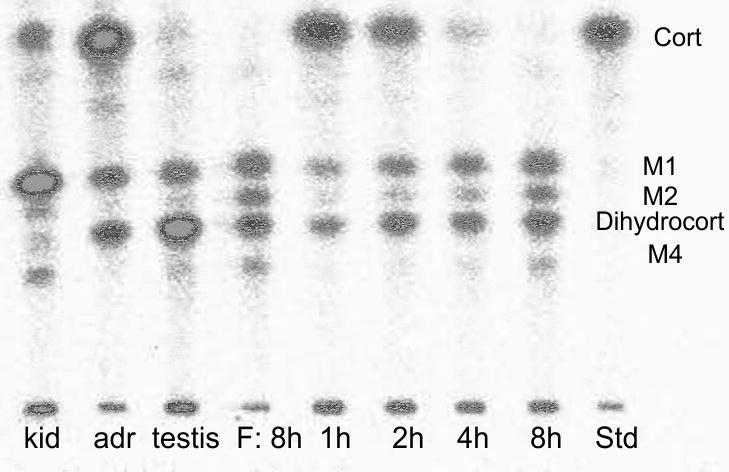
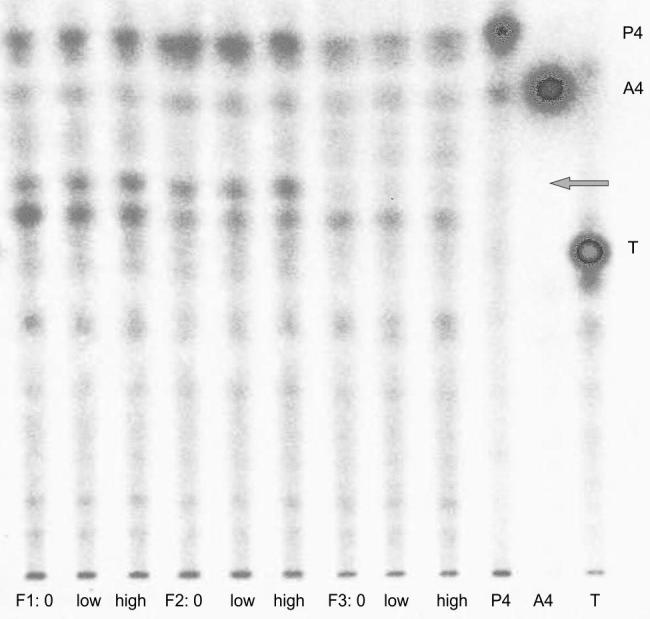
Glucocorticoids affect reproductive hormone production in many species. In chickens, elevated plasma corticosterone down-regulates testosterone and progesterone concentrations in plasma, but also in egg yolk. This suppression could be mediated via the hypothalamic-pituitary system but also via local inhibition of gonadal activity by glucocorticoids. As the latter has not been tested in birds yet, we tested if corticosterone directly inhibits ovarian steroid synthesis under in vitro conditions. We hypothesized that degradation of corticosterone by follicular cells impairs their ability to synthesize reproductive hormones due to either inhibition of enzymes or competition for common co-factors. Therefore, we first established whether follicles degrade corticosterone. Follicular tissue was harvested from freshly euthanized laying hens and incubated with radiolabelled corticosterone. Radioactive metabolites were visualized and quantified by autoradiography. Follicles converted corticosterone in a time-dependent manner into metabolites with a higher polarity than corticosterone. The predominant metabolite co-eluted with 20β-dihydrocorticosterone. Other chicken tissues mostly formed the same metabolite when incubated with corticosterone. In a second experiment, follicles were incubated with either progesterone or dehydroepiandrosterone. Corticosterone was added in increasing dosages up to 1000 ng per ml medium. Corticosterone did not inhibit the conversion of progesterone and dehydroepiandrosterone into a number of different metabolites, including 17α-hydroxyprogesterone, androstenedione and testosterone. In conclusion, avian tissues degrade corticosterone mostly to 20β-dihydrocorticosterone and even high corticosterone dosages do not affect follicular hormone production under in vitro conditions.
糖皮质激素影响许多物种的生殖激素产生。在鸡中,血浆皮质酮水平升高会下调血浆中和蛋黄中的睾酮和孕酮浓度。这种抑制作用可能通过下丘脑-垂体系统介导,但也可能通过糖皮质激素对性腺活性的局部抑制来介导。由于后者尚未在鸟类中进行测试,我们测试了皮质酮是否在体外条件下直接抑制卵巢类固醇合成。我们假设卵泡细胞降解皮质酮会损害其合成生殖激素的能力,这是由于酶的抑制或共同辅因子的竞争。因此,我们首先确定了卵泡是否降解皮质酮。从刚安乐死的产蛋母鸡中采集卵泡组织,并与放射性标记的皮质酮一起孵育。通过放射自显影可视化和定量放射性代谢物。卵泡以时间依赖性方式将皮质酮转化为比皮质酮极性更高的代谢物。主要代谢物与 20β-二氢皮质酮共洗脱。其他鸡组织在与皮质酮孵育时主要形成相同的代谢物。在第二个实验中,将卵泡与孕酮或脱氢表雄酮一起孵育。以递增剂量(高达 1000ng/ml 培养基)添加皮质酮。皮质酮不会抑制孕酮和脱氢表雄酮转化为许多不同的代谢物,包括 17α-羟孕酮、雄烯二酮和睾酮。总之,禽类组织主要将皮质酮降解为 20β-二氢皮质酮,即使在高皮质酮剂量下,也不会影响体外条件下卵泡的激素产生。