Vascular Biology and Immunopharmacology Group, Department of Pharmacology, Monash University Clayton, VIC, Australia.
Front Cell Neurosci. 2013 Jan 17;6:66. doi: 10.3389/fncel.2012.00066. eCollection 2012.
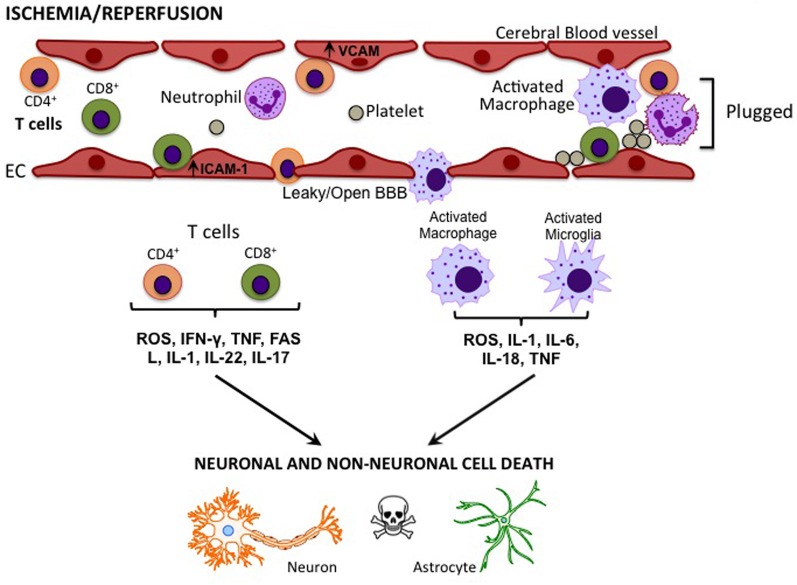
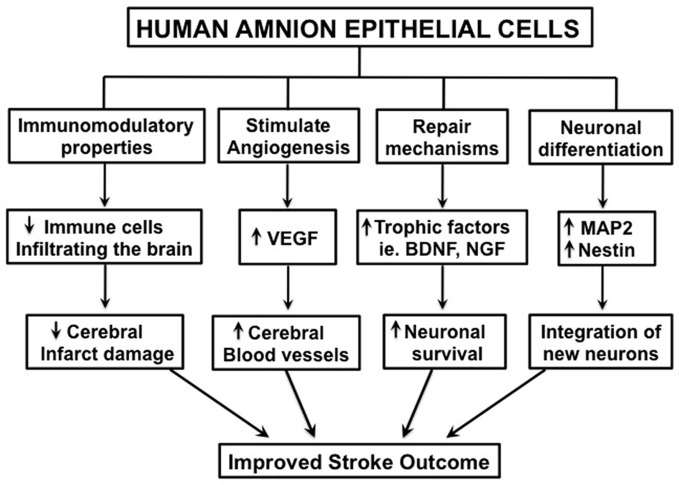
Ischemic stroke is a debilitating disease for which there are currently no effective treatments besides the clot-buster, tissue plasminogen activator (t-PA), which is administered to less than 10% of patients due to a limited (4.5 h) time window of efficacy. Thus, there is an urgent need for novel therapies that can prevent or reverse the effects of stroke-induced brain injury. Recent encouraging reports have revealed that stem cells derived from human tissue, including embryonic, induced pluripotent, neural, and mesenchymal cells, can rescue injured brain tissue and improve functional recovery in experimental models of stroke. However, there are potentially major limitations to each of these types of stem cells that may ultimately prevent or restrict their use as viable mainstream treatment options for stroke patients. Conversely, stem cells derived from the placenta, such as human amnion epithelial cells (hAECs), appear to have several important advantages over other stem cell lineages, in particular their non-tumorigenic and non-immunogenic characteristics. Surprisingly, so far hAECs have received little attention as a potential stroke therapy. This brief review will firstly describe the inflammatory response and immune cell involvement following stroke, and then consider the potential for hAECs to improve stroke outcome given their unique characteristics. These actions of hAECs may involve a reduction of local inflammation and modulation of the immune response, promotion of neural recovery, differentiation into neural tissue, re-innervation of lost connections, and secretion of necessary cytokines, growth factors, hormones and/or neurotransmitters to restore cellular function.
缺血性中风是一种使人虚弱的疾病,目前除了血栓溶解剂组织型纤溶酶原激活剂(t-PA)之外,没有有效的治疗方法,由于疗效有限(4.5 小时),该药物只有不到 10%的患者使用。因此,迫切需要新的疗法,可以预防或逆转中风引起的脑损伤。最近令人鼓舞的报告表明,源自人体组织的干细胞,包括胚胎干细胞、诱导多能干细胞、神经干细胞和间充质干细胞,可以挽救受损的脑组织,并改善中风实验模型中的功能恢复。然而,这些类型的干细胞都可能存在重大的局限性,最终可能会阻止或限制它们作为中风患者可行的主流治疗选择。相反,源自胎盘的干细胞,如人羊膜上皮细胞(hAECs),与其他干细胞系相比,似乎具有几个重要的优势,特别是它们的非致瘤性和非免疫原性特征。令人惊讶的是,到目前为止,hAECs 作为一种潜在的中风治疗方法还没有得到太多关注。这篇简短的综述将首先描述中风后的炎症反应和免疫细胞参与,然后考虑 hAECs 由于其独特的特性,改善中风预后的潜力。hAECs 的这些作用可能涉及减少局部炎症和调节免疫反应、促进神经恢复、分化为神经组织、重新支配失去的连接以及分泌必要的细胞因子、生长因子、激素和/或神经递质以恢复细胞功能。