Graduate Institute of Clinical Medicine, College of Medicine, Taipei Medical University, Taipei, Taiwan.
Int Immunopharmacol. 2013 Feb;15(2):333-9. doi: 10.1016/j.intimp.2013.01.006. Epub 2013 Jan 19.
Sorafenib, a multi-kinase inhibitor approved for treatment of advanced renal cell carcinoma and other malignancies, has been shown as a modulator for dendritic cells. This study was designed to examine the effects of sorafenib on macrophages, the major ontogeny of innate immunity.
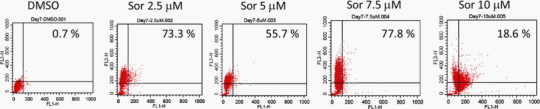
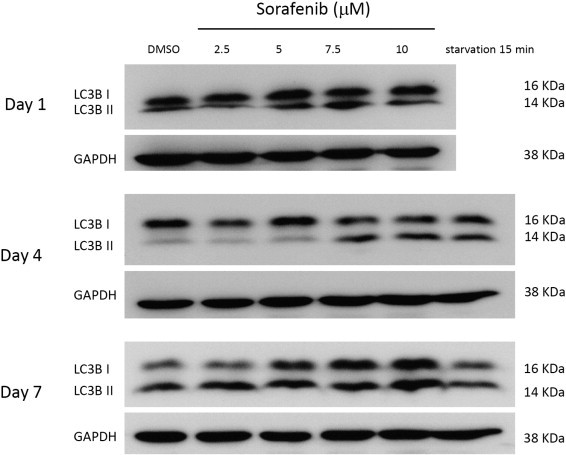
Macrophages were derived from sorted CD14(+) monocytes of human peripheral blood mononuclear cells. Cell viability and surface antigens were examined by trypan blue analysis. Autophagy was characterized by light microscopy and transmission electron microscopy for morphology, Western blotting for microtubule associated light chain protein 3B (LC-3B) I lipidation, and acridine orange staining for acidic component vacuoles. Soluble factors contained in culture medium and serum were measured by ELISA.
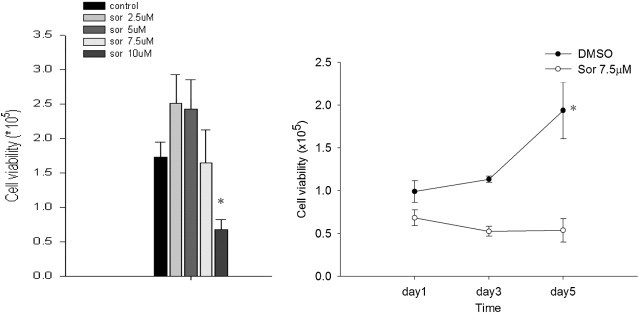
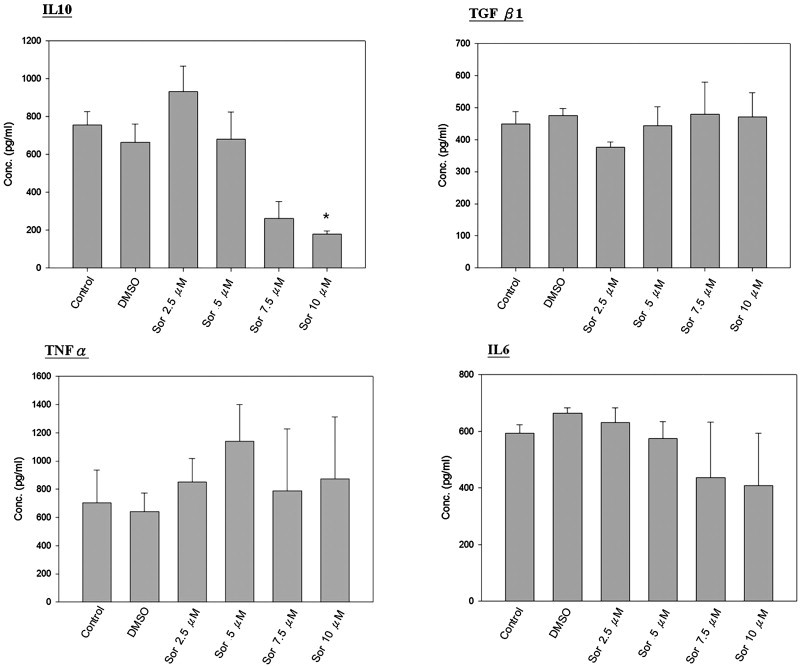
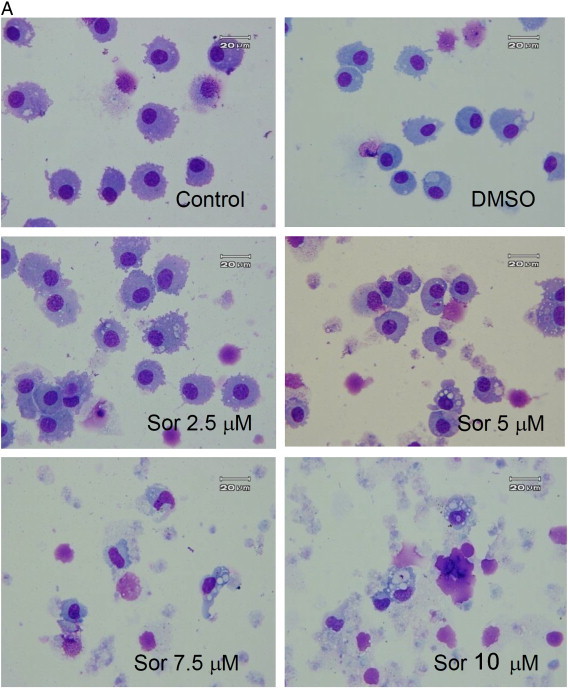
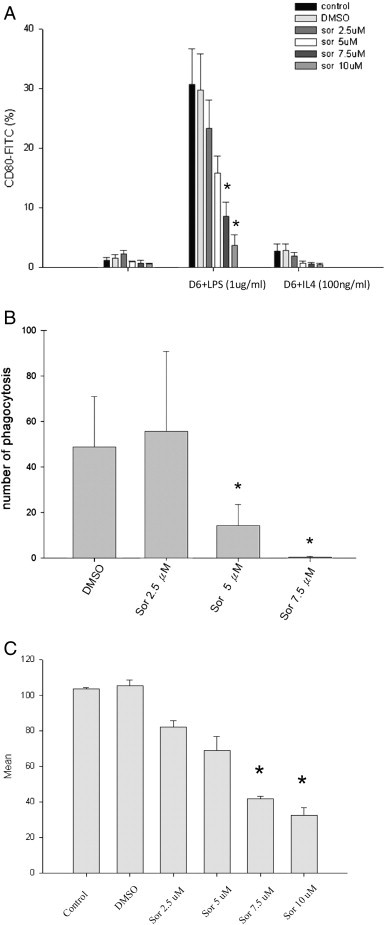
We found that sorafenib inhibited the viability of macrophages accompanied by morphological changes characteristic of autophagy. This autophagy-inducing effect was validated by LC3B-I lipidation and autophagosome accumulation. The surface antigen expression and the function of activated macrophages were inhibited by sorafenib, including the expression of co-stimulatory molecule CD80, phagocytosis, and the production of reactive oxygen species. The secretion of IL-10, but not IL-6, TNF-α nor TGF-β, was reduced by sorafenib.
Sorafenib, in addition to being a cancer targeted therapeutic agent, can induce autophagy and modulate the function of human macrophages.
索拉非尼是一种多激酶抑制剂,已被批准用于治疗晚期肾细胞癌和其他恶性肿瘤,它被证明是树突状细胞的调节剂。本研究旨在研究索拉非尼对巨噬细胞(固有免疫的主要起源)的影响。
巨噬细胞来源于人外周血单核细胞中分离的 CD14(+)单核细胞。通过台盼蓝分析检查细胞活力和表面抗原。通过光镜和透射电镜观察形态学、微管相关轻链蛋白 3B(LC-3B)I 脂质化的 Western blot 以及酸性成分空泡的吖啶橙染色来表征自噬。通过 ELISA 测量培养物和血清中含有的可溶性因子。
我们发现索拉非尼抑制巨噬细胞的活力,同时伴有自噬的特征性形态变化。LC3B-I 脂质化和自噬体积累验证了这种自噬诱导作用。索拉非尼抑制了活化巨噬细胞的表面抗原表达和功能,包括共刺激分子 CD80 的表达、吞噬作用和活性氧的产生。索拉非尼减少了 IL-10 的分泌,但不减少 IL-6、TNF-α 或 TGF-β 的分泌。
索拉非尼除了作为癌症靶向治疗剂外,还可以诱导自噬并调节人巨噬细胞的功能。