Department of Pharmacological and Pharmaceutical Sciences, College of Pharmacy, University of Houston, Houston, TX, USA.
PLoS One. 2013;8(1):e48425. doi: 10.1371/journal.pone.0048425. Epub 2013 Jan 15.
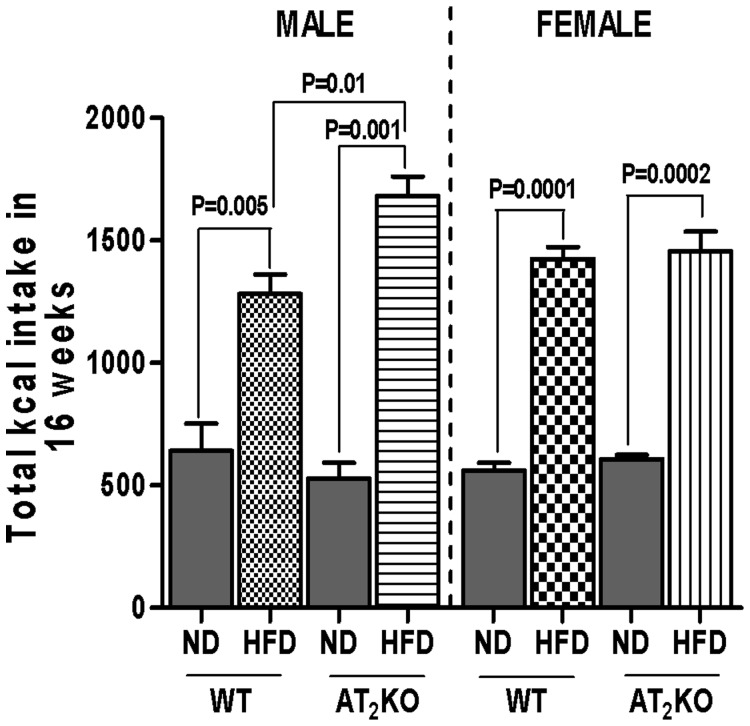
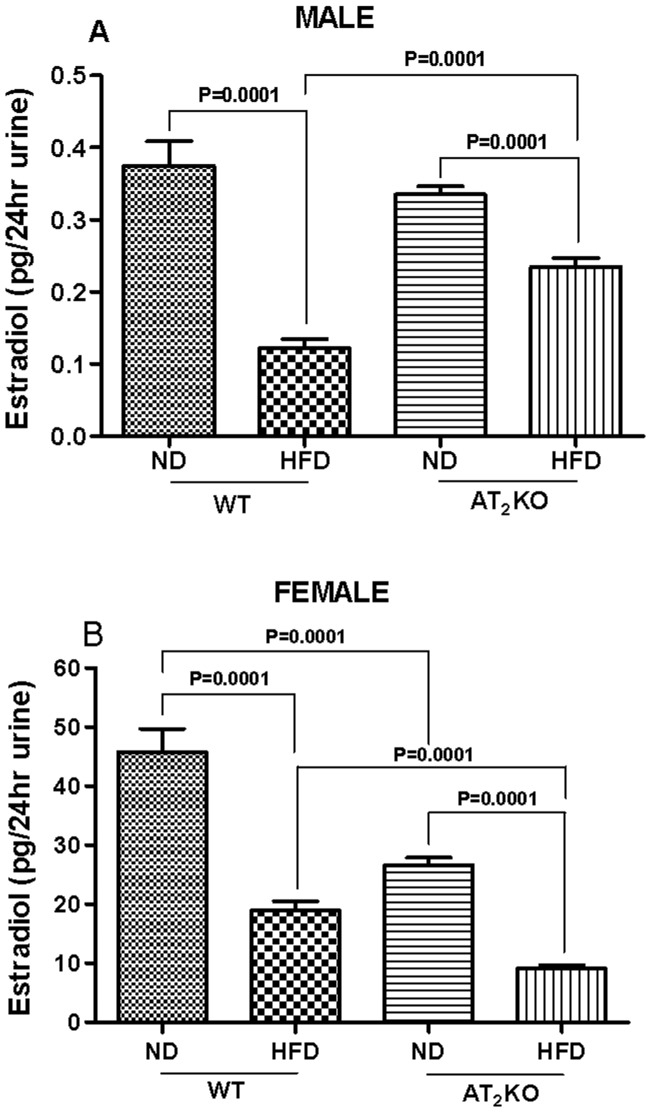
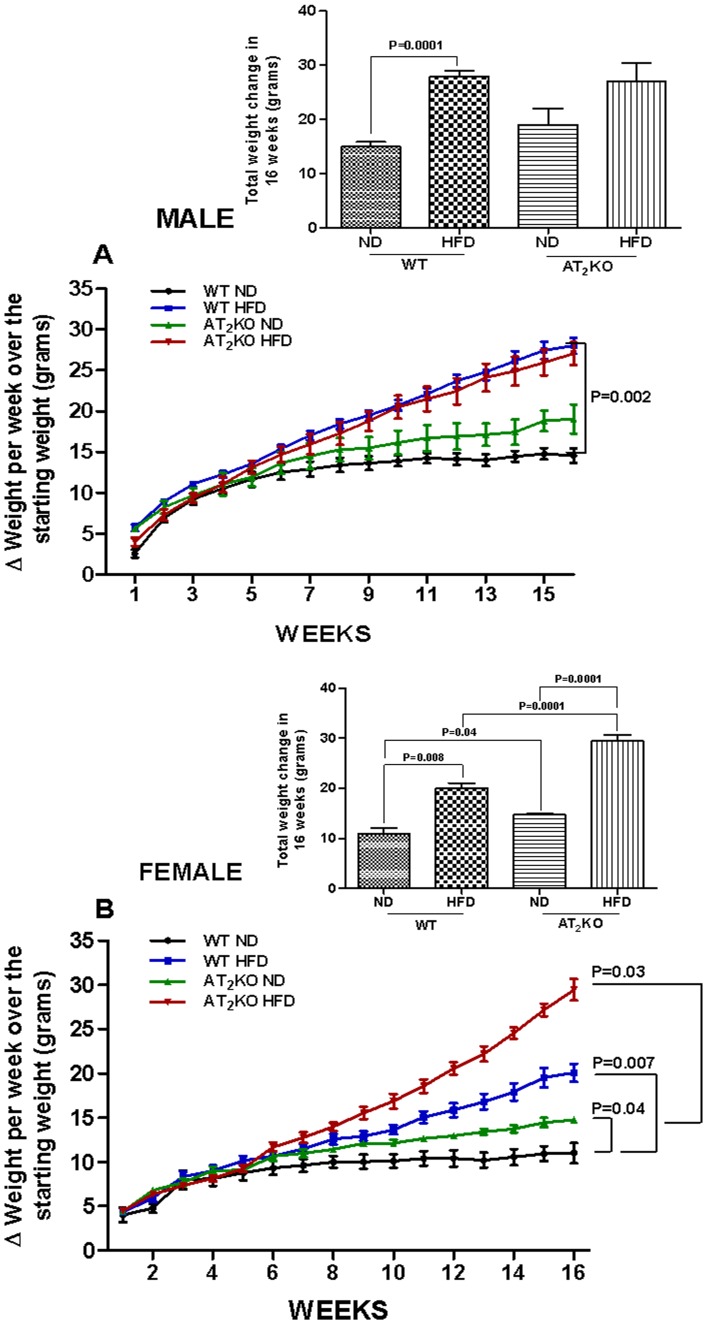
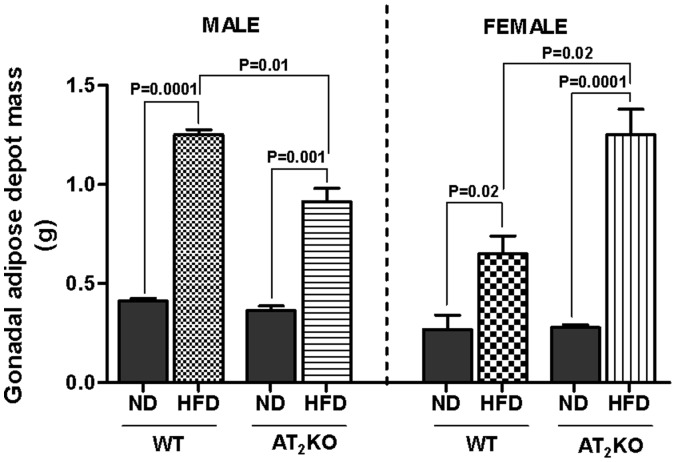
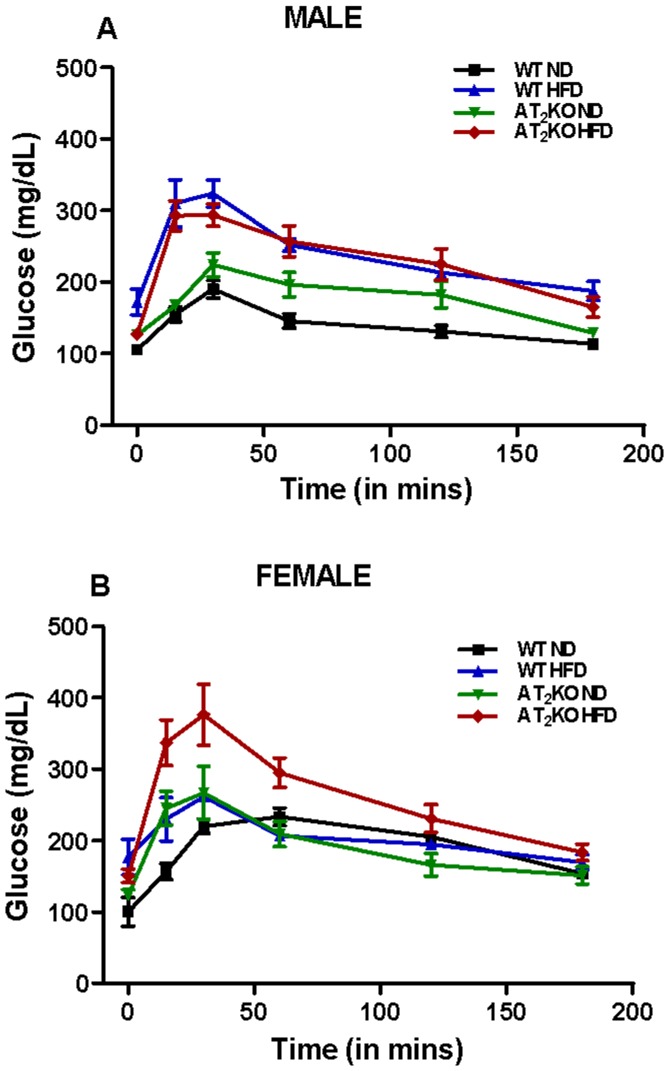
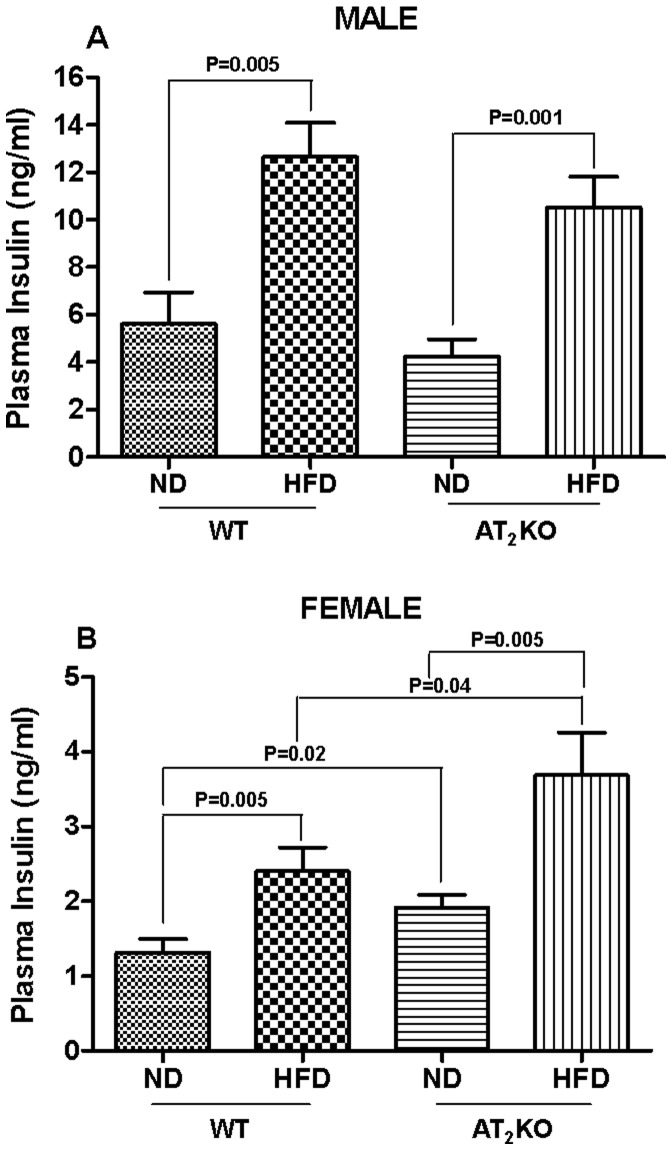
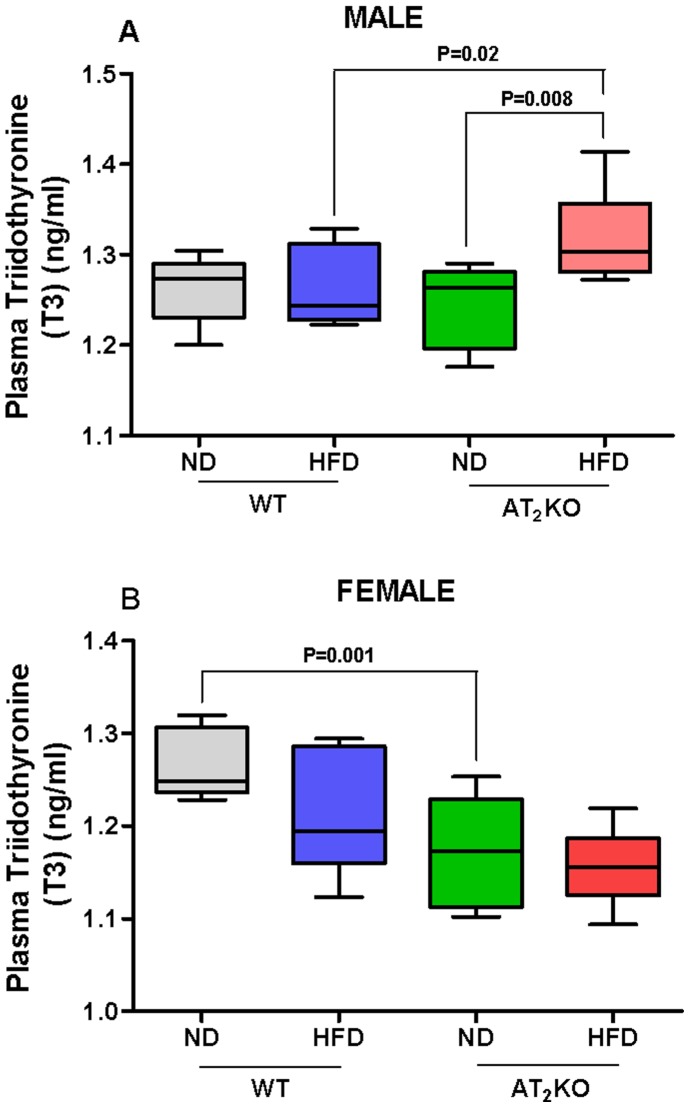
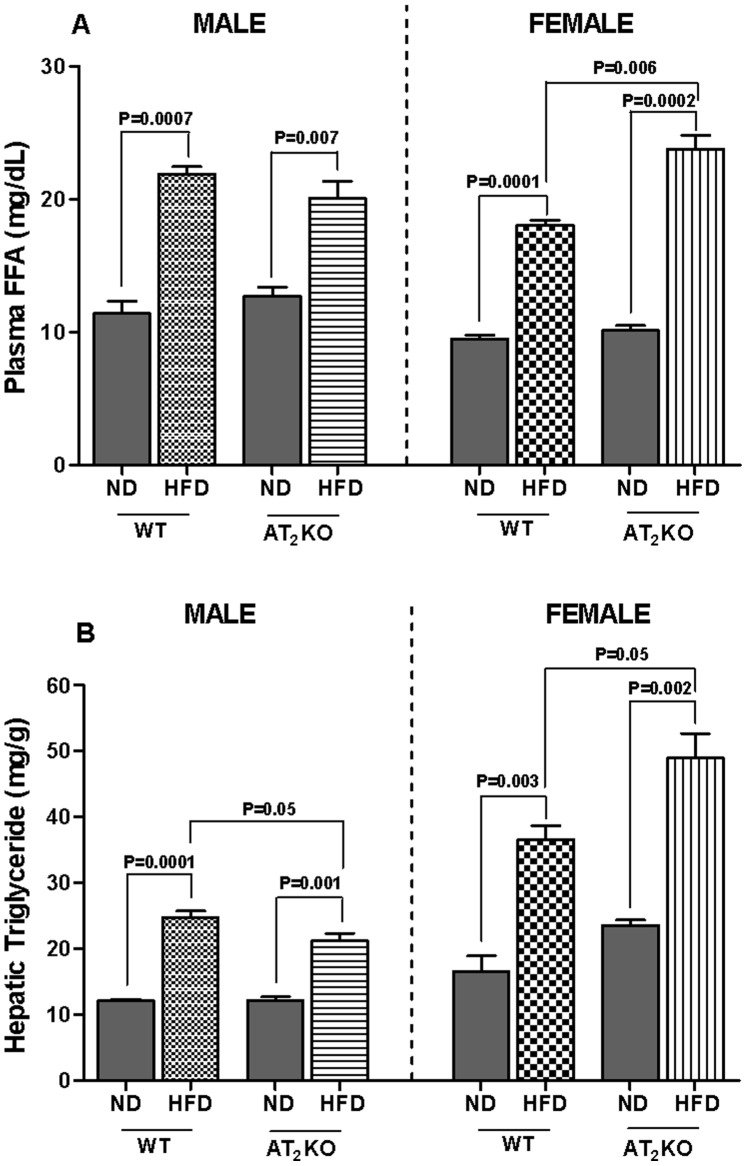
Obesity is a major disease condition, in turn leading to pathological changes collectively recognized as metabolic syndrome. Recently angiotensin receptor AT(2)R has been associated negatively with body weight (BW) gain in male mice. However, the gender differences in AT(2)R and BW changes have not been studied. To understand the gender based role of AT(2)R involving BW changes, we fed male and female wild type (WT) and AT(2)R knock out (AT(2)KO) mice with C57BL6 background with high fat diet (HFD) for 16 weeks. The male AT(2)KO had higher HFD calorie intake (WT: 1280±80; AT(2)KO:1680±80 kcal) but gained less BW compared with the WT (WT: 13; AT(2)KO: 6 g). Contrary to the male animals, the female AT(2)KO mice with equivalent caloric intake (WT: 1424±48; AT(2)KO:1456±80 kcal) gained significantly more BW than the WT mice (WT: 9 g; AT(2)KO: 15 g). The male AT(2)KO on HFD displayed lower plasma insulin level, less impaired glucose tolerance (GT), and higher plasma T3 compared with WT males on HFD; whereas the female AT(2)KO mice on HFD showed elevated levels of plasma insulin, more impaired GT, lower plasma T3 and higher free fatty acid and hepatic triglycerides compared with WT females on HFD. Interestingly, compared with WT, AT(2)KO female mice had significantly lower estrogen, which was further reduced by HFD. These results suggest that AT(2)R in female mice via potentially regulating estrogen may have protective role against BW gain and impaired glucose tolerance and lipid metabolism.
肥胖是一种主要的疾病状况,反过来又导致被集体认为是代谢综合征的病理性变化。最近,血管紧张素受体 AT(2)R 与雄性小鼠的体重(BW)增加呈负相关。然而,AT(2)R 和 BW 变化的性别差异尚未得到研究。为了了解涉及 BW 变化的 AT(2)R 的性别作用,我们用高脂肪饮食(HFD)喂养 C57BL6 背景的雄性和雌性野生型(WT)和 AT(2)R 敲除(AT(2)KO)小鼠 16 周。雄性 AT(2)KO 的 HFD 热量摄入较高(WT:1280±80;AT(2)KO:1680±80 卡路里),但与 WT 相比体重增加较少(WT:13;AT(2)KO:6 克)。与雄性动物相反,具有等效热量摄入的雌性 AT(2)KO 小鼠(WT:1424±48;AT(2)KO:1456±80 卡路里)比 WT 小鼠体重增加明显更多(WT:9 克;AT(2)KO:15 克)。雄性 AT(2)KO 在 HFD 上表现出较低的血浆胰岛素水平、较少的葡萄糖耐量受损(GT)和较高的血浆 T3 水平,而雌性 AT(2)KO 小鼠在 HFD 上表现出较高的血浆胰岛素水平、更多的 GT 受损、较低的血浆 T3 水平以及较高的游离脂肪酸和肝甘油三酯。有趣的是,与 WT 相比,AT(2)KO 雌性小鼠的雌激素水平显著降低,而 HFD 进一步降低了雌激素水平。这些结果表明,雌性小鼠中的 AT(2)R 通过潜在地调节雌激素可能对 BW 增加和葡萄糖耐量受损以及脂质代谢具有保护作用。