Department of Orthopaedics, Section of Hand Surgery, and Orthopaedic Research Unit, Holstebro Regional Hospital, Holstebro, Denmark.
Acta Orthop. 2013 Feb;84(1):98-105. doi: 10.3109/17453674.2013.765625. Epub 2013 Jan 23.
Cup failure is a recognized problem in total trapeziometacarpal (TM) joint prostheses; it may be related to poor fixation, which can be revealed by radiostereometric analysis (RSA). We compared the early implant migration of cemented trapezium cups to that of uncemented screw cups.
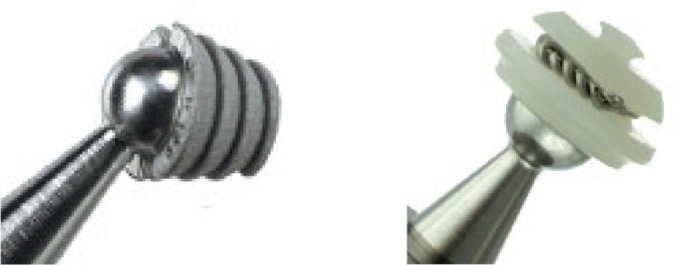
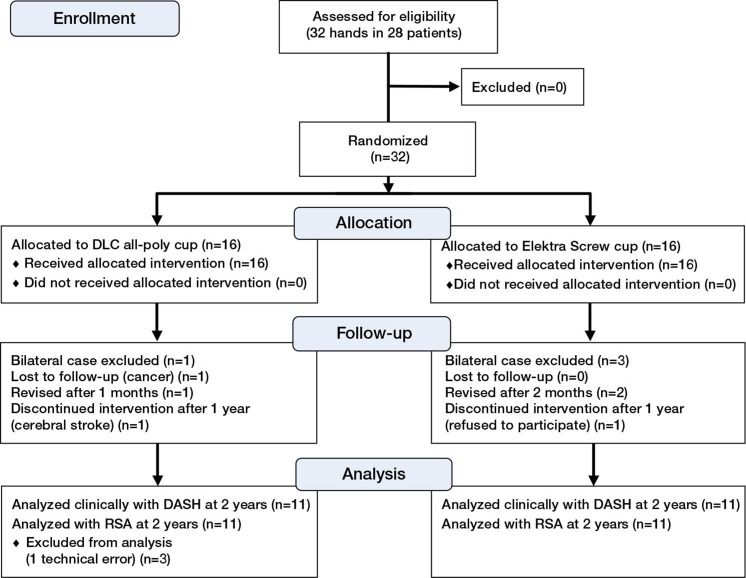
In a prospective, parallel-group, randomized patient-blinded clinical trial, we included 32 hands in 28 patients (5 males) with a mean age of 58 (40-77) years and with Eaton stage-2 or -3 osteoarthritis of the trapeziometacarpal joint. Patients were randomized to surgery with a cemented DLC all-polyethylene cup (C) (n = 16) or an uncemented hydroxyapatite-coated chrome-cobalt Elektra screw cup (UC) (n = 16). Uncemented cups were inserted without threading of the bone. Stereoradiographs for evaluation of cup migration (primary effect size) and DASH and pain scores were obtained during 2 years of follow-up.
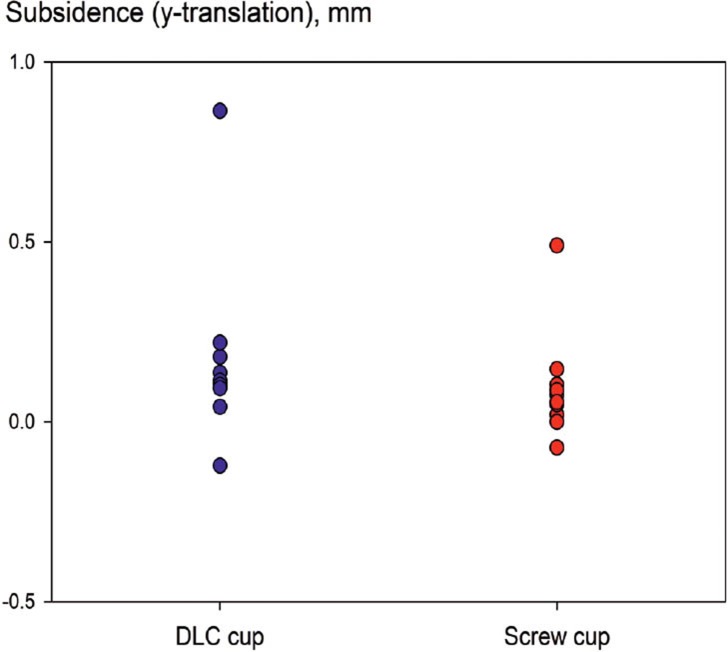
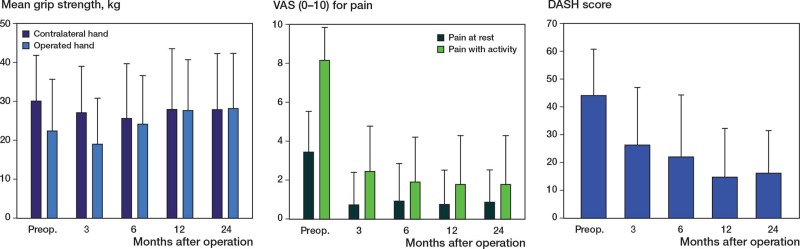
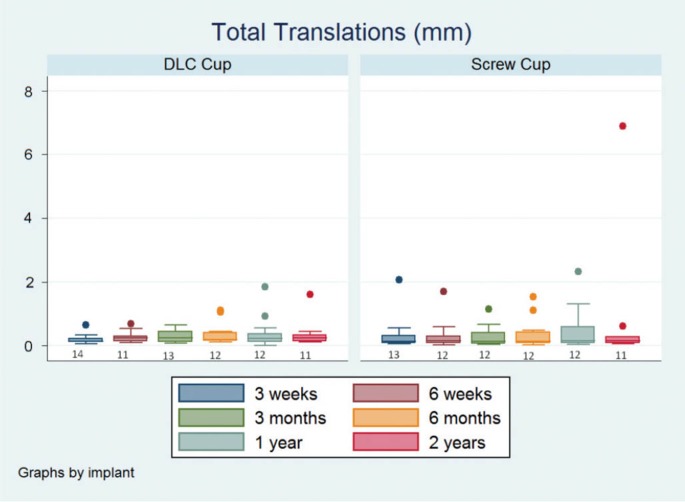
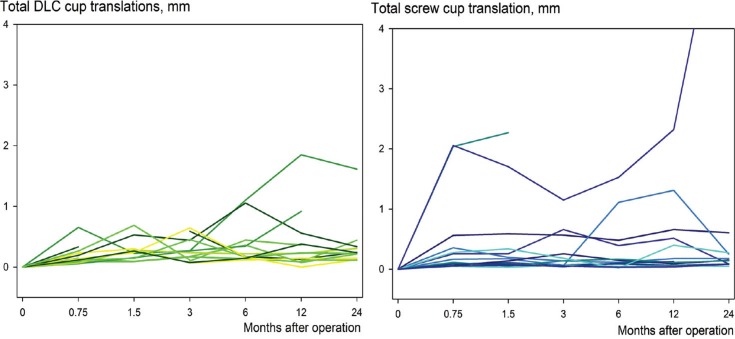
The 2-year total translation (TT) was similar (p = 0.2): 0.24 mm (SD 0.10) for the C (n = 11) and 0.19 mm (SD 0.16) for the UC (n = 11). Variances were similar (p = 0.4). Judged by RSA, 2 UC cups and 1 C cup became loose (TT > 1 mm). Both UC cups were found to be loose at revision. Grip strength, pain, and DASH scores were similar between groups at all measurement points.
Early implant fixation and clinical outcome were equally good with both cup designs. This is the first clinical RSA study on trapezium cups, and the method appears to be clinically useful for detection of loose implants.
在全腕掌关节(TM)假体中,杯体失败是公认的问题;这可能与固定不良有关,而放射立体测量分析(RSA)可揭示这一问题。我们比较了骨水泥固定掌骨杯和非骨水泥螺钉杯的早期植入物迁移。
在一项前瞻性、平行组、随机患者盲法临床试验中,我们纳入了 28 名患者(5 名男性)的 32 只手,平均年龄为 58 岁(40-77 岁),Eaton 分期 2 或 3 期腕掌关节骨关节炎。患者随机分为骨水泥 DLC 全聚乙烯杯(C)(n = 16)或非骨水泥羟基磷灰石涂层铬钴 Elektra 螺钉杯(UC)(n = 16)手术组。非骨水泥杯在不穿透骨的情况下插入。在 2 年的随访期间,获取用于评估杯体迁移(主要效应量)和 DASH 评分和疼痛评分的立体放射照片。
2 年的总平移(TT)相似(p = 0.2):C 组(n = 11)为 0.24mm(SD 0.10),UC 组(n = 11)为 0.19mm(SD 0.16)。方差相似(p = 0.4)。根据 RSA 判定,2 个 UC 杯和 1 个 C 杯松动(TT > 1mm)。翻修时发现两个 UC 杯均松动。两组在所有测量点的握力、疼痛和 DASH 评分均相似。
两种杯体设计的早期植入物固定和临床结果同样良好。这是首例关于掌骨杯的临床 RSA 研究,该方法似乎对检测松动植入物具有临床意义。