Zoological Institute: Functional Morphology and Biomechanics, Kiel University, Kiel, Germany.
Sci Rep. 2013;3:1101. doi: 10.1038/srep01101. Epub 2013 Jan 22.
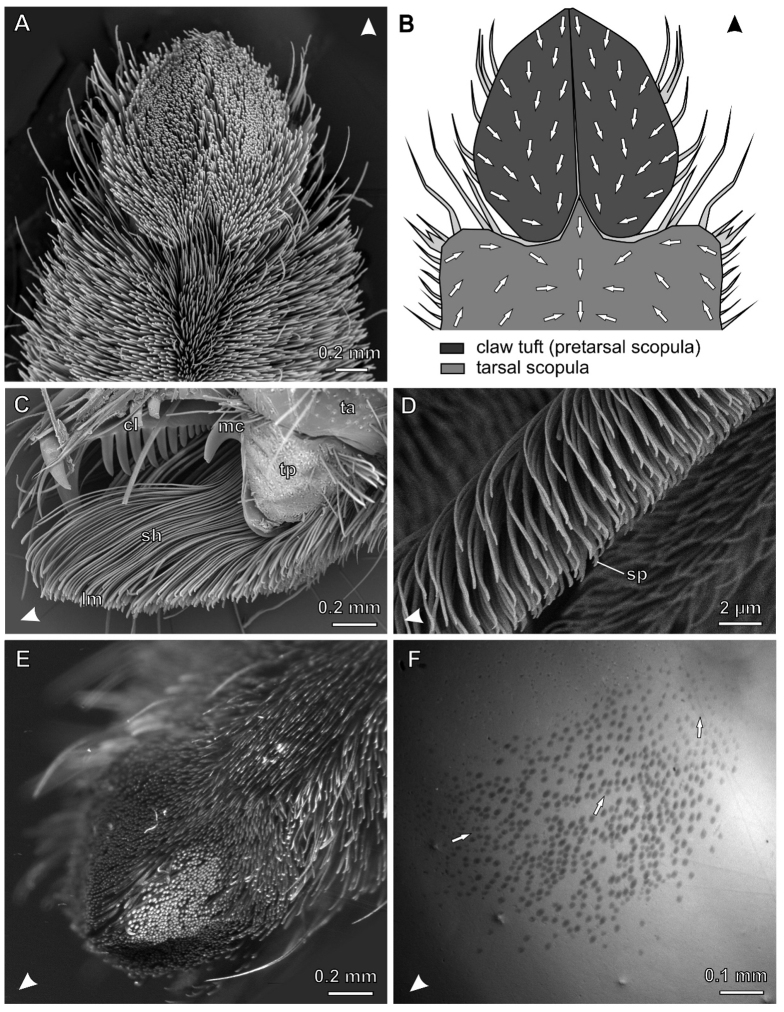
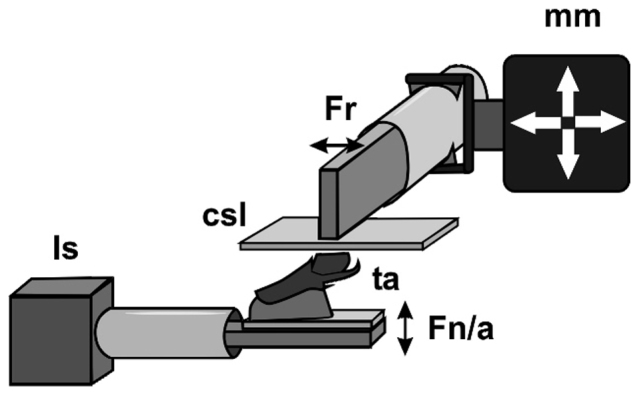
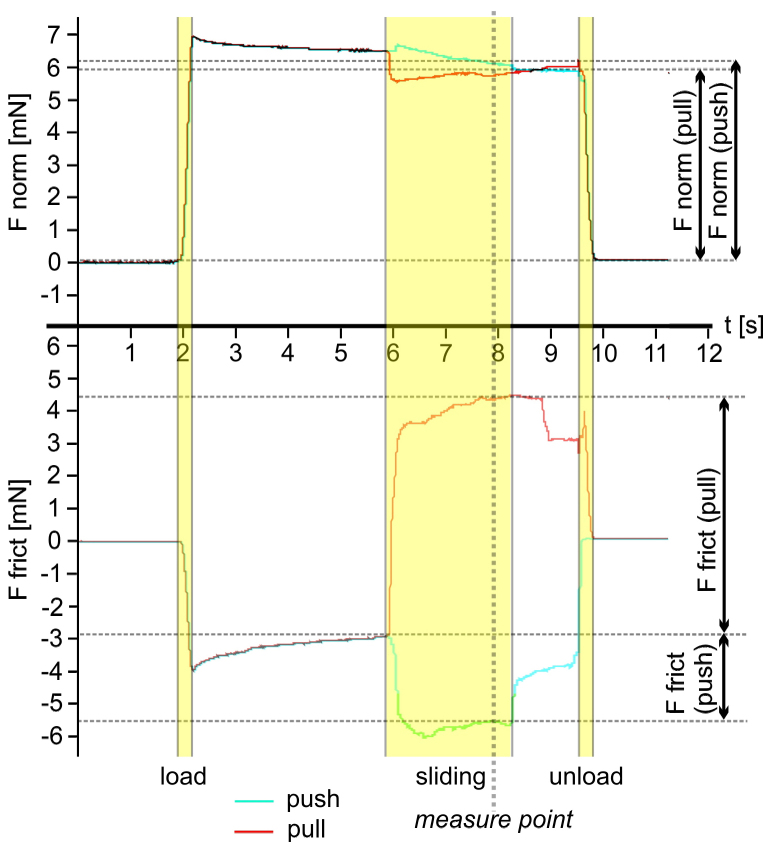
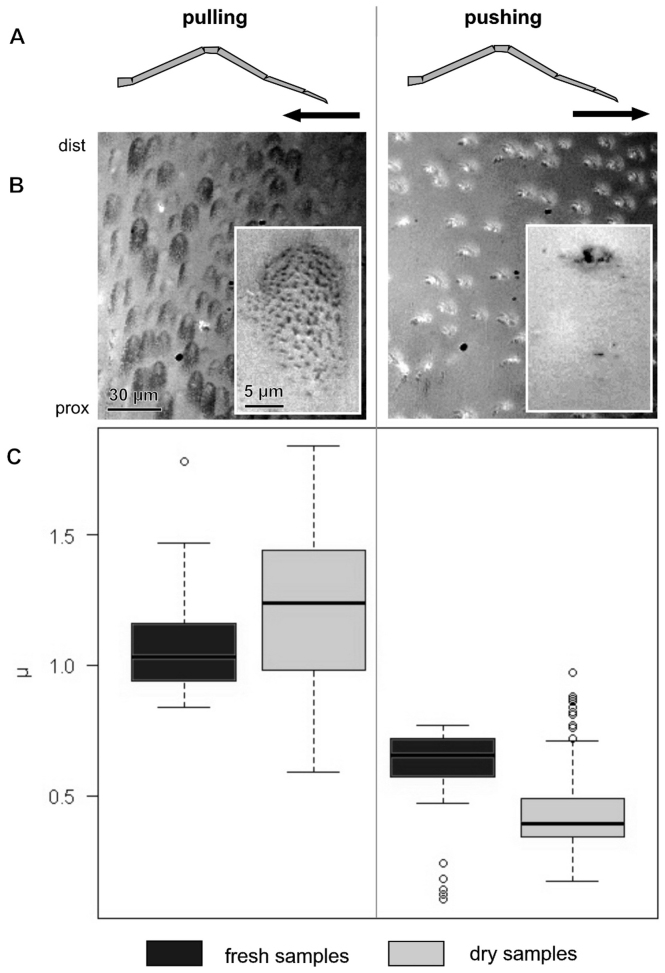
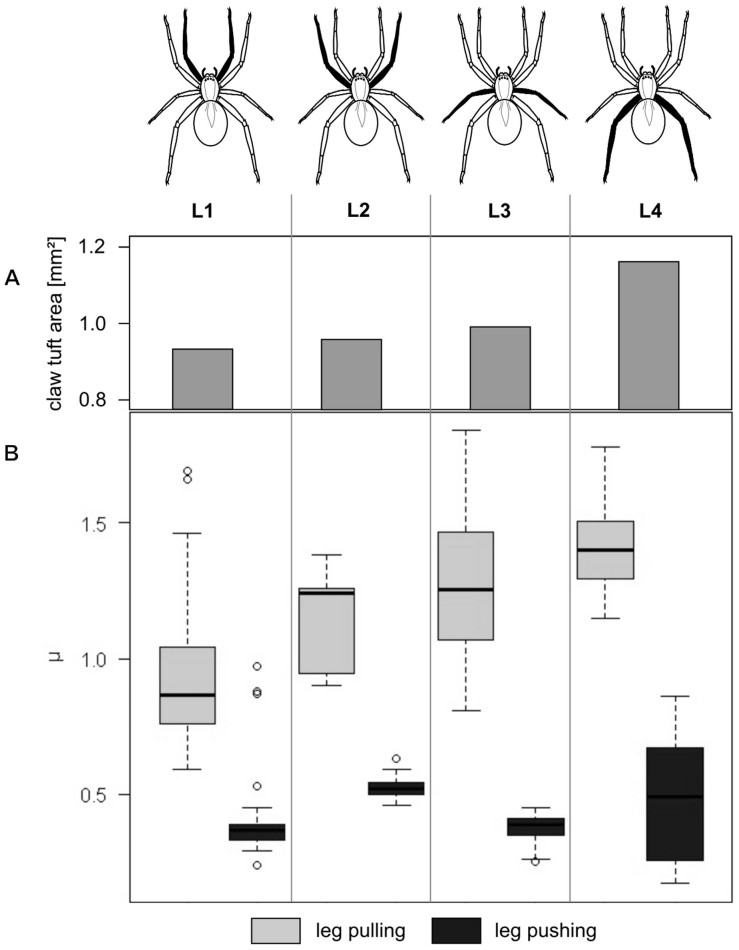
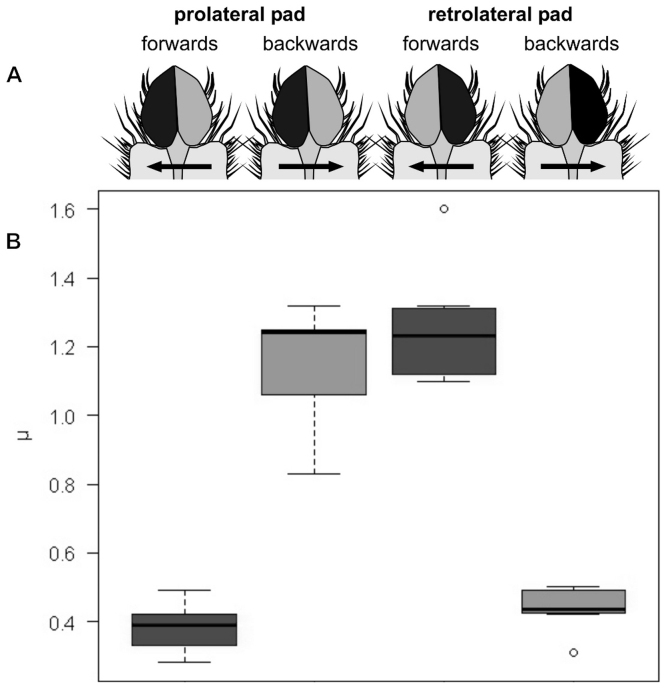
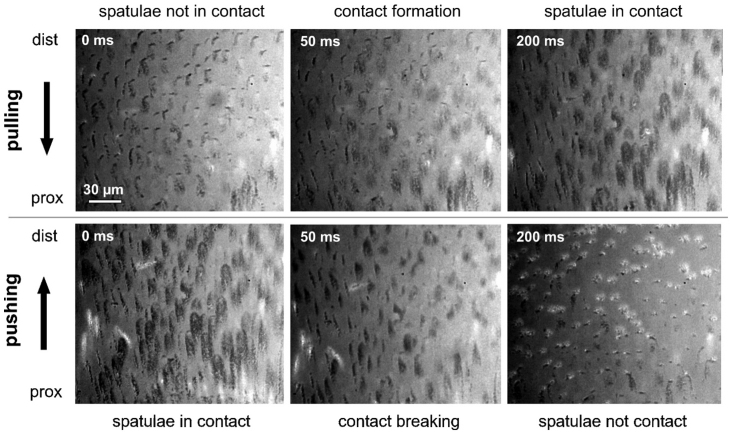
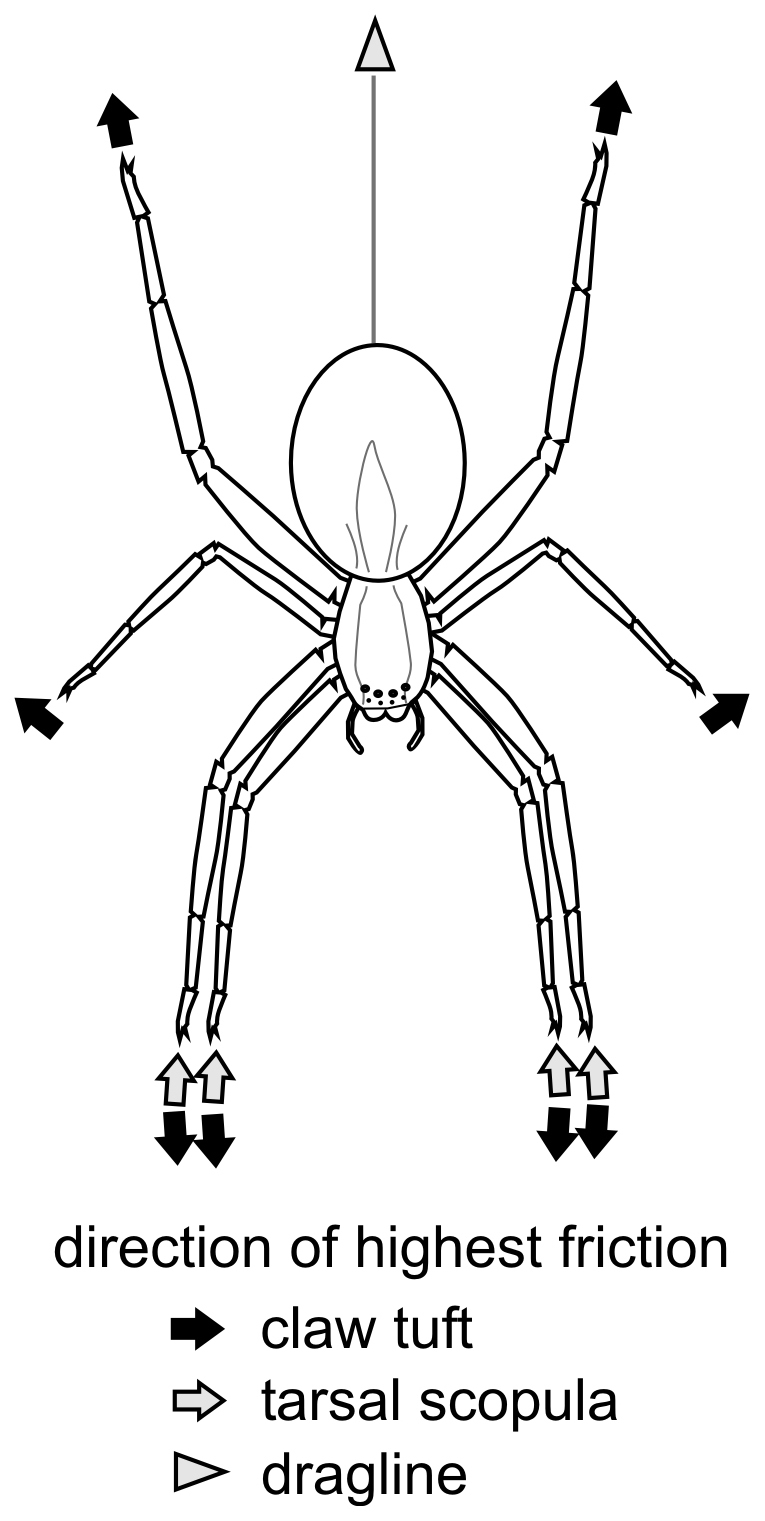
Dynamic attachment is the key to move on steep surfaces, with mechanisms being still not well understood. The hunting spider Cupiennius salei (Arachnida, Ctenidae) possesses hairy attachment pads (claw tufts) at its distal legs, consisting of directional branched setae. The morphological investigation revealed that adhesive setae are arranged in a radial manner within the distal tarsus. Friction of claw tufts on smooth glass was measured to reveal the functional effect of seta arrangement within the pad. Measurements revealed frictional anisotropy in both longitudinal and transversal directions. Contact behaviour of adhesive setae was investigated in a reflection interference contrast microscope (RICM). Observations on living spiders showed, that only a small part of the hairy pads is in contact at the same time. Thus the direction of frictional forces is depending on leg placement and rotation. This may aid controlling the attachment to the substrate.
动态附着是在陡峭表面上移动的关键,但其机制仍未被很好地理解。狩猎蜘蛛 Cupiennius salei(蛛形纲,Ctenidae)在其远端腿部具有毛茸茸的附着垫(爪簇),由定向分支的刚毛组成。形态学研究表明,粘性刚毛在远端跗节内呈放射状排列。测量爪簇在光滑玻璃上的摩擦力,以揭示垫内刚毛排列的功能效果。测量结果显示在纵向和横向都存在摩擦各向异性。在反射干涉对比显微镜(RICM)中研究了粘性刚毛的接触行为。对活体蜘蛛的观察表明,只有一小部分毛茸茸的垫同时接触。因此,摩擦力的方向取决于腿部的位置和旋转。这可能有助于控制对基质的附着。