Department of Microbiology, Immunology and Glycobiology, Institute of Laboratory Medicine, Lund University, , Lund, Sweden.
Gut. 2014 Jan;63(1):131-42. doi: 10.1136/gutjnl-2012-303715. Epub 2013 Jan 24.
Most colon cancers start with dysregulated Wnt/β-catenin signalling and remain a major therapeutic challenge. Examining whether HAMLET (human α-lactalbumin made lethal to tumour cells) may be used for colon cancer treatment is logical, based on the properties of the complex and its biological context.
To investigate if HAMLET can be used for colon cancer treatment and prevention. Apc(Min)(/+) mice, which carry mutations relevant to hereditary and sporadic human colorectal tumours, were used as a model for human disease.
HAMLET was given perorally in therapeutic and prophylactic regimens. Tumour burden and animal survival of HAMLET-treated and sham-fed mice were compared. Tissue analysis focused on Wnt/β-catenin signalling, proliferation markers and gene expression, using microarrays, immunoblotting, immunohistochemistry and ELISA. Confocal microscopy, reporter assay, immunoprecipitation, immunoblotting, ion flux assays and holographic imaging were used to determine effects on colon cancer cells.
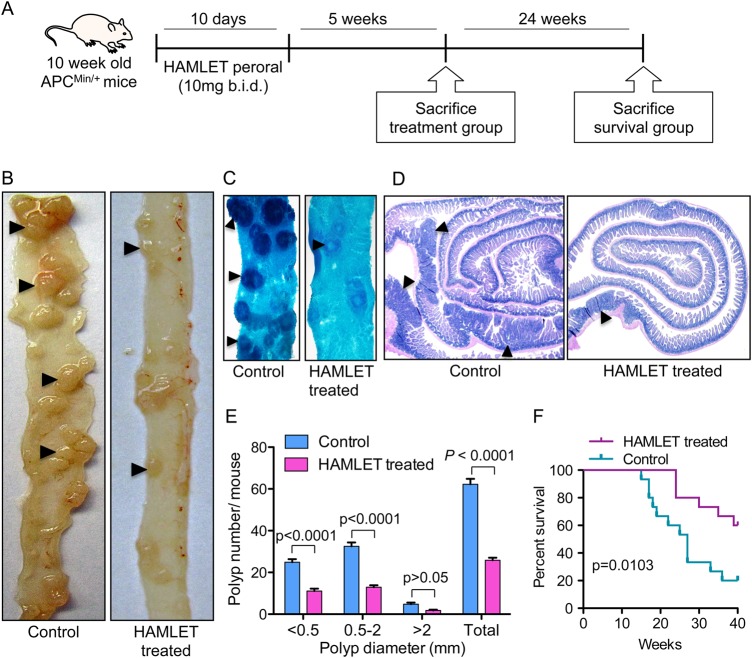
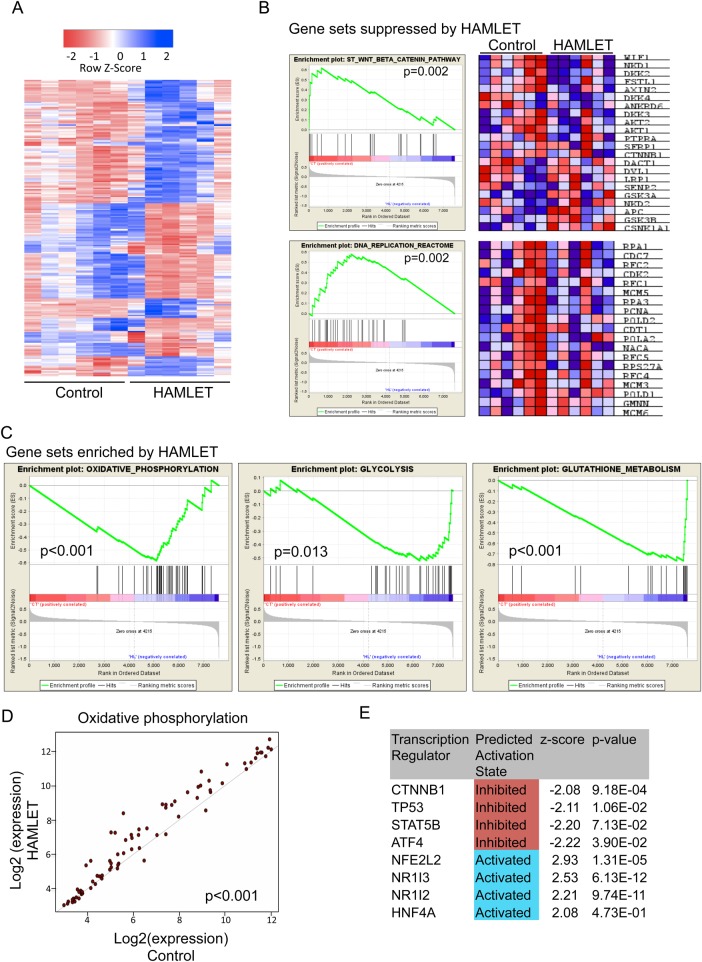
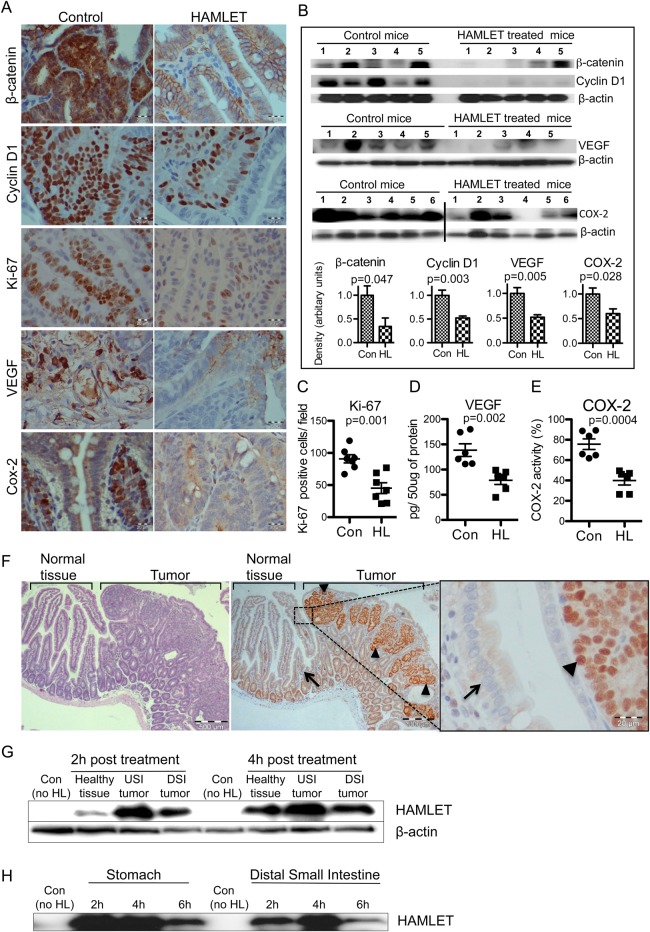
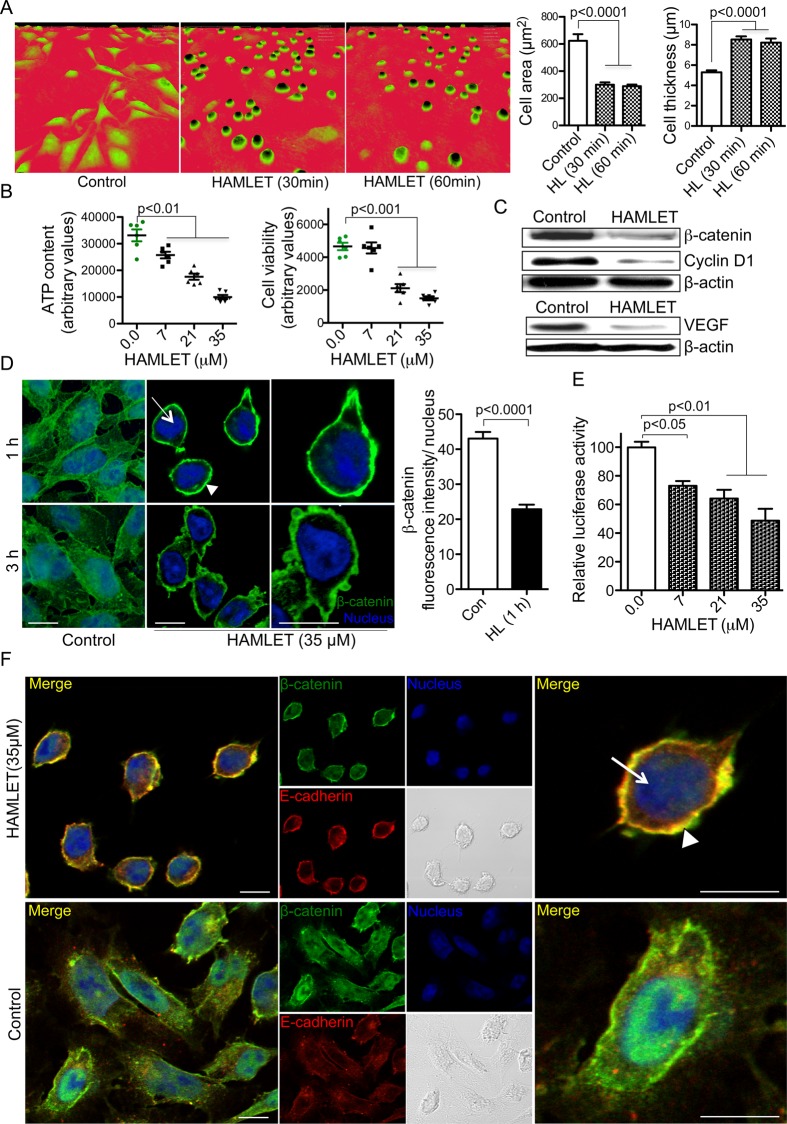
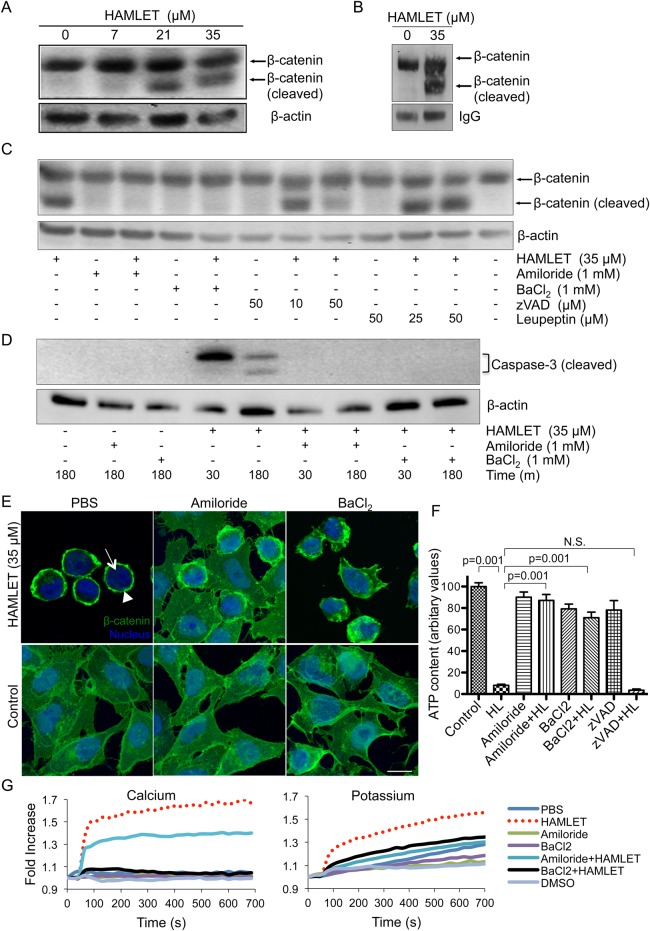
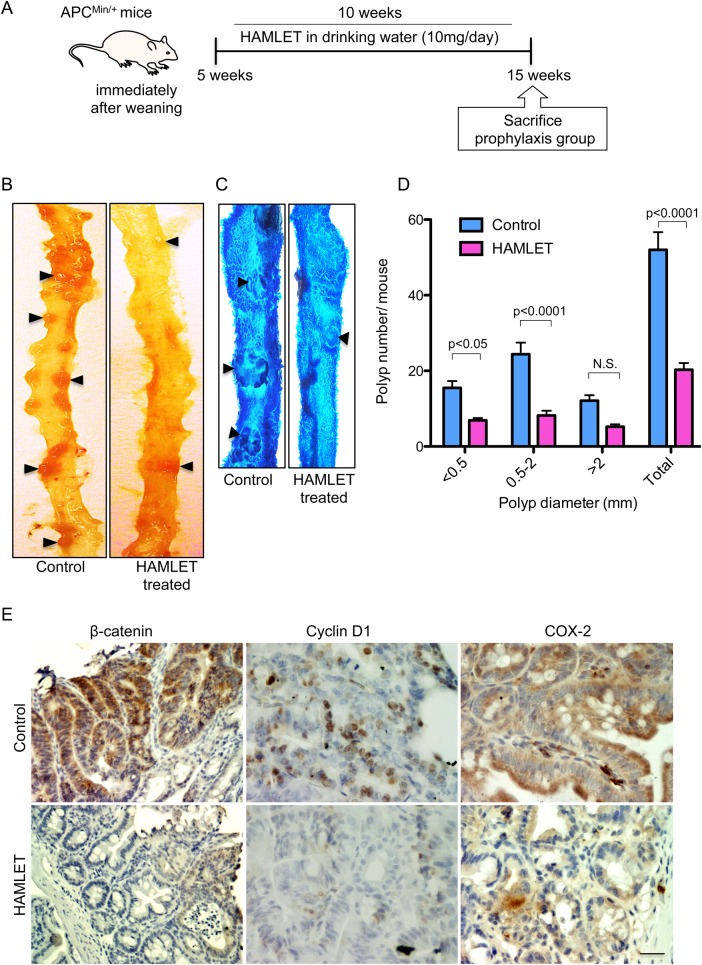
Peroral HAMLET administration reduced tumour progression and mortality in Apc(Min)(/+) mice. HAMLET accumulated specifically in tumour tissue, reduced β-catenin and related tumour markers. Gene expression analysis detected inhibition of Wnt signalling and a shift to a more differentiated phenotype. In colon cancer cells with APC mutations, HAMLET altered β-catenin integrity and localisation through an ion channel-dependent pathway, defining a new mechanism for controlling β-catenin signalling. Remarkably, supplying HAMLET to the drinking water from the time of weaning also significantly prevented tumour development.
These data identify HAMLET as a new, peroral agent for colon cancer prevention and treatment, especially needed in people carrying APC mutations, where colon cancer remains a leading cause of death.
大多数结肠癌起始于 Wnt/β-连环蛋白信号的失调,且仍然是一个主要的治疗挑战。基于该复合物的特性及其生物学背景,检验 HAMLET(人乳白蛋白使肿瘤细胞致死)是否可用于结肠癌的治疗是合理的。
研究 HAMLET 是否可用于结肠癌的治疗和预防。携带与人遗传性和散发性结直肠肿瘤相关突变的 Apc(Min)(/+)小鼠被用作人类疾病的模型。
以治疗和预防方案经口给予 HAMLET。比较 HAMLET 处理组和假饲组小鼠的肿瘤负担和动物存活率。使用微阵列、免疫印迹、免疫组化和 ELISA 聚焦于 Wnt/β-连环蛋白信号、增殖标志物和基因表达进行组织分析。共聚焦显微镜、报告基因检测、免疫沉淀、免疫印迹、离子通量测定和全息成像用于确定对结肠癌细胞的影响。
经口 HAMLET 给药可减少 Apc(Min)(/+)小鼠的肿瘤进展和死亡率。HAMLET 特异性积聚在肿瘤组织中,降低β-连环蛋白和相关肿瘤标志物。基因表达分析检测到 Wnt 信号的抑制和向更分化表型的转变。在具有 APC 突变的结肠癌细胞中,通过离子通道依赖性途径, HAMLET 改变了β-连环蛋白的完整性和定位,定义了控制β-连环蛋白信号的新机制。值得注意的是,从断奶时开始用 HAMLET 供水也显著预防了肿瘤的发展。
这些数据确定 HAMLET 为一种新的、经口的结肠癌预防和治疗药物,特别是在携带 APC 突变的人群中尤为需要,因为结肠癌仍然是导致死亡的主要原因。