Kan Akinori, Ikeda Toshiyuki, Fukai Atsushi, Nakagawa Takumi, Nakamura Kozo, Chung Ung-il, Kawaguchi Hiroshi, Tabin Clifford J
Department of Genetics, Harvard Medical School, 77 Avenue Louis Pasteur, Boston, MA 02115, USA.
BMC Dev Biol. 2013 Jan 29;13:4. doi: 10.1186/1471-213X-13-4.
Individual skeletal elements of the vertebrate limbs arise through a segmentation process introducing joints in specific locations. However, the molecular pathways controlling joint formation and subsequent joint maintenance are largely unknown. In this study, we focused on SOX11, and its contribution to the regulation of GDF5, a secreted signal necessary for proper joint formation and postnatal joint homeostasis.
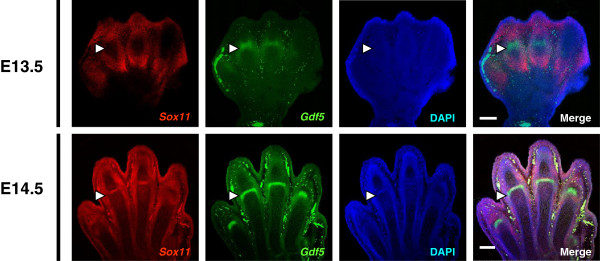
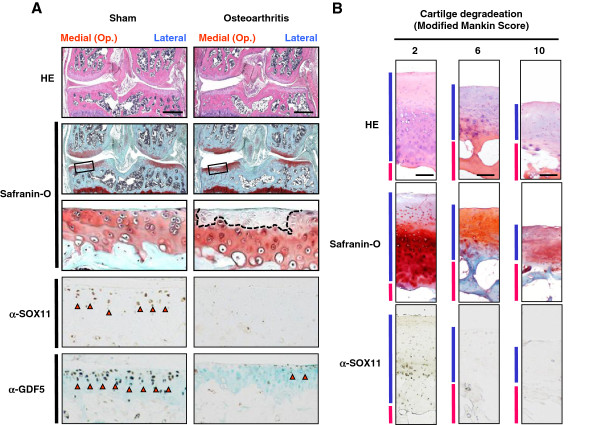
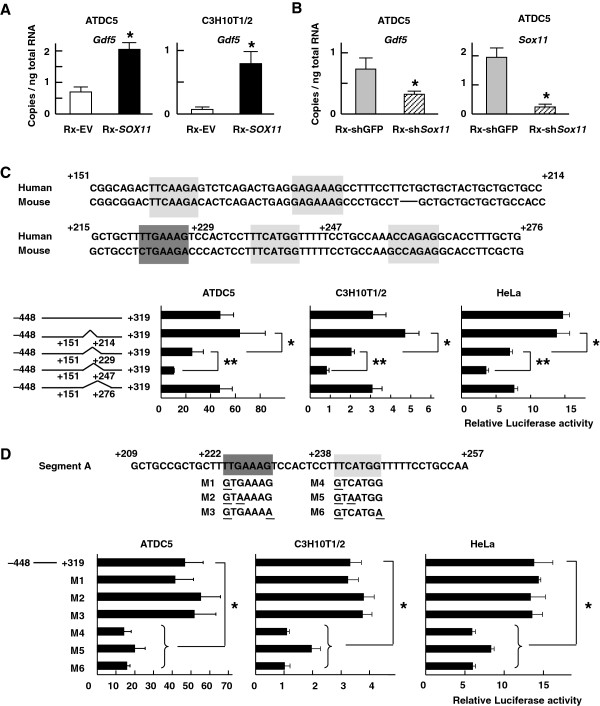
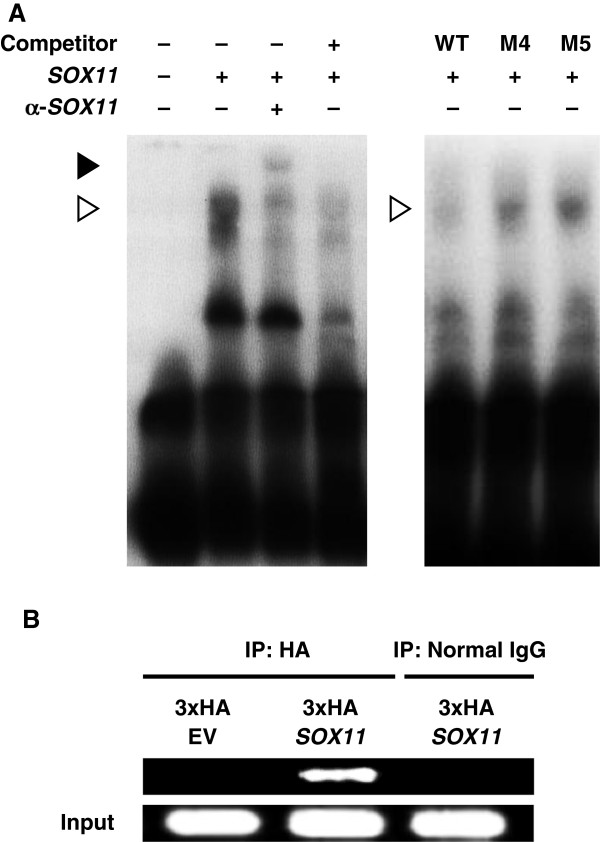
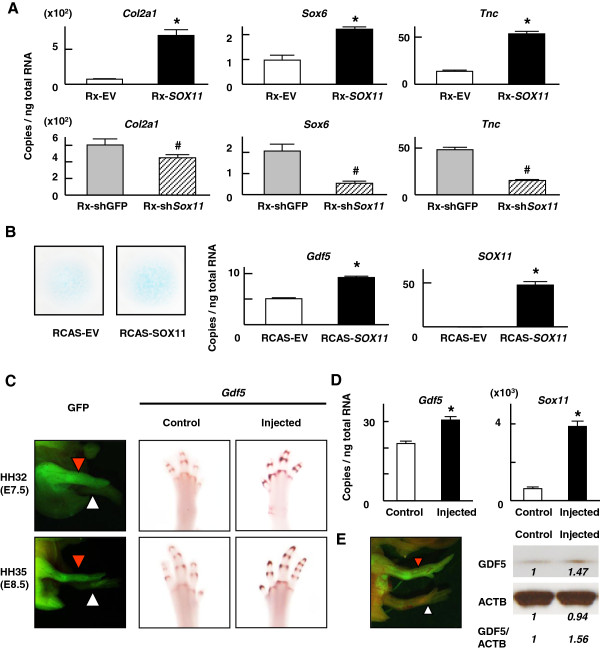
Sox11 is initially expressed broadly in the murine cartilage condensations at early stages of skeletal development, but its expression is specifically increased in the forming joint interzone as is forms. SOX11 overexpression can directly activate GDF5 expression both in vitro and in micromass cell cultures prepared from chick limb buds. Conserved SOX family binding sites are present in the 5' UTR region of the GDF5 gene and we show SOX11 can specifically bind to one of them. While misexpression of Sox11 in developing chick limbs through RCAS virus infection does not induce Gdf5 expression in ectopic locations, it does enhance its expression. To explore the roles of Sox11 in joint homeostasis, we analyzed adult knee joints in an osteoarthritis mouse model where the medial meniscus and the medial collateral ligament were removed. We also analyzed knee joints from human subjects who underwent total knee replacement surgery. We find that SOX11 is mainly expressed in the weight-bearing areas of knee joints, and its expression is decreased in degraded cartilage during progression of knee osteoarthritis in both mice and humans.
This work implicates SOX11 as a potential regulator of GDF5 expression in joint maintenance and suggests a possible role in the pathogenesis of osteoarthritis.
脊椎动物肢体的单个骨骼元件通过在特定位置引入关节的分割过程而产生。然而,控制关节形成及后续关节维持的分子途径在很大程度上尚不清楚。在本研究中,我们聚焦于SOX11及其对GDF5调节的贡献,GDF5是关节正常形成和出生后关节稳态所必需的分泌信号。
Sox11最初在骨骼发育早期的小鼠软骨凝块中广泛表达,但随着关节间区形成,其表达在其中特异性增加。SOX11过表达在体外以及从鸡胚肢芽制备的微团细胞培养物中均可直接激活GDF5表达。GDF5基因的5'UTR区域存在保守的SOX家族结合位点,并且我们证明SOX11可特异性结合其中之一。虽然通过RCAS病毒感染在发育中的鸡胚肢体中错误表达Sox11不会在异位位置诱导Gdf5表达,但会增强其表达。为了探究Sox11在关节稳态中的作用,我们分析了骨关节炎小鼠模型中切除内侧半月板和内侧副韧带的成年膝关节。我们还分析了接受全膝关节置换手术的人类受试者的膝关节。我们发现SOX11主要在膝关节的负重区域表达,并且在小鼠和人类膝关节骨关节炎进展过程中,其在退化软骨中的表达降低。
这项工作表明SOX11是关节维持中GDF5表达的潜在调节因子,并提示其在骨关节炎发病机制中可能发挥作用。