Cardiovascular Biochemistry Group, Biomedical Research Institute Sant Pau (IIB Sant Pau), Barcelona 08041, Spain.
Int J Mol Sci. 2013 Jan 28;14(2):2601-16. doi: 10.3390/ijms14022601.
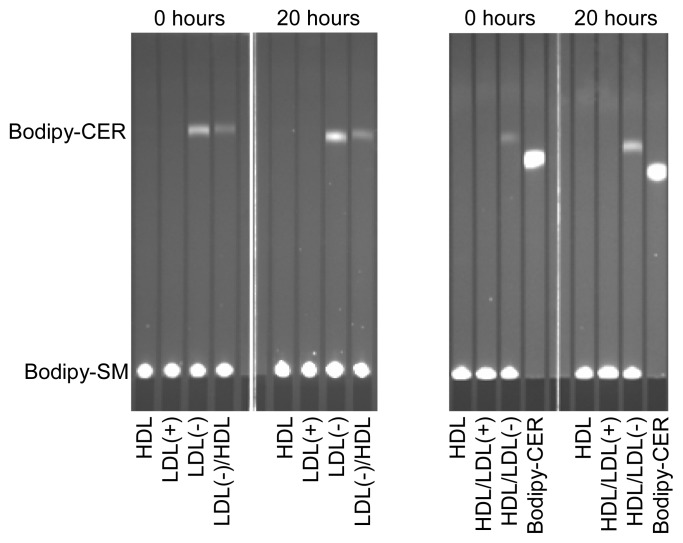
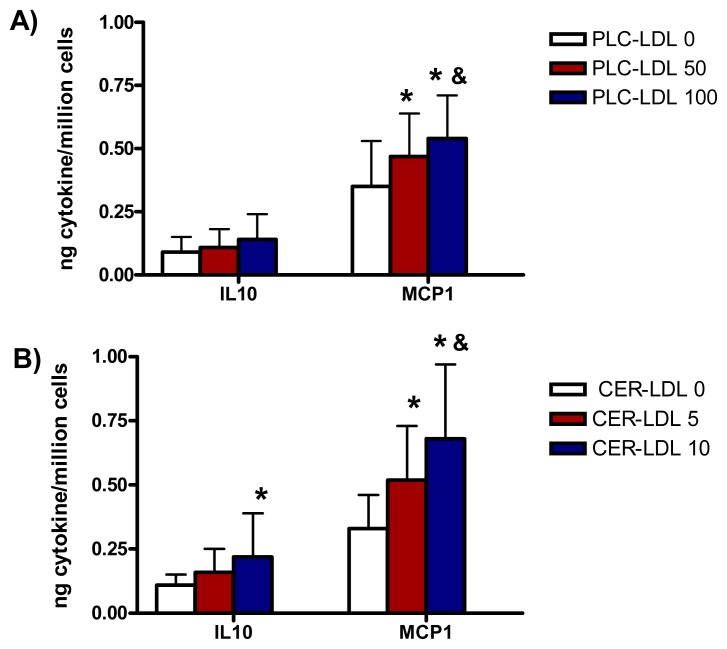
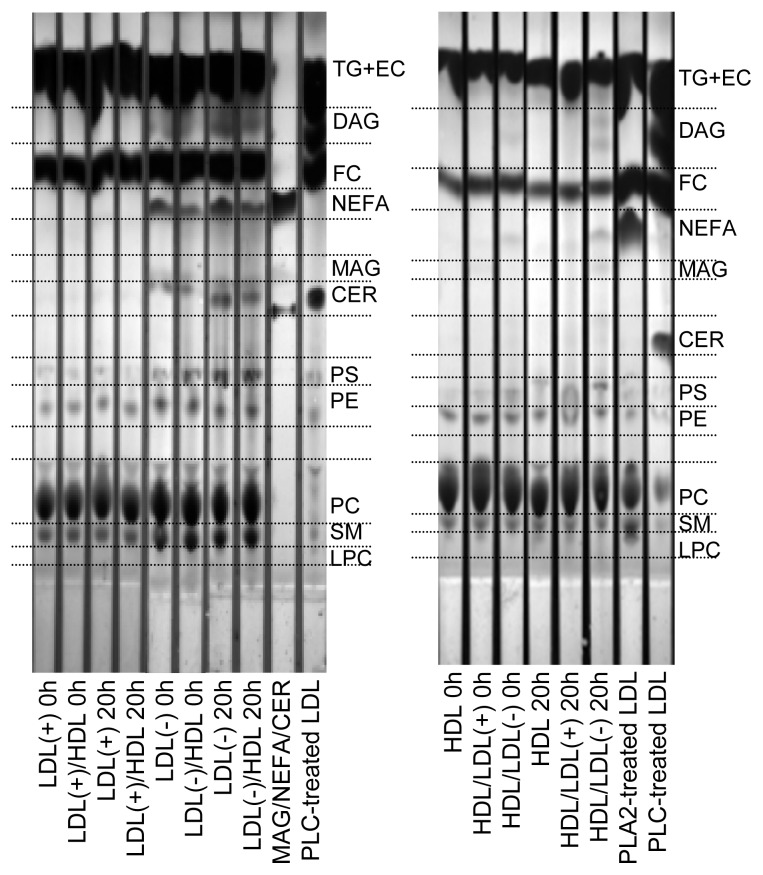
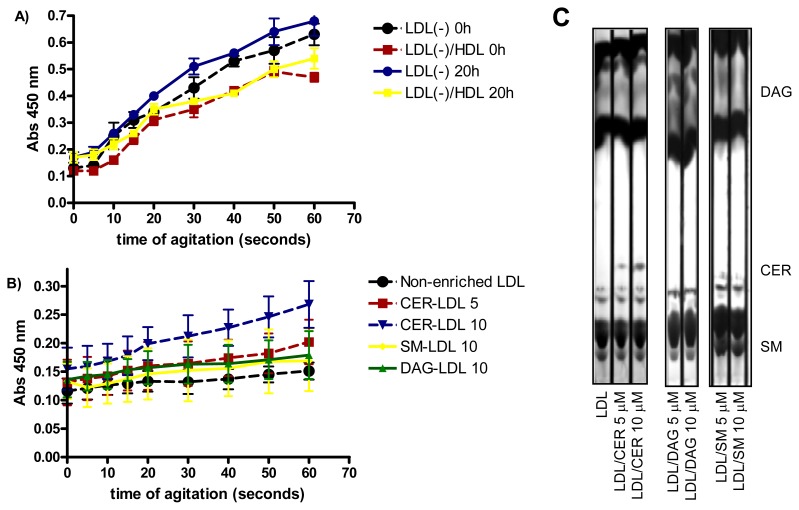
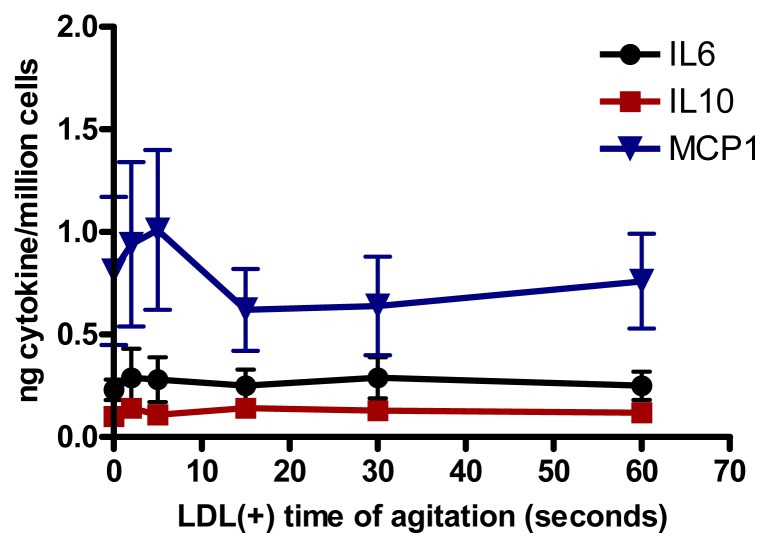
Electronegative low-density lipoprotein (LDL(-)) is a minor modified LDL subfraction that is present in blood. LDL(-) promotes inflammation and is associated with the development of atherosclerosis. We previously reported that the increase of cytokine release promoted by this lipoprotein subfraction in monocytes is counteracted by high-density lipoprotein (HDL). HDL also inhibits a phospholipase C-like activity (PLC-like) intrinsic to LDL(-). The aim of this work was to assess whether the inhibition of the PLC-like activity by HDL could decrease the content of ceramide (CER) and diacylglycerol (DAG) generated in LDL(-). This knowledge would allow us to establish a relationship between these compounds and the inflammatory activity of LDL(-). LDL(-) incubated at 37 °C for 20 h increased its PLC-like activity and, subsequently, the amount of CER and DAG. We found that incubating LDL(-) with HDL decreased both products in LDL(-). Native LDL was modified by lipolysis with PLC or by incubation with CER-enriched or DAG-enriched liposomes. The increase of CER in native LDL significantly increased cytokine release, whereas the enrichment in DAG did not show these inflammatory properties. These data point to CER, a resultant product of the PLC-like activity, as a major determinant of the inflammatory activity induced by LDL(-) in monocytes.
电负性低密度脂蛋白 (LDL(-)) 是血液中存在的一种次要修饰的 LDL 亚组分。LDL(-) 可促进炎症反应,与动脉粥样硬化的发生有关。我们之前曾报道,这种脂蛋白亚组分在单核细胞中促进细胞因子释放的增加,可被高密度脂蛋白 (HDL) 抵消。HDL 还可抑制 LDL(-) 固有的一种磷酯酶 C 样活性 (PLC-like)。本研究的目的是评估 HDL 对 LDL(-) 中 PLC-like 活性的抑制是否会降低生成的神经酰胺 (CER) 和二酰基甘油 (DAG) 的含量。这一知识将使我们能够确定这些化合物与 LDL(-) 的炎症活性之间的关系。在 37°C 孵育 20 小时的 LDL(-) 会增加其 PLC-like 活性,随后增加 CER 和 DAG 的含量。我们发现,用 HDL 孵育 LDL(-) 可降低 LDL(-) 中的这两种产物。用 PLC 对天然 LDL 进行脂解或用富含 CER 或富含 DAG 的脂质体孵育,可修饰 LDL。天然 LDL 中 CER 的增加显著增加了细胞因子的释放,而 DAG 的富集则没有表现出这些炎症特性。这些数据表明,源自 PLC-like 活性的 CER 是 LDL(-) 在单核细胞中诱导炎症活性的主要决定因素。