Sananmuang Thanida, Phutikanit Nawapen, Nguyen Catherine, Manee-In Sukanya, Techakumphu Mongkol, Tharasanit Theerawat
Department of Obstetrics, Gynaecology and Reproduction, Faculty of Veterinary Science, Chulalongkorn University, Bangkok 10330, Thailand.
J Reprod Dev. 2013;59(2):180-8. doi: 10.1262/jrd.2012-116. Epub 2013 Jan 25.
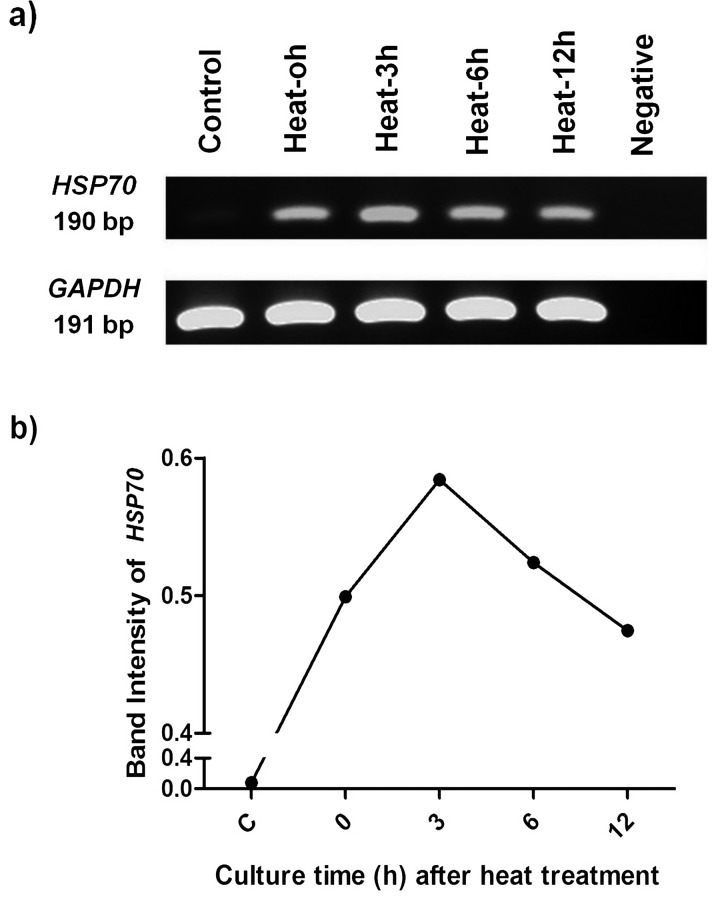
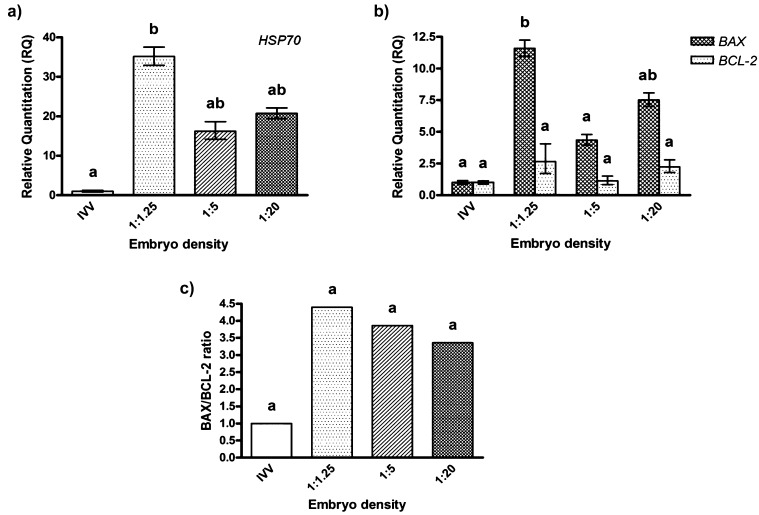
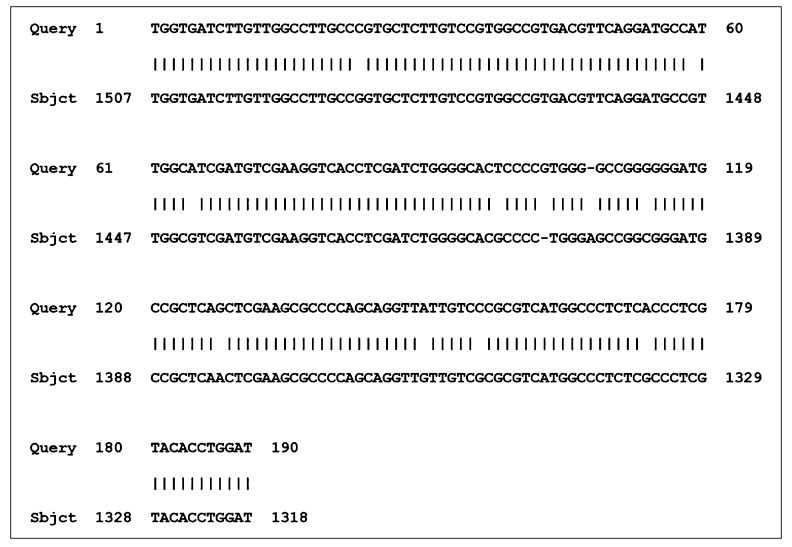
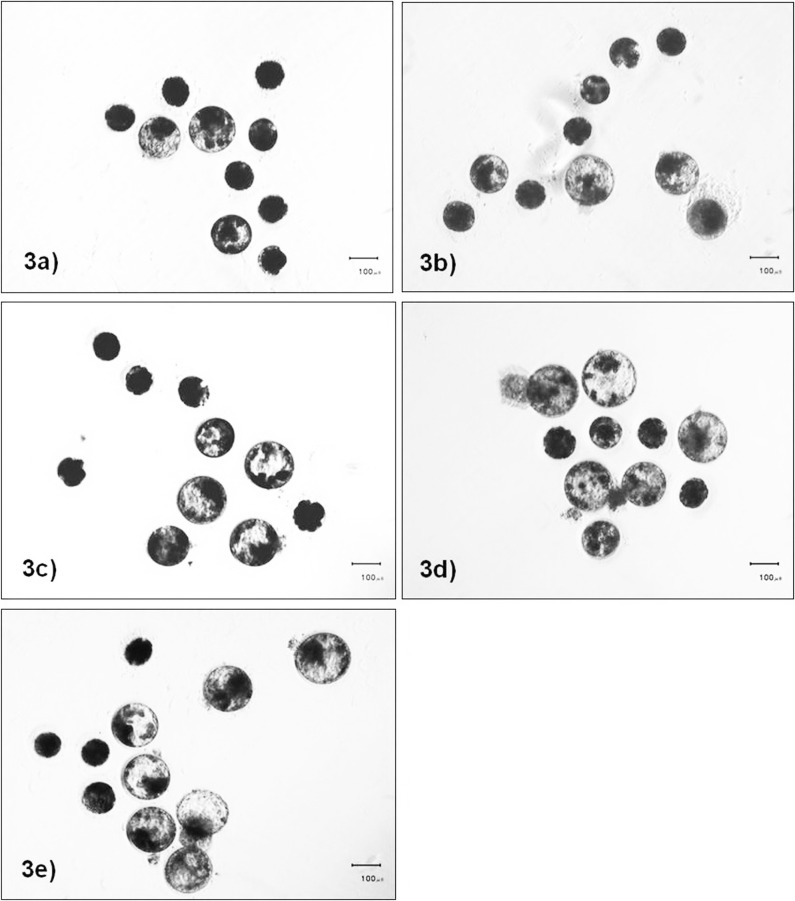
Developmental competence and quality of in vitro produced embryos has been demonstrated to be lower than in vivo derived embryos. This study aimed specifically to determine the effects of in vitro culture of feline embryos using various culture densities on developmental competence and expression of stress- and apoptotic-related genes in terms of heat shock protein 70 (HSP70) and apoptotic-related (BAX and BCL-2) gene expressions. In experiment 1, we characterized the inducible form of a feline-specific HSP70 mRNA sequence, as it has not been previously reported. The primers for feline HSP70 mRNA were synthesized and tested on heat-treated cat fibroblasts. In experiment 2, feline embryos were cultured at different culture densities (embryo:culture volume; 1:1.25, 1:5 and 1:20). The developmental competence was determined along with HSP70, BAX and BCL-2 transcript abundances using quantitative RT-PCR. In vivo derived embryos were used as a control group. A partial cat HSP70 mRNA sequence (190 bp) was characterized and exhibited high nucleotide identity (93 to 96%) with other species. Cleaved embryos cultured at high density (1:1.25) developed to blastocysts at a lower rate than those generated from lower densities. Irrespective of the culture densities used, in vitro cultured blastocysts showed increased levels of HSP70 and BAX transcripts compared with in vivo counterparts. Blastocysts derived from the highest culture density (1:1.25) showed higher levels of upregulation of HSP70 and BAX transcripts than those cultured at lower culture densities (1:5 and 1:20). In conclusion, increased levels of pro-apoptotic (BAX) and stress-response (HSP70) transcripts correlated with developmental incompetence of embryos cultured at high embryonic density, indicating that stress accumulated during in vitro embryo culture affected the fate for embryo development and quality.
体外生产胚胎的发育能力和质量已被证明低于体内来源的胚胎。本研究旨在具体确定使用不同培养密度对猫胚胎进行体外培养,在热休克蛋白70(HSP70)和凋亡相关(BAX和BCL-2)基因表达方面,对胚胎发育能力以及应激和凋亡相关基因表达的影响。在实验1中,我们鉴定了猫特异性HSP70 mRNA序列的可诱导形式,因为此前尚未有相关报道。合成了猫HSP70 mRNA的引物,并在热处理的猫成纤维细胞上进行了测试。在实验2中,将猫胚胎以不同的培养密度(胚胎:培养液体积;1:1.25、1:5和1:20)进行培养。使用定量RT-PCR测定发育能力以及HSP70、BAX和BCL-2转录本丰度。体内来源的胚胎用作对照组。鉴定出一段部分猫HSP70 mRNA序列(190 bp),其与其他物种具有较高的核苷酸同一性(93%至96%)。高密度(1:1.25)培养的分裂期胚胎发育为囊胚的比率低于低密度培养的胚胎。无论使用何种培养密度,与体内胚胎相比,体外培养的囊胚显示HSP70和BAX转录本水平升高。来自最高培养密度(1:1.25)的囊胚比在较低培养密度(1:5和1:20)下培养的囊胚显示出更高水平的HSP70和BAX转录本上调。总之,促凋亡(BAX)和应激反应(HSP70)转录本水平升高与高胚胎密度培养的胚胎发育无能相关,表明体外胚胎培养过程中积累的应激影响了胚胎发育的命运和质量。