Département de Pharmacologie, Université de Montréal, Montréal, Québec, Canada.
Clin Epigenetics. 2013 Feb 1;5(1):3. doi: 10.1186/1868-7083-5-3.
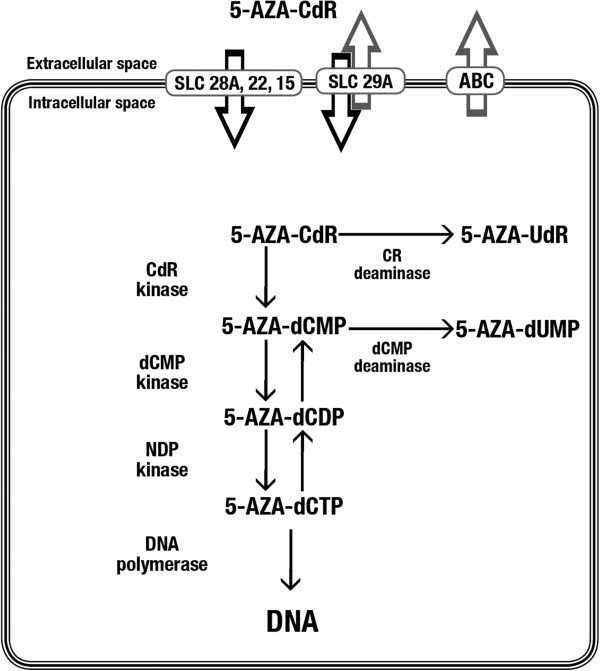
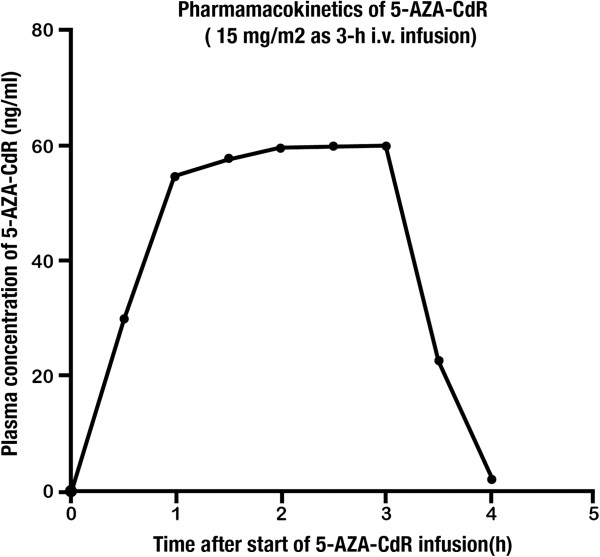
5-Aza-2'-deoxycytidine (5-AZA-CdR, decitabine), an epigenetic drug that inhibits DNA methylation, is currently used to treat myelodysplastic syndrome (MDS), and is under investigation for treating acute myeloid leukemia (AML) and other malignancies. 5-AZA-CdR can reactivate tumor suppressor genes silenced by aberrant DNA methylation, a frequent event in all types of cancer. Because this epigenetic change is reversible, it is a good target for 5-AZA-CdR therapy. We have reviewed the preclinical data of 5-AZA-CdR to analyze the concentrations and exposure times required to eradicate cancer stem cells. We analyzed the dose-schedules used in animal models that show potent antineoplastic activity of 5-AZA-CdR. We attempted to correlate the preclinical data with the responses obtained in clinical trials of 5-AZA-CdR in patients with cancer. The pharmacokinetics and drug distribution of 5-AZA-CdR are key parameters because adequate therapeutic drug levels are required to eliminate cancer stem cells in all anatomic compartments. The plasma half-life of 5-AZA-CdR in humans is approximately 20 minutes due to the high levels in the liver of cytidine deaminase, the enzyme that inactivates this analogue. This provides a rationale to use an inhibitor of cytidine deaminase in combination with 5-AZA-CdR. Low-dose 5-AZA-CdR is effective for MDS and AML and can induce complete remissions (CR). However, maintenance of CR with low-dose 5-AZA-CdR is difficult. Based on analyses of preclinical and clinical data, low dose 5-AZA-CdR has the potential to be an effective form of therapy in some patients with cancer. For patients who do not respond to low dose therapy we recommend dose-intensive treatment with 5-AZA-CdR. Patients who are candidates for intensive dose 5-AZA-CdR should have a good bone marrow status so as to permit adequate recovery from myelosuppression, the major toxicity of 5-AZA-CdR. Solid tumors are also interesting targets for therapy with 5-AZA-CdR. Both low dose and intensive therapy with 5-AZA-CdR can reduce the proliferative potential of tumor stem cells in animal models. We propose novel dose schedules of 5-AZA-CdR for investigation in patients with cancer. The full chemotherapeutic potential of 5-AZA-CdR to treat cancer merits further clinical investigation and can only be realized when its optimal dose-schedule is determined.
5-氮杂-2'-脱氧胞苷(5-AZA-CdR,地西他滨)是一种抑制 DNA 甲基化的表观遗传药物,目前用于治疗骨髓增生异常综合征(MDS),并正在研究用于治疗急性髓系白血病(AML)和其他恶性肿瘤。5-AZA-CdR 可以重新激活因异常 DNA 甲基化而沉默的肿瘤抑制基因,这种表观遗传改变是所有类型癌症中常见的事件。由于这种表观遗传变化是可逆的,因此它是 5-AZA-CdR 治疗的一个很好的靶点。我们回顾了 5-AZA-CdR 的临床前数据,以分析消除癌症干细胞所需的浓度和暴露时间。我们分析了在显示出 5-AZA-CdR 具有强大抗肿瘤活性的动物模型中使用的剂量方案。我们试图将临床前数据与癌症患者接受 5-AZA-CdR 的临床试验中的反应相关联。5-AZA-CdR 的药代动力学和药物分布是关键参数,因为需要在所有解剖部位达到足够的治疗药物水平才能消除癌症干细胞。由于肝脏中胞苷脱氨酶的高水平,5-AZA-CdR 的半衰期在人体内约为 20 分钟,该酶使该类似物失活。这为使用胞苷脱氨酶抑制剂与 5-AZA-CdR 联合使用提供了依据。低剂量 5-AZA-CdR 对 MDS 和 AML 有效,可诱导完全缓解(CR)。然而,低剂量 5-AZA-CdR 维持 CR 较为困难。基于临床前和临床数据的分析,低剂量 5-AZA-CdR 有可能成为某些癌症患者的有效治疗形式。对于对低剂量治疗无反应的患者,我们建议使用高剂量 5-AZA-CdR 进行强化治疗。适合接受高强度剂量 5-AZA-CdR 治疗的患者骨髓状况良好,以便从骨髓抑制(5-AZA-CdR 的主要毒性)中充分恢复。实体瘤也是用 5-AZA-CdR 治疗的有趣靶标。低剂量和高强度治疗均可降低动物模型中肿瘤干细胞的增殖潜力。我们提出了用于癌症患者的新型 5-AZA-CdR 剂量方案。只有确定了最佳剂量方案,才能进一步研究 5-AZA-CdR 治疗癌症的全部化疗潜力。