The Lautenberg Center for Immunology and Cancer Research, Department of Immunology and Cancer Research-IMRIC, Hebrew University-Hadassah Medical School, Jerusalem, Israel.
Cell Death Dis. 2013 Jan 31;4(1):e480. doi: 10.1038/cddis.2013.6.
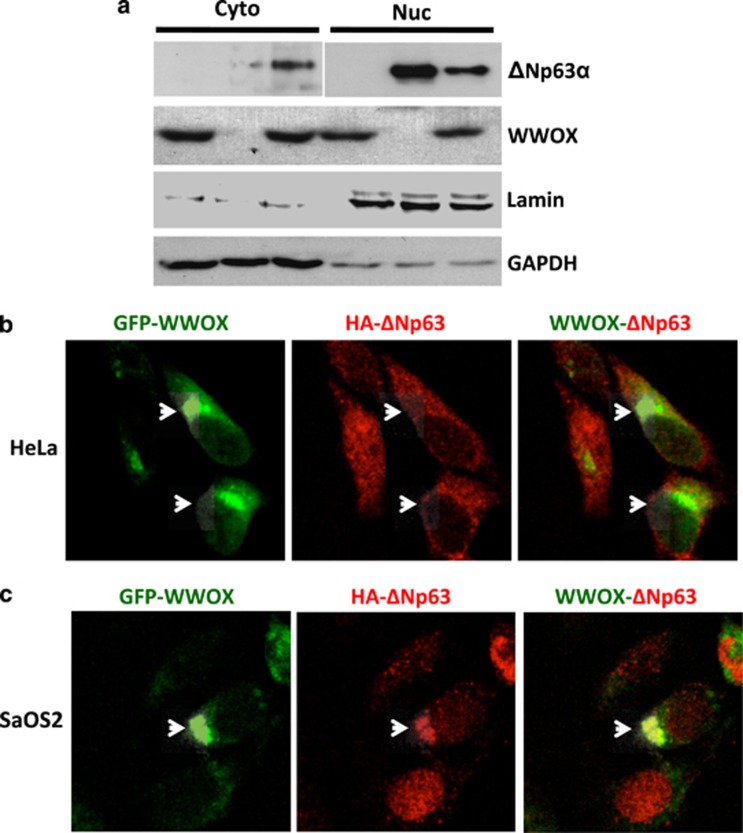
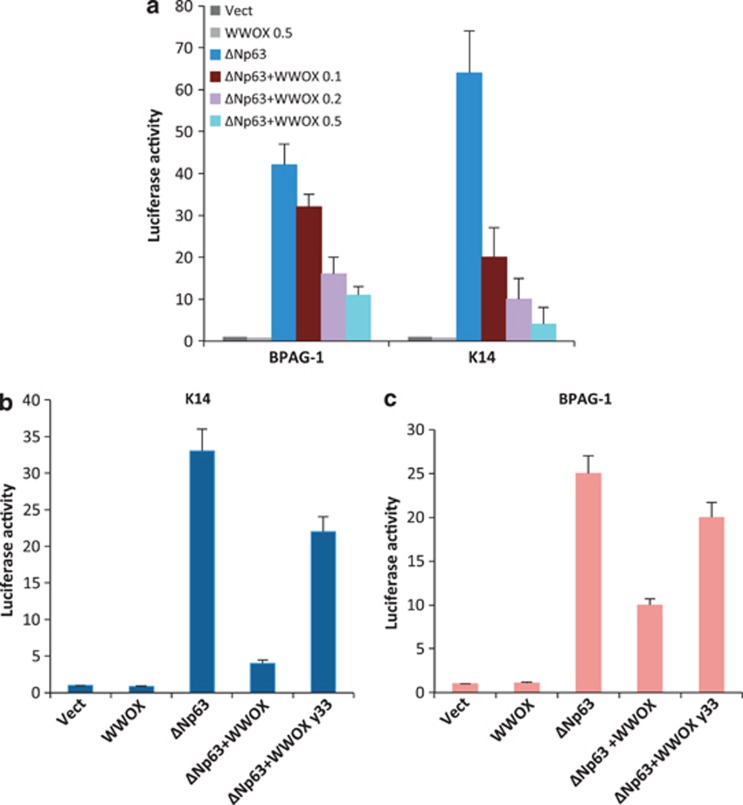
The WWOX tumor suppressor is a WW domain-containing protein. Its function in the cell has been shown to be mediated, in part, by interacting with its partners through its first WW (WW1) domain. Here, we demonstrated that WWOX via WW1 domain interacts with p53 homolog, ΔNp63α. This protein-protein interaction stabilizes ΔNp63α, through antagonizing function of the E3 ubiquitin ligase ITCH, inhibits nuclear translocation of ΔNp63α into the nucleus and suppresses ΔNp63α transactivation function. Additionally, we found that this functional crosstalk reverses cancer cells resistance to cisplatin, mediated by ΔNp63α, and consequently renders these cells more sensitive to undergo apoptosis. These findings suggest a functional crosstalk between WWOX and ΔNp63α in tumorigenesis.
WWOX 肿瘤抑制因子是一种含有 WW 结构域的蛋白质。其在细胞中的功能部分是通过其第一个 WW(WW1)结构域与其伙伴相互作用来介导的。在这里,我们证明了 WWOX 通过 WW1 结构域与 p53 同源物 ΔNp63α 相互作用。这种蛋白-蛋白相互作用通过拮抗 E3 泛素连接酶 ITCH 的功能稳定 ΔNp63α,抑制 ΔNp63α 向核内的核易位,并抑制 ΔNp63α 的转录激活功能。此外,我们发现这种功能串扰逆转了由 ΔNp63α 介导的癌细胞对顺铂的耐药性,从而使这些细胞更容易发生凋亡。这些发现表明 WWOX 和 ΔNp63α 之间在肿瘤发生过程中有功能串扰。