State Key Laboratory of Veterinary Etiological Biology, National Foot and Mouth Diseases Reference Laboratory, Key Laboratory of Animal Virology of Ministry of Agriculture, Lanzhou Veterinary Research Institute, Chinese Academy of Agricultural Sciences, Lanzhou, China.
PLoS One. 2013;8(1):e55228. doi: 10.1371/journal.pone.0055228. Epub 2013 Jan 25.
No licensed vaccine is currently available against serotype A foot-and-mouth disease (FMD) in China, despite the isolation of A/WH/CHA/09 in 2009, partly because this strain does not replicate well in baby hamster kidney (BHK) cells.
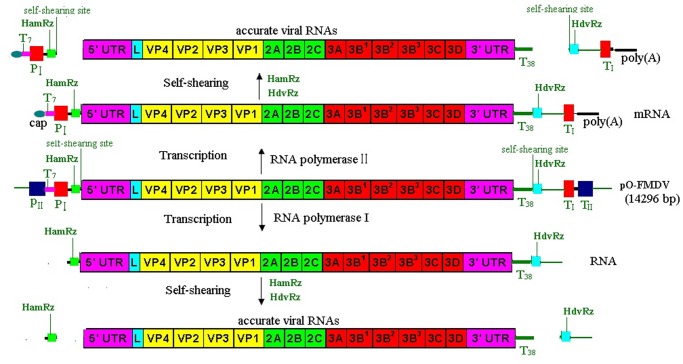
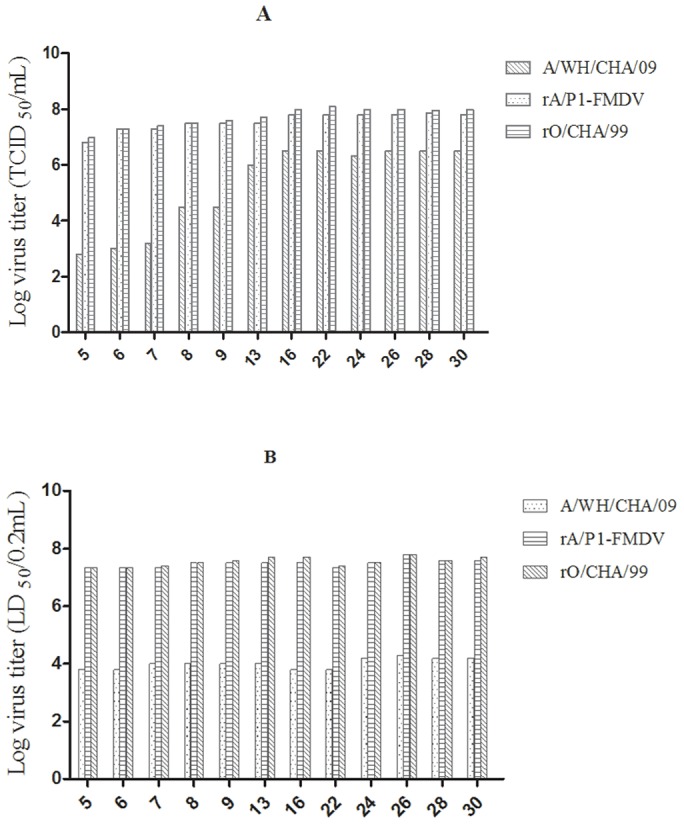
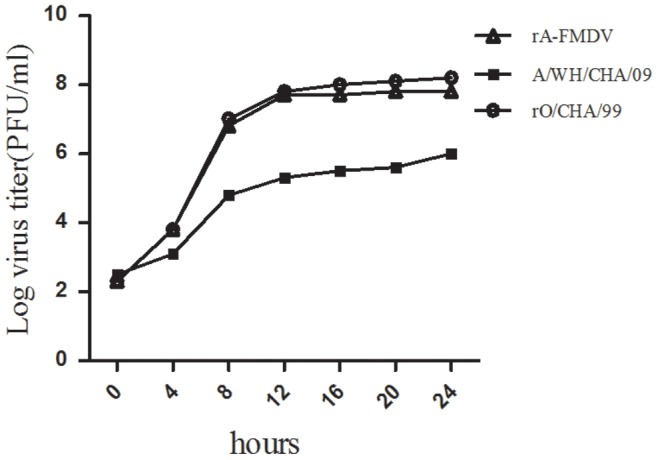
METHODOLOGY/PRINCIPAL FINDINGS: A novel plasmid-based reverse genetics system was used to construct a chimeric strain by replacing the P1 gene in the vaccine strain O/CHA/99 with that from the epidemic stain A/WH/CHA/09. The chimeric virus displayed growth kinetics similar to those of O/CHA/99 and was selected for use as a candidate vaccine strain after 12 passages in BHK cells. Cattle were vaccinated with the inactivated vaccine and humoral immune responses were induced in most of the animals on day 7. A challenge infection with A/WH/CHA/09 on day 28 indicated that the group given a 4-µg dose was fully protected and neither developed viremia nor seroconverted to a 3ABC antigen.
CONCLUSIONS/SIGNIFICANCE: Our data demonstrate that the chimeric virus not only propagates well in BHK cells and has excellent antigenic matching against serotype A FMD, but is also a potential marker vaccine to distinguish infection from vaccination. These results suggest that reverse genetics technology is a useful tool for engineering vaccines for the prevention and control of FMD.
尽管中国在 2009 年分离到了 A/WH/CHA/09 血清型,但目前仍没有针对该血清型的 FMD 疫苗获得许可,部分原因是该毒株在 BHK 细胞中不能很好地复制。
方法/主要发现:本研究利用一种新型基于质粒的反向遗传系统,通过用流行株 A/WH/CHA/09 的 P1 基因替换疫苗株 O/CHA/99 的 P1 基因,构建了一株嵌合病毒。该嵌合病毒的生长动力学与 O/CHA/99 相似,在 BHK 细胞中传代 12 次后被选择作为候选疫苗株。牛用灭活疫苗进行免疫接种,大多数动物在第 7 天产生了体液免疫反应。在第 28 天用 A/WH/CHA/09 进行攻毒感染表明,给予 4µg 剂量的组完全得到保护,既没有发生病毒血症,也没有对 3ABC 抗原产生血清转化。
结论/意义:我们的数据表明,该嵌合病毒不仅在 BHK 细胞中能很好地繁殖,并且与 A 型 FMD 具有极好的抗原匹配性,而且还是一种潜在的标记疫苗,可用于区分感染和接种。这些结果表明,反向遗传技术是用于设计预防和控制 FMD 的疫苗的有用工具。